After the Fire: Documenting Reforestation and Resilience on the Umpqua National Forest
2025 Conservation Connect Fellow Bennett Fate shares how partnerships and sustained effort are restoring Oregon's fire-scarred forests for future generations.
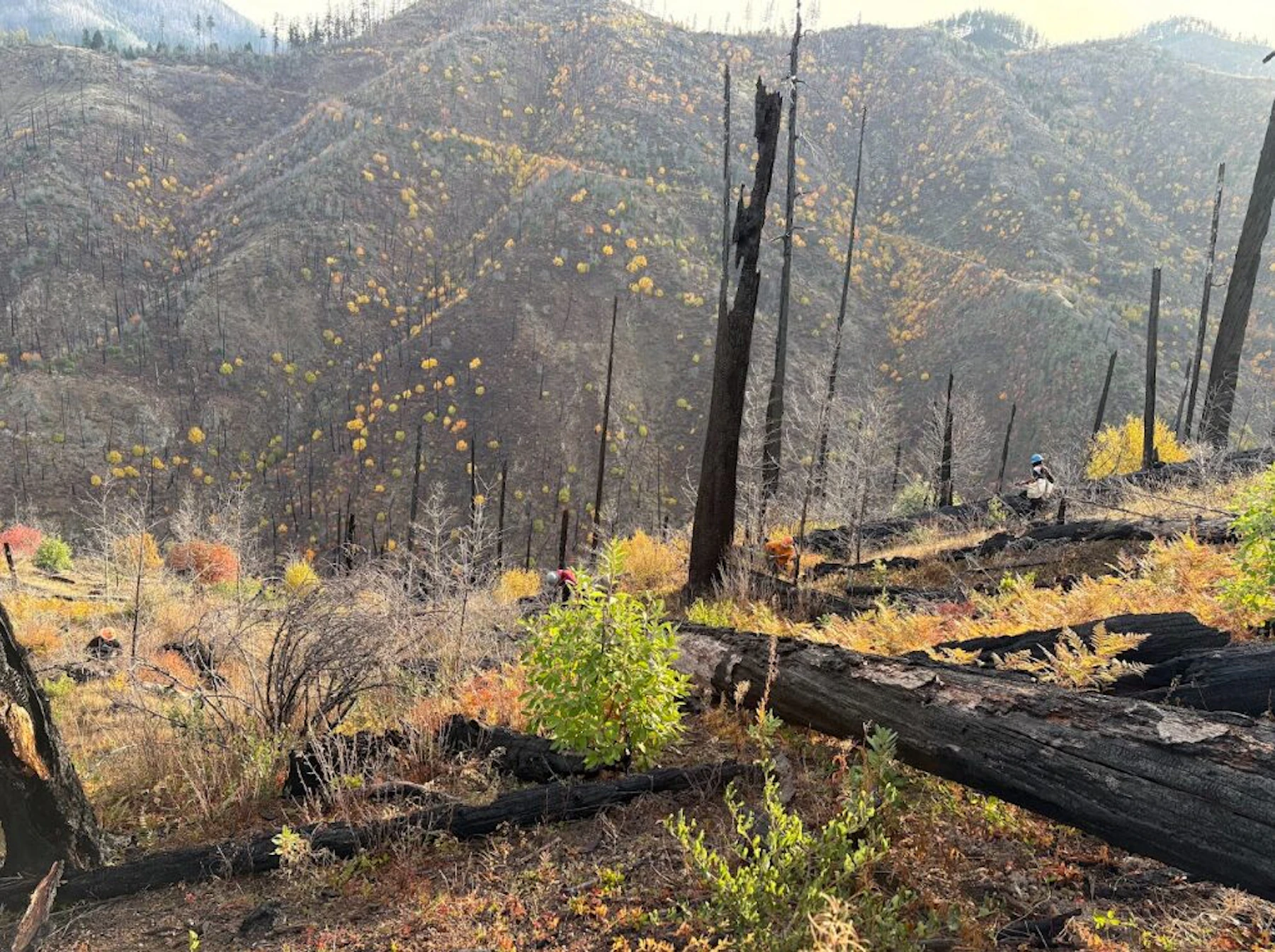
As a Conservation Connect Fellow, I have had the privilege of working with Anna Wemple and the National Forest Foundation’s reforestation team to document the complexities of post-fire reforestation and the collaborative work currently underway on the Umpqua National Forest.
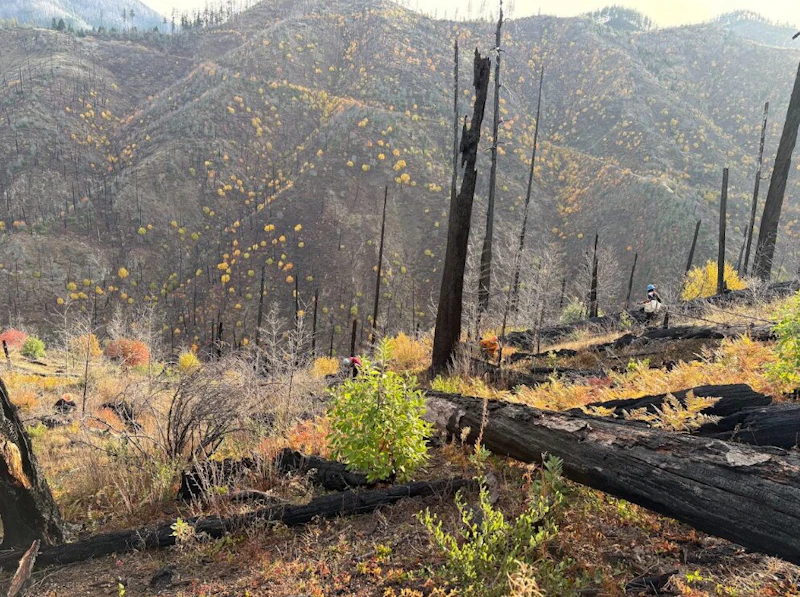
In 2020, the Archie Creek Fire burned more than 131,000 acres of the Umpqua National Forest. The following year, another seven fires burned more than 100,000 additional acres across the forest. In the wake of intense wildfires, natural conifer regeneration is often limited. When a fire burns hot enough to kill the seed bank in the soil and eliminate nearby seed sources, the forest cannot simply regrow on its own. In these conditions artificial regeneration—manually planting tree seedlings—becomes necessary to restore the landscape.

To meet this need, the National Forest Foundation partnered with the Umpqua National Forest to strengthen reforestation capacity. This is part of a broader push from the National Forest Foundation to strengthen the entire reforestation pipeline, from seed collection and nursery production to planting and post-planting monitoring. Reforestation is not a single event but a multiyear cycle that requires sustained attention at every stage.
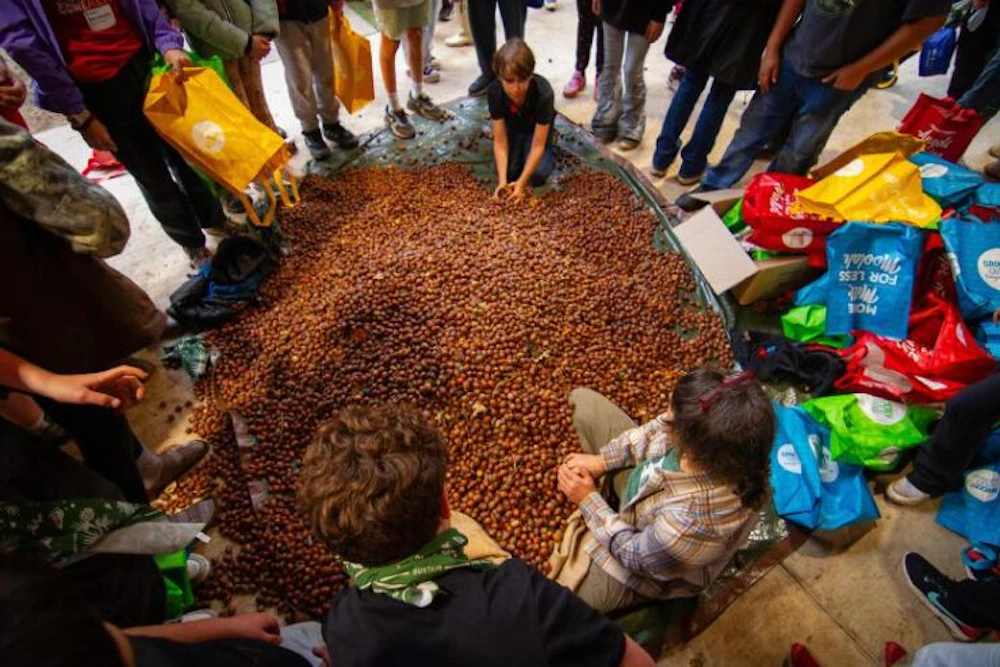
This collaboration gave me a unique opportunity to contribute to that work by creating a series of StoryMaps documenting both the need for reforestation and the projects taking shape on the Umpqua. To develop a grounded understanding of the challenges involved, I participated in multiple site visits. The first brought me to a reforestation event with students from Roseburg Middle School. Students listened to educational talks and helped to collect thousands of acorns that will be used in reforestation.
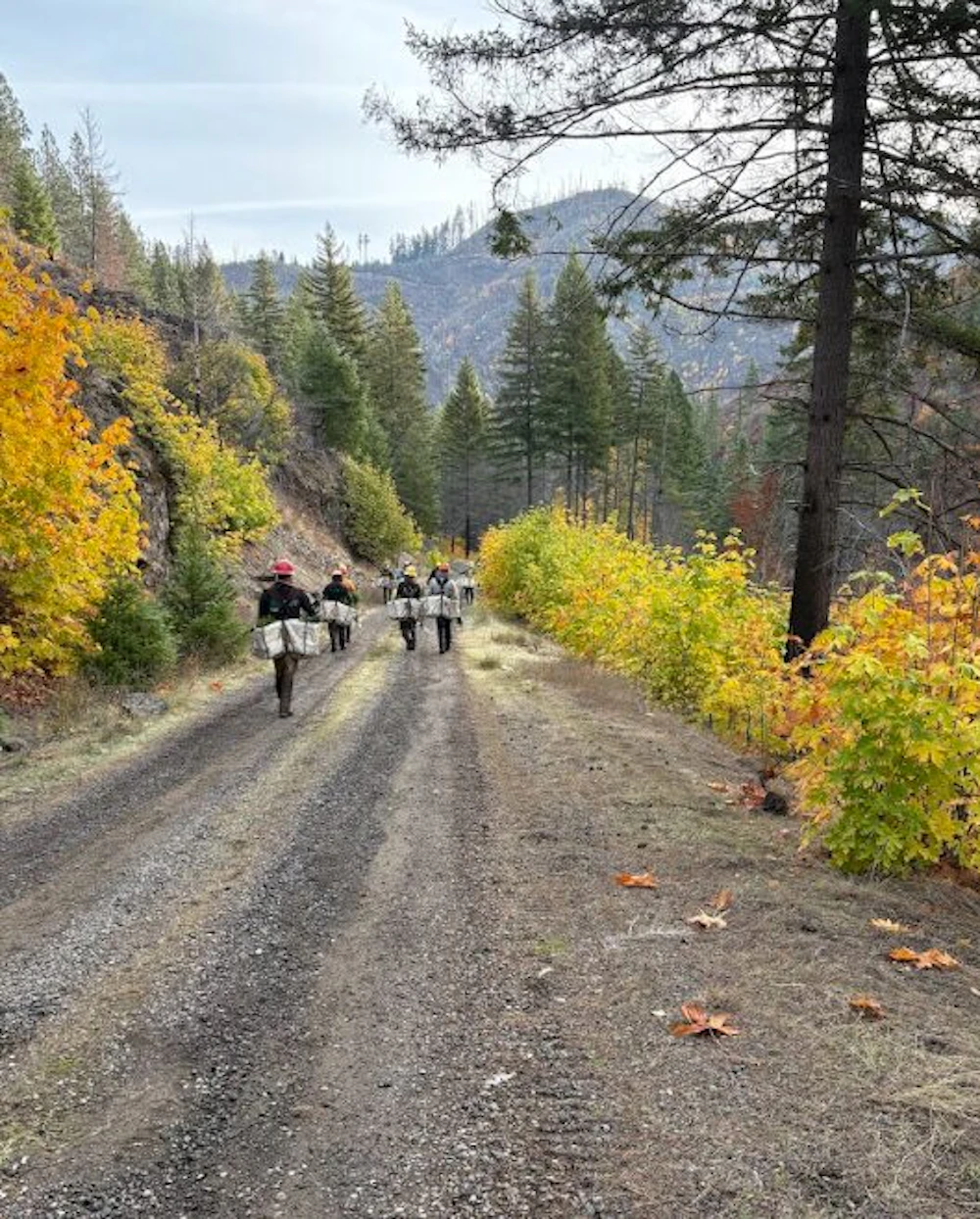
The second site visit took me into the field with Anna Wemple and a team of reforestation contractors working on the Jack Fire burn scar from 2021. Even without a heavy pack full of seedlings, I struggled to keep pace as the contractors efficiently planted trees up and down steep mountainsides. Watching them work gave me a deep appreciation for how demanding, and how skilled, this work truly is.
Overall, the biggest takeaway from this fellowship has been the importance of building partnerships. Reforestation at this scale does not happen quickly, and it does not happen alone. By working together, the National Forest Foundation and the Umpqua National Forest are able to expand their collective capacity far beyond what either could accomplish independently. This collaboration is not just replanting a burned landscape; it is intentionally stewarding forests that will be resilient and productive for generations to come.
Bennett Fate is a 2025 Conservation Connect Fellow pursuing a masters in sustainable forest management at Oregon State University. In his research, Bennett focuses on the impacts of short-interval reburns on soil processes and Douglas-fir regeneration.
Our Forests Need Us Today.
Your donation powers critical, on-the-ground conservation—from wildfire recovery to watershed restoration—protecting forests for the future.