A Hundred Years of Fortitude
Summer/Fall 2026
Story by Orey Buhay | Photos by the National Forest Foundation
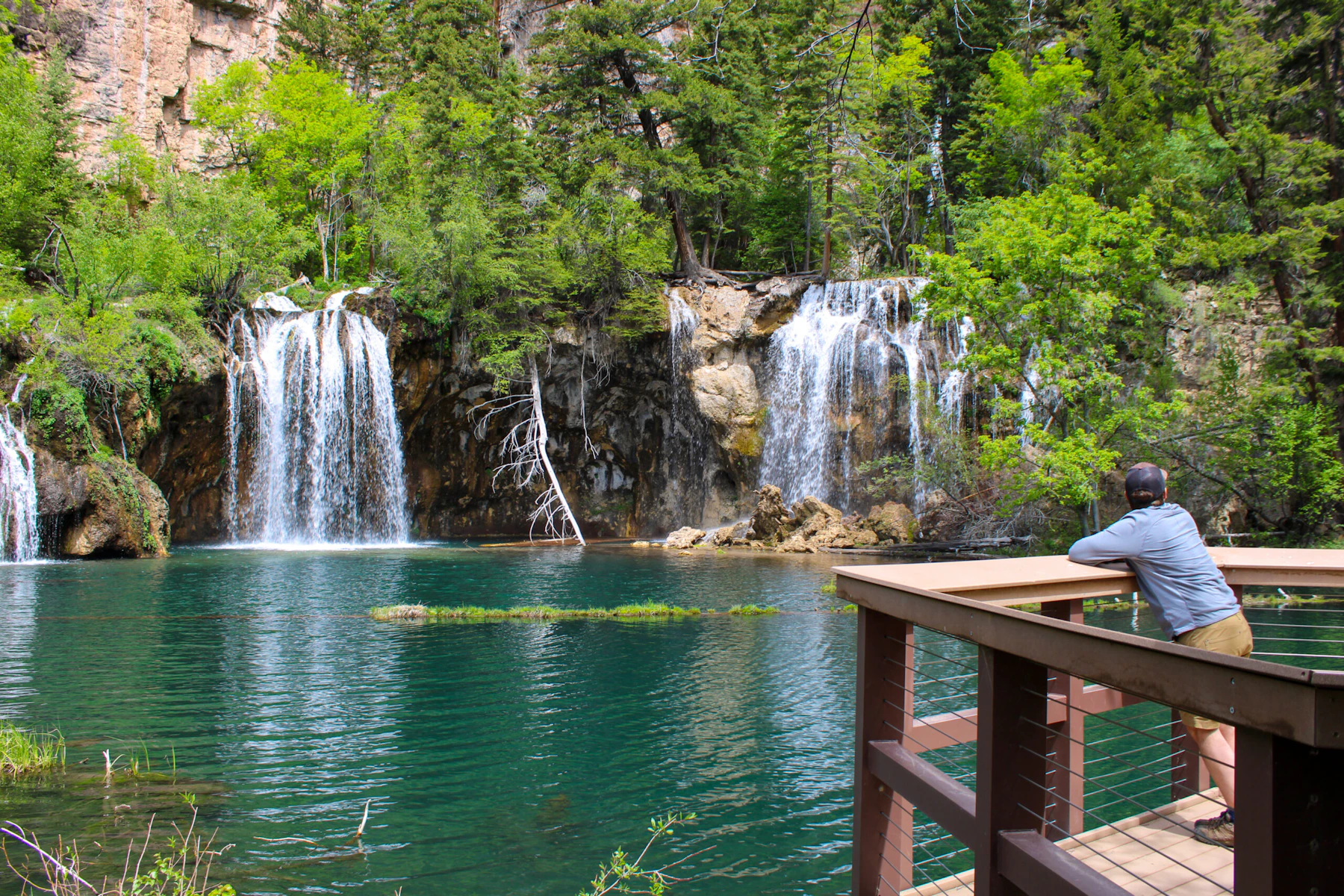
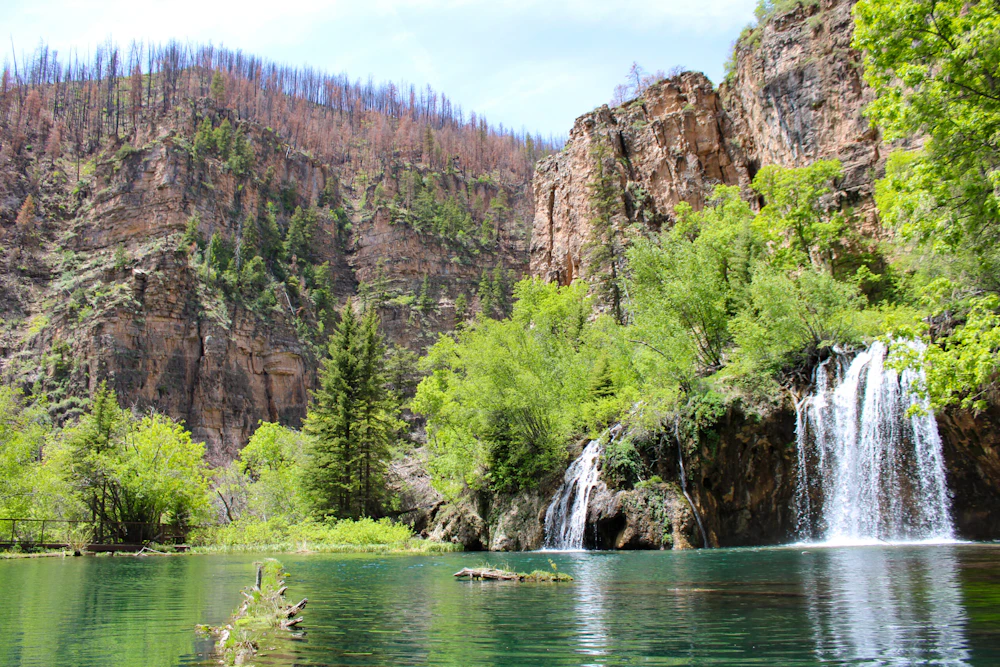
When I moved to Colorado a decade ago, Hanging Lake was one of the first places I was told I must see. The trail to the alpine lake is short—just 1.2 miles—but it spirals up a narrow ravine, carrying hikers 1,200 feet up through lush evergreen forest to a lake that has no right to exist in any world beyond FernGully or Neverland.
Its glassy waters shift from translucent emerald to electric blue, and they sit cupped in a shelf of pale travertine. Waterfalls mist into the pool from underground rivers with no known origin. It’s hard to believe the place exists.
It’s even harder to imagine that, five years ago, it almost didn’t.
In 2020, the devastating Grizzly Creek Fire tore through more than 32,000 acres of the White River National Forest, including Glenwood Canyon, where Hanging Lake sits.
Locals spent those days glued to their radios and social media feeds.
“People didn’t know if the lake was going to survive the fire,” said Emily Kasyon, the White River National Forest program coordinator for the National Forest Foundation (NFF).
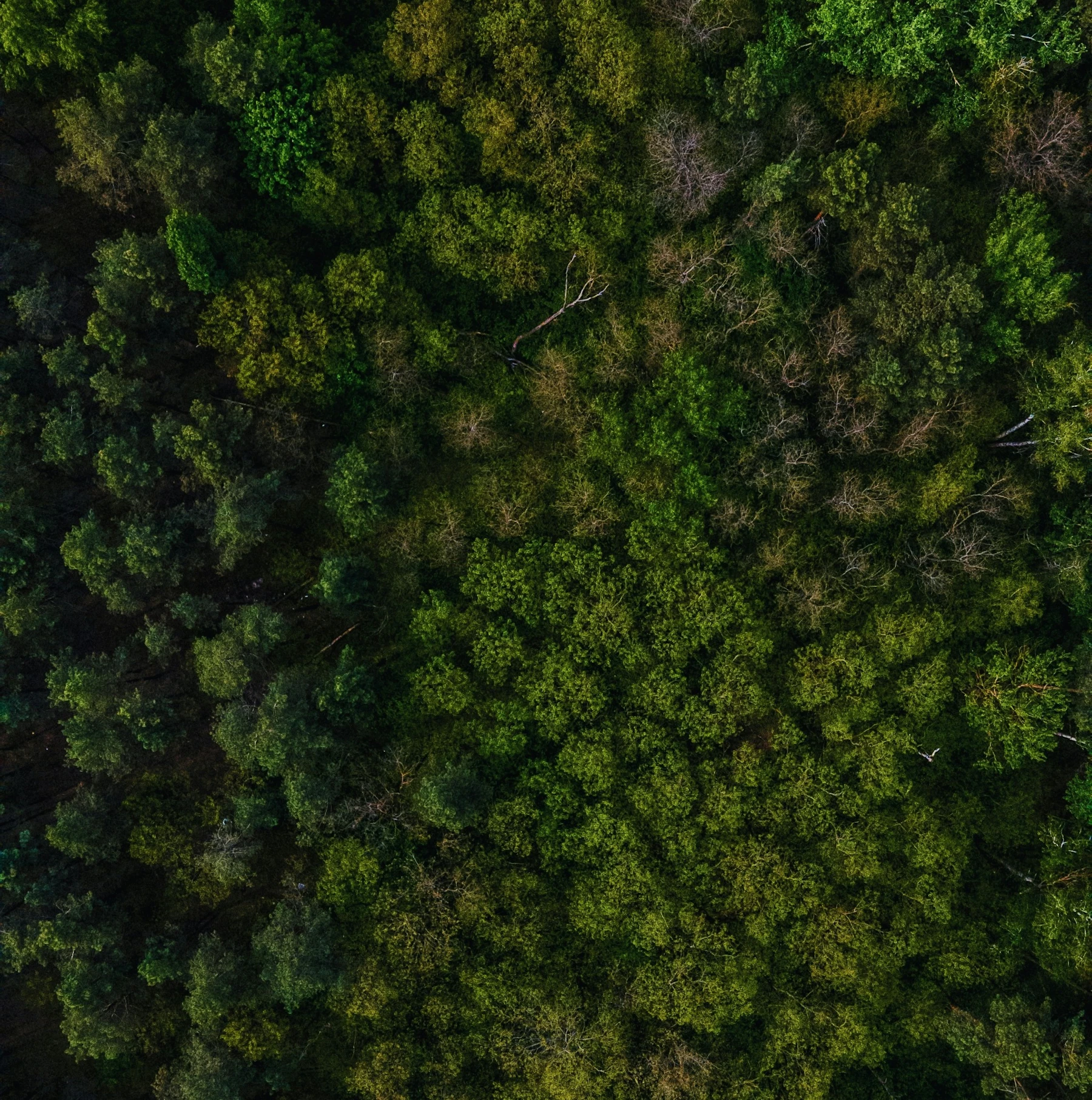
As soon as it was safe to, Forest Service officials flew a drone over the damage. Incredibly, aerial photos showed Hanging Lake untouched, a pristine gem amid a charred forest. It felt like a miracle. But Mother Nature wasn’t done yet.
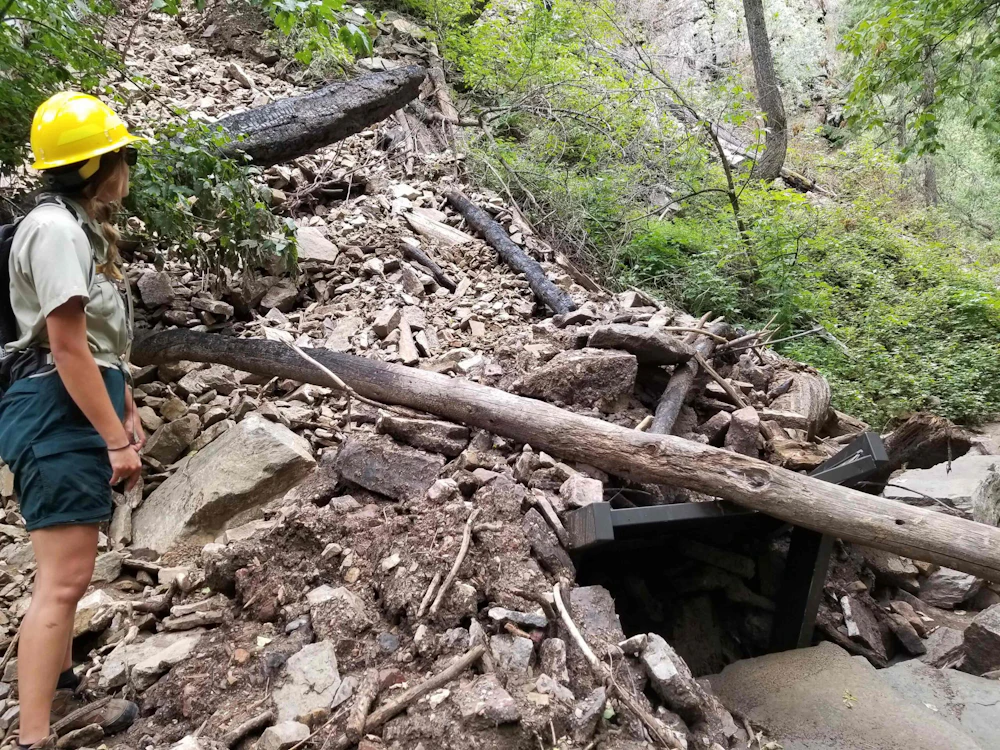
The Grizzly Creek fire left wood debris and rubble scattered across the surrounding hillsides. The following summer, rain and snowmelt flowed down the affected slopes, funneling catastrophic debris flows down the narrow ravine.
Restoration crews leapt into action, but almost as soon as they finished repairs, a 500-year rain event struck Glenwood Canyon in 2023, scouring away whole sections of the trail. Charred trunks and rockfall buried retaining walls, dislodged two bridges, took out the interstate, and left the creek choked with rubble.
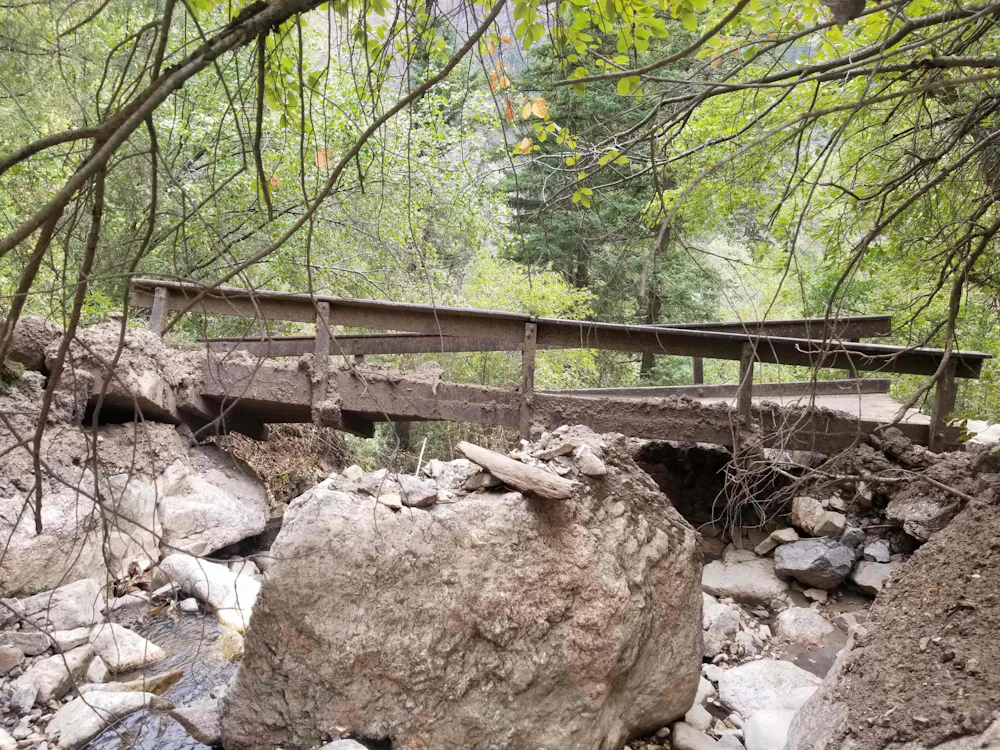
“It was catastrophe after catastrophe, back to back, for three years in a row,” said Kasyon.
This time, land managers shut down the trail completely, suspending public access for nearly a year. Around 15,000 hikers were forced to cancel their trail reservations—and with them, airline tickets, hotel stays, and restaurant bookings. The loss of tourism was a massive blow to the gateway town of Glenwood Springs, which earns an estimated $4.6 million annually from visitors to Hanging Lake alone.
“Hanging Lake is the most clicked-on link on the Visit Glenwood website,” said David Boyd, public affairs officer for the White River National Forest. “It’s a really special place for the people of Colorado, but it also attracts visitors from all over the world.” Suddenly, all that was gone. Glenwood’s lush backyard refuge had become a disaster zone.
Local stakeholders knew they had to do something. The NFF, Glenwood Springs, the Forest Service, Roaring Fork Outdoor Volunteers (RFOV), and a handful of other community members convened a working group. Everyone was devastated. But they also saw an opportunity.
Before the fire, Hanging Lake was drawing up to 189,000 hikers per year—a level of human traffic the original 1800s-era footpath was never built to withstand. By the 2010s, social media fame had turned the trailhead into a mall parking lot. Cars lined the access road and highway. Forest Service rangers caught hikers cutting switchbacks, leaving trash, and swimming in the lake’s biochemically delicate waters. Endless footsteps dug the trail deep into the crumbling earth. In some places, the path became a four-foot trench.
By 2020, the Forest Service was already desperate to make repairs. After the floods, they realized this was their chance to start from scratch—and do things the right way.
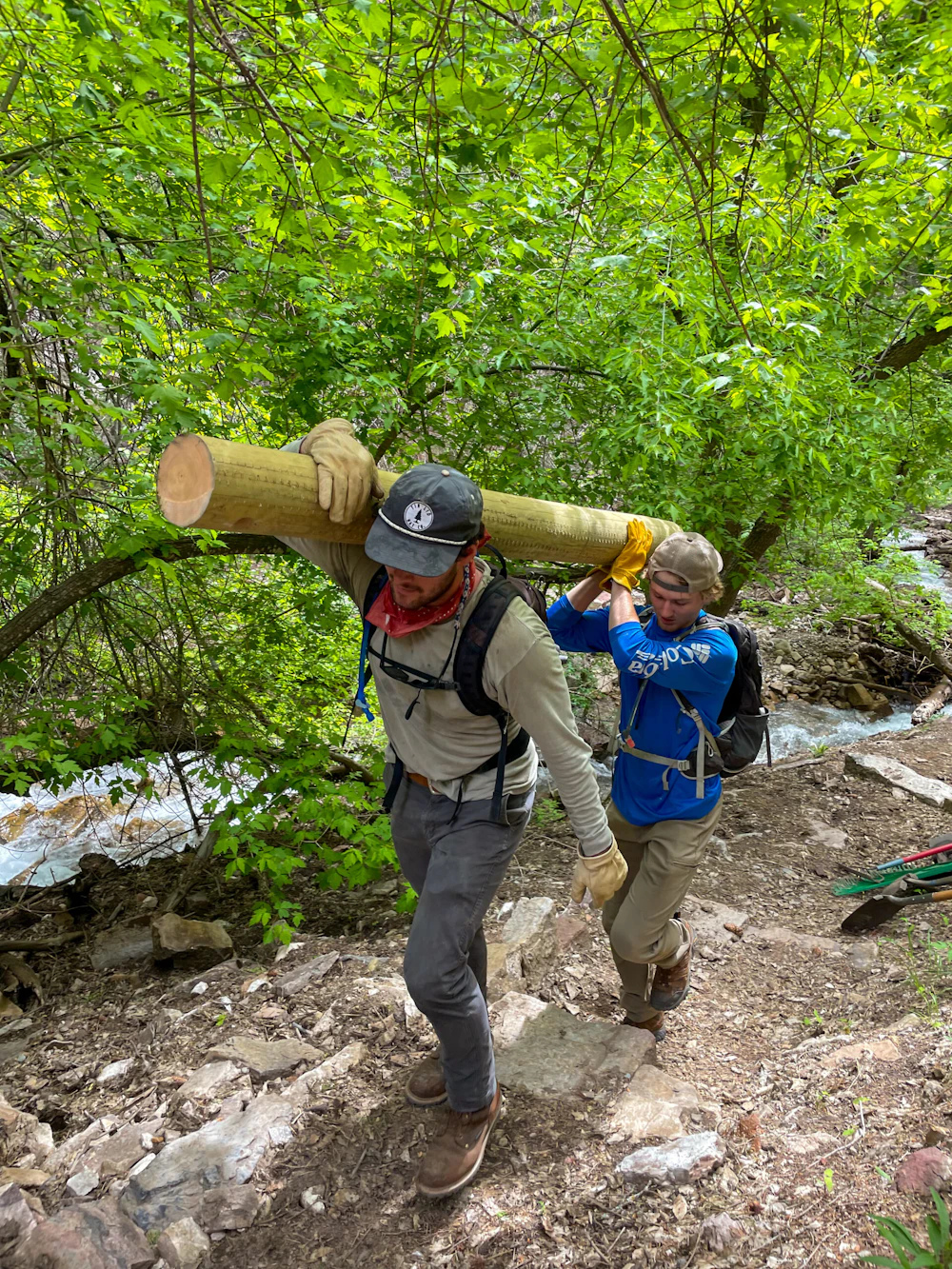
The catch: re-working the trail would be a huge project—and an expensive one. That’s where the NFF came in. The organization immediately jumped in to coordinate partners and raise funding. It also brought on extra personnel, including Kasyon.
Kasyon got her start on a saw crew in Southwest Colorado, slashing through invasive weeds to restore river ecosystems. She didn’t expect to fall in love with restoration work, but she did. Over time, Kasyon rose through the ranks, becoming an expert in large-scale landscape rehabilitation.
After the 2023 floods, the NFF realized it needed a project manager, someone both passionate about the work and good at bringing people together. Kasyon was the perfect fit. Plus, she grew up in Colorado. Restoring the landscapes that made her fall in love with the outdoors as a kid was a dream come true.
“There’s so much history of people coming here to make lifelong memories,” Kasyon said. “It’s so cool to be a part of it.”
“There’s so much history of people coming to Hanging Lake to make lifelong memories."
Emily KasyonNFF’s White River National Forest program coordinator
Before bringing Kasyon on board, the NFF helped secure a grant from Colorado Parks and Wildlife and generous support from the Great Outdoors Colorado, an organization that uses a portion of the state’s lottery funds to preserve natural spaces. Glenwood Springs and other groups also chipped in.
After shoring up the funding, trail crews, landscape architects, and master trail builders began creating one of the most thoughtfully designed trails in Colorado history. The goal: build something that could withstand another 100 years of foot traffic and future flooding.
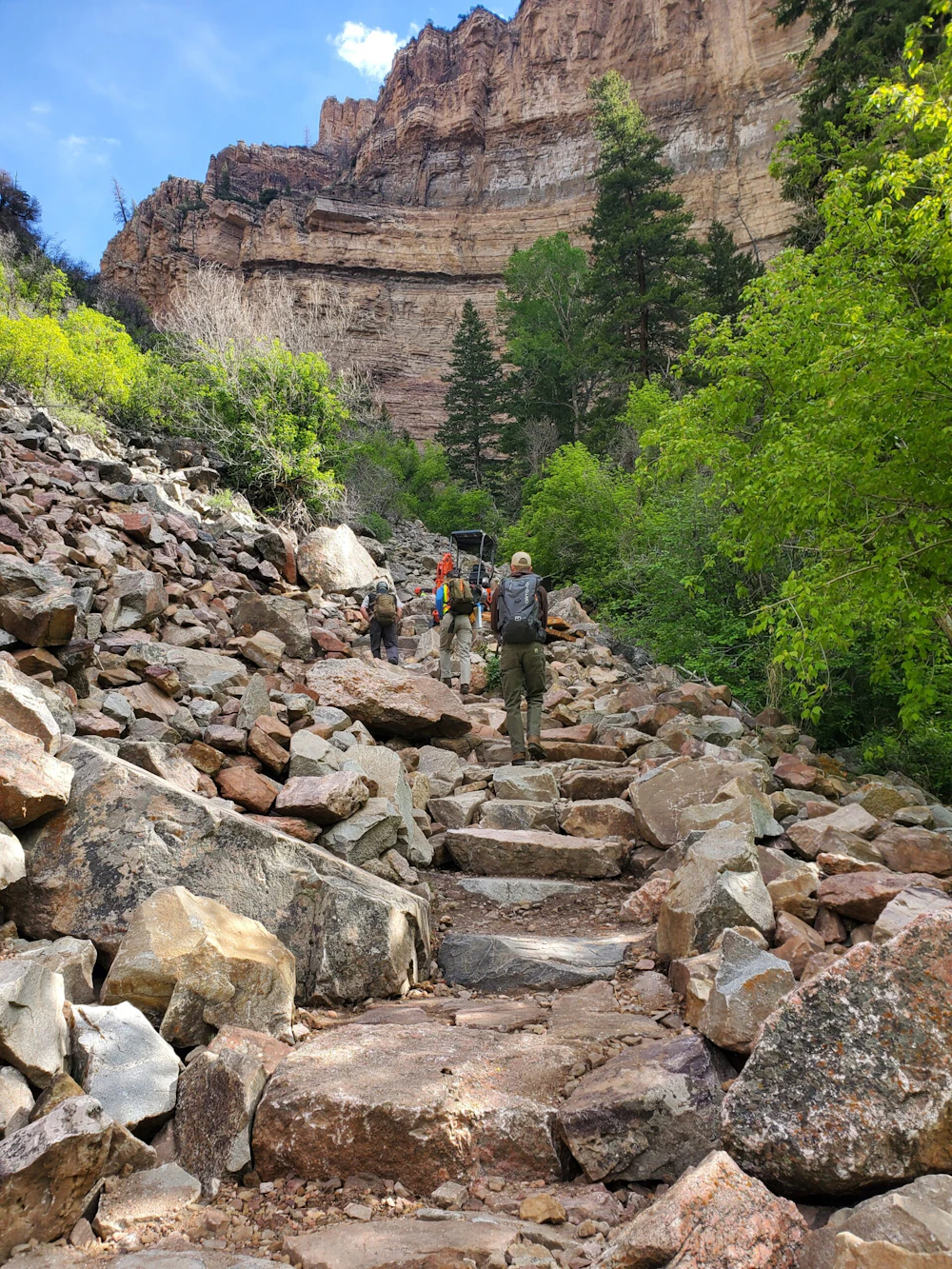
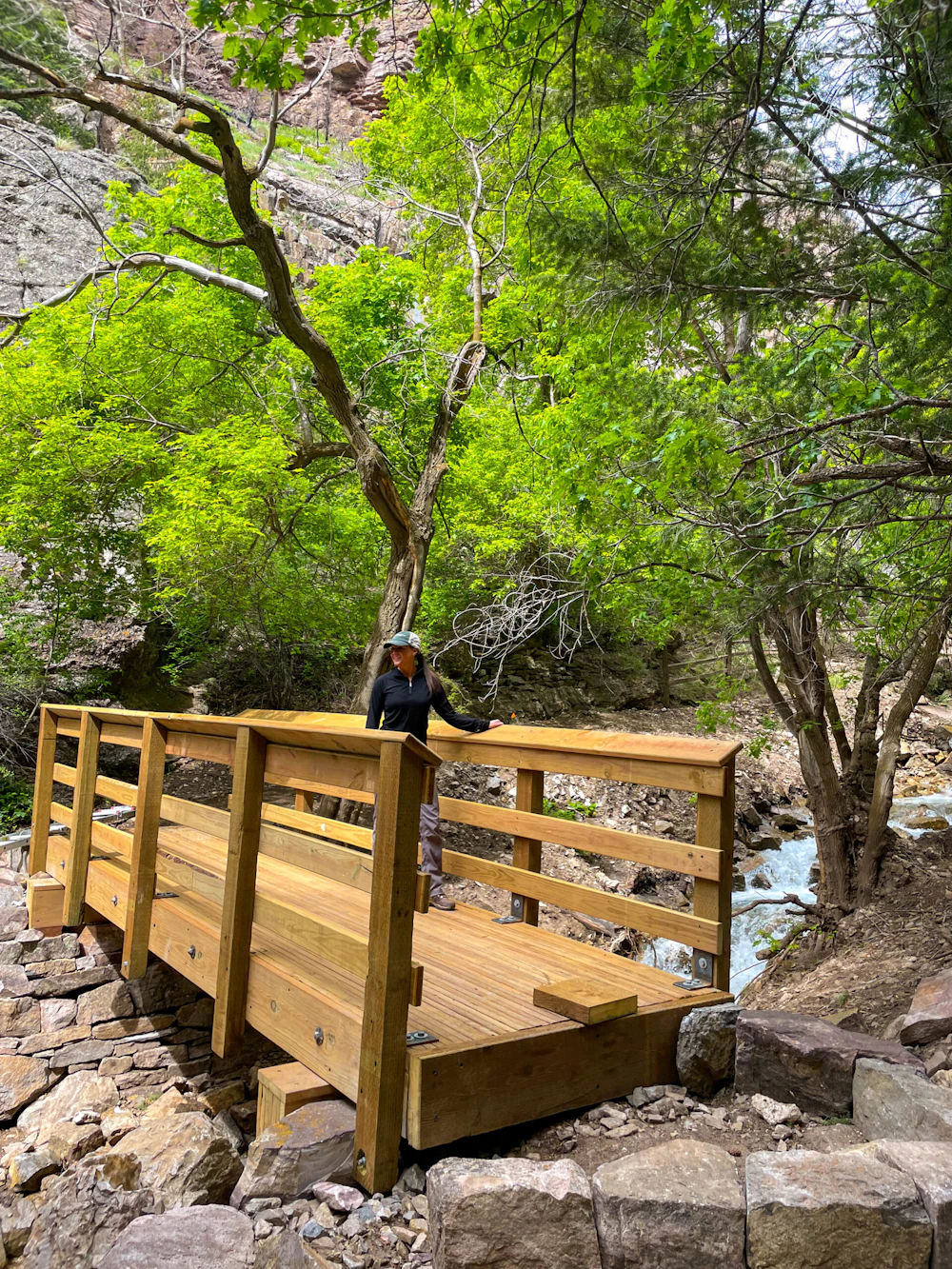
In February 2026, as I walked with Boyd and Kasyon along the new trail, it became clear how much had gone into redirecting and reinforcing it. The snow-dusted path, winding through a hanging garden of conifers, is an intricate jigsaw of stepping stones, stack-stone walls, and rock staircases—all designed to defy erosion and keep hikers on the route.
“Our goal was to build a trail that feels like it’s always been here,” said Sam Massman, a lifelong trail builder and the forest recreation program manager for the White River National Forest. The new path sits nestled among the rocks and trees, rippling along the existing topography as if it’s been a feature of the landscape since the beginning of time.
“Our goal was to build a trail that feels like it’s always been here.”
Sam MassmanForest recreation program manager for the White River National Forest
That feel wasn’t an easy one to manufacture; Kasyon said their teams spent hours poring over plans, color-matching bridges to historic designs, carefully interlacing old stonework with new materials, and making delicate slices into cliffsides to widen the trail by careful degrees.
“We’ve created a trail that’s sustainable and flood-resistant,” she said. “It’s also a better hike.” More than 1,100 stone steps make for a steep but engaging trek—and a faster one. According to Glenwood Springs officials, the new route has slashed the average hike time by 30 minutes.
Still, as we ascended the final twisting staircase to the lake, Kasyon couldn’t help but slow down to take it all in.
“It never gets old,” she said, taking her phone out. “I think this is the 75th hike I’ve done to the lake since the project started, and I still take the same photos every time.” I couldn’t blame her. The lake was just as stunning as I’d remembered. And now, it feels like it has a trail worthy of it.
To many longtime locals, the transformation has been shocking, said Becca Schild, RFOV’s executive director. The volunteer organization has worked at Hanging Lake annually since 2010. Last year, the crew returned for the first time since the fires.
It felt like the difference between being in a log cabin versus a marble mansion,” Schild said about the new trail.
The stewardship group will continue its work at Hanging Lake, but the new trail design will require less maintenance than in the past. That leaves RFOV more time and energy to devote to other areas, further bolstering the trails around the White River and shoring up the community’s treasured outdoor recreation economy.
The Hanging Lake project will have other ripple effects, too. According to Kasyon, all the stakeholders who came together over the lake have learned to collaborate and problem-solve in ways they didn’t previously think possible.
“There are so many areas in the White National Forest that need care and stewardship,” said Kasyon. “We’ve discovered that when we come together over a shared goal, we can do some really cool things, so we plan to keep this collaboration going.
Secure a timed permit before hiking the Hanging Lake Trail ($12) at visitglenwood.com/hanginglake. While making your reservation, consider donating to the Roaring Fork Stewardship Fund, which benefits the White River National Forest.
About the Author
Corey Buhay is a freelance writer, editor, and guidebook co-author based in Colorado. In her spare time, she works as a volunteer bat monitor for the City of Boulder.
Want to receive a physical copy of Light & Seed® in your mailbox? Become an annual donor of $25 or more to start receiving your copy twice a year.
Our Forests Need Us Today.
Your donation powers critical, on-the-ground conservation—from wildfire recovery to watershed restoration—protecting forests for the future.