Fighting Fire With Fungi
Winter/Spring 2026
Interview by Erin Vivid Riley
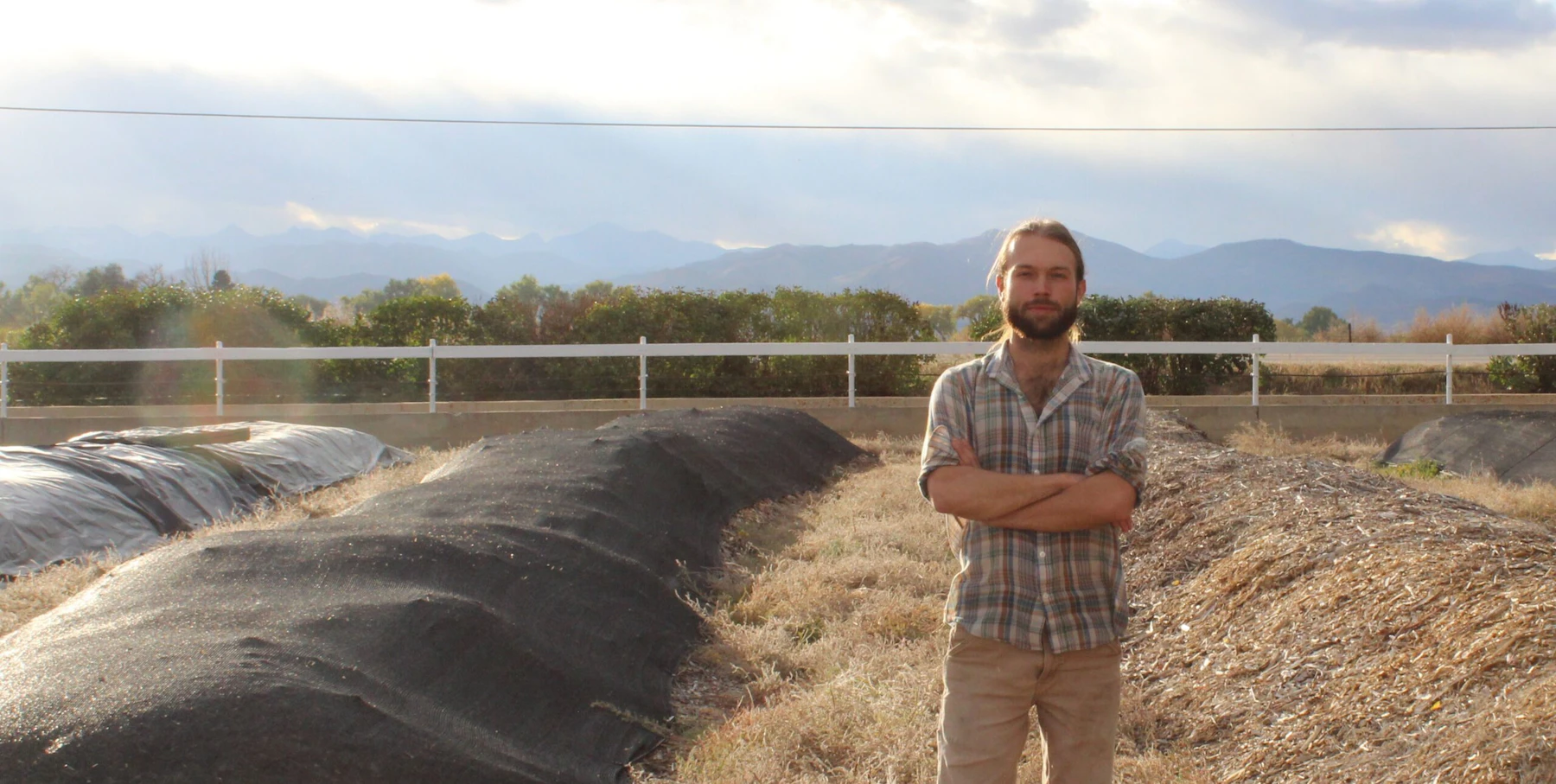
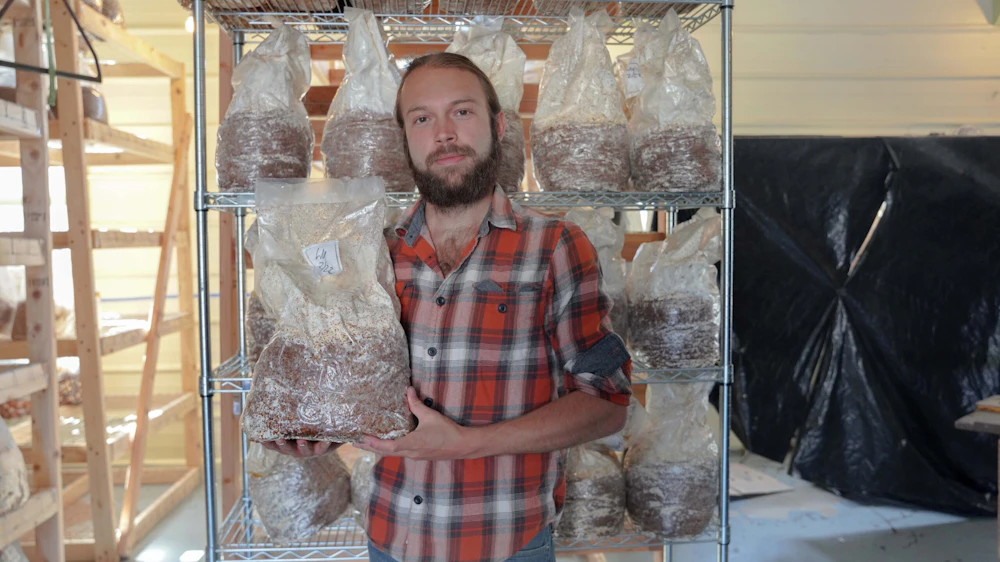
Growing up in the fungi-filled forests near Boulder, Zach Hedstrom joined the Colorado Mycological Society to better understand “this whole world underfoot that we don’t get to see.” Later, while working at an organic farm, he watched as oyster mushrooms were added to wood chips to quicken their decomposition. Hedstrom saw an opportunity to turn his fascination into a cause, and launched Boulder Mushroom in 2020.
What began as a humble research project is now a multifaceted mycology center, with a mushroom farm and spawn-producing facilities. The company’s ascent came at a time when forestry and fire-mitigation experts were contending with managing wood waste from large-scale thinning efforts, which itself can act as fuel if it doesn’t decompose fast enough.
On Colorado’s Front Range, the National Forest Foundation and its partners have identified 600,000 acres in need of treatment—an area roughly double the size of Nashville— as part of its wildfire mitigation work on the Pike-San Isabel National Forest. That creates a lot of debris that’s cumbersome to dispose of. “Fungal inoculation is a natural and cost-effective solution in an area where there’s already a bottleneck,” says Hedstrom. We spoke to the mycologist about the innovate solution and it’s potential agrescale.
How did Boulder Mushroom get its start?
The company started out of a cabin on a tiny square of private land surrounded by the Arapaho-Roosevelt National Forest. I’d go out to find fungi to culture into spawn, which is essentially the root-like structure. A few years later, I began applying this spawn to forest biomass to transform it into soil, which is our current focus at Boulder Mushroom.
How do you turn a mushroom into a natural recycler?
Let’s say we find a mushroom growing on a pine tree. Once we’ve confirmed it’s performing decomposition, we regrow that type of mushroom in a sterile location, preserve its genetics, and expand its mycelium, the root-like structure that secretes the enzymes that cause decomposition. From this, we develop a liquid slurry that can be sprayed onto pine wood waste to speed up its breakdown.
How does this solution help mitigate wildfires?
In Colorado and across the west, forestry groups and agencies are actively thinning dense stands of trees a natural and cost-effective solution in an area where there’s already a bottleneck,” says Hedstrom. We spoke to the mycologist about the innovate solution and it’s potential agrescale. How did Boulder Mushroom get its start? The company started out of a cabin on a tiny square of private land surrounded by the Arapaho-Roosevelt National Forest. I’d go out to find fungi to culture into spawn, which is essentially the root-like structure. A few years later, I began applying this spawn to forest biomass to transform it into soil, which is our current focus at Boulder Mushroom. to remove the main fuel source of large wildfires. The leftover wood is often processed into chips that are spread across the forest floor or left in slash piles to be removed by controlled burns.
In this arid climate, it can take a very long time, often more than 50 years, for decomposition to happen on its own. In our trials of four-inch chip depths, we’re seeing biomass turn into a humus within 16 to 24 months. The mycelial matting also catches and holds moisture, reducing the risk of waste becoming fuel for wildfires as it breaks down.
“In our trials of four-inch chip depths, we’re seeing biomass turn into a humus within 16 to 24 months.”
What are you working on now?
We’re currently brewing large tanks of native fungi at our Boulder facility that can be applied over large areas using equipment that’s already out there. Off-road vehicles with tanks that are used to apply herbicides, for example, are also effective at applying the inoculants.
What’s the biggest challenge facing your growth?
Scaling the technology’s application. We first partnered with local agricultural partners to transform farm biomass into a soil amendment, which piqued the interest of forestry agencies. We’re now working with a number of local partners to take what’s already standard practice within forestry and fire mitigation and cater these strategies to that, and hope to work with federal agencies in the future.
Follow Boulder Mushroom on Instagram at @boulder_mushroom. Buy your own at-home fungi growing kit from Boulder Mushroom’s online shop at bouldermushroom.com.
Want to receive a physical copy of Light & Seed® in your mailbox? Become an annual donor of $25 or more to start receiving your copy twice a year.
Our Forests Need Us Today.
Your donation powers critical, on-the-ground conservation—from wildfire recovery to watershed restoration—protecting forests for the future.