First Responder
Summer/Fall 2026
Interview by Erin Vivid Riley
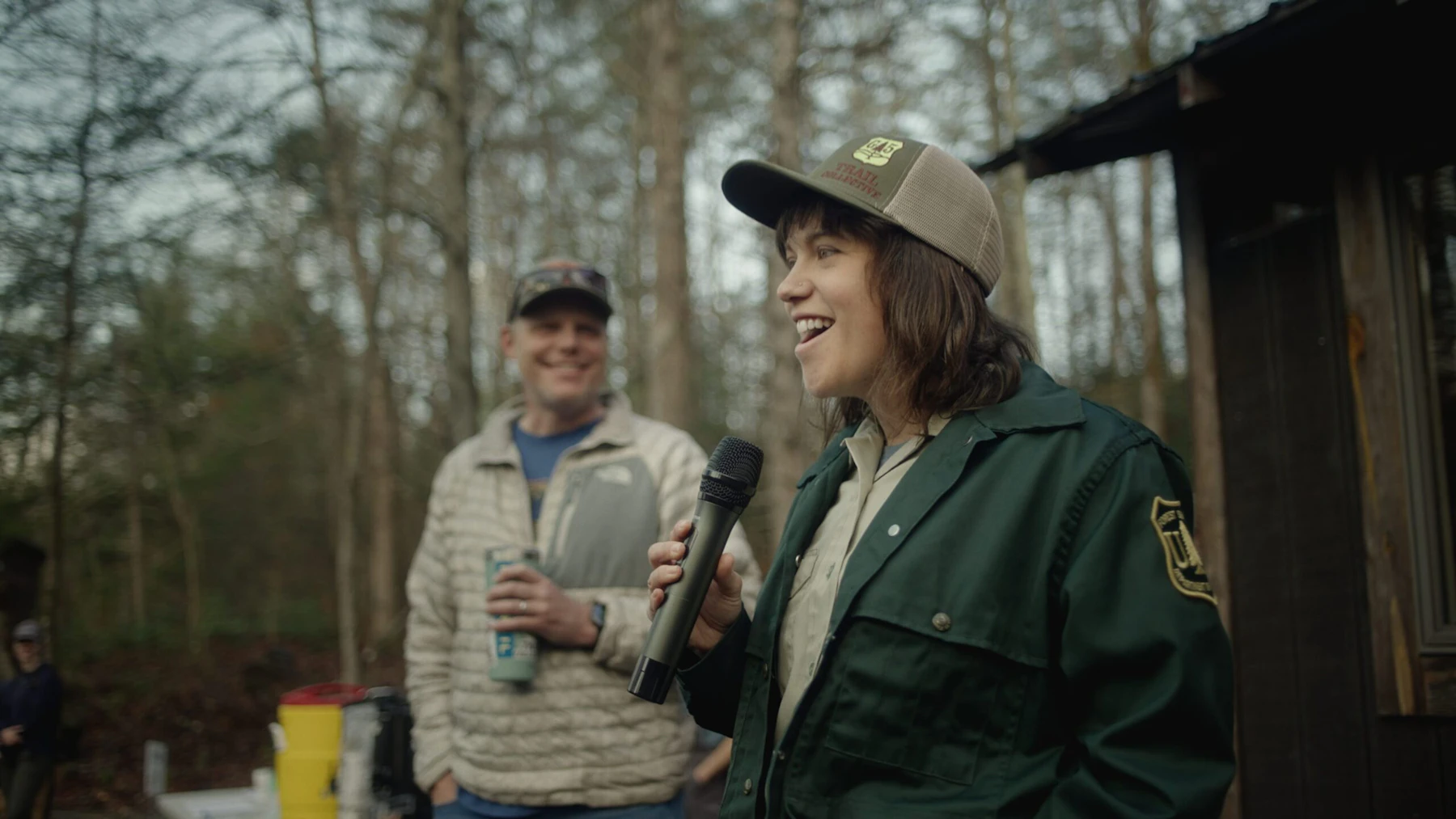
When Lisa Jennings was growing up, she moved around a lot for her parents’ work in higher education. From living in a small town in the Sierra Nevada Mountains to the base of the Blue Ridge Mountains in rural Georgia, the spectacular settings helped Jennings embrace the constant change. Despite her outdoorsy childhood, it wasn’t until she drove through the redwoods in Northern California that she realized she wanted to work with trees.
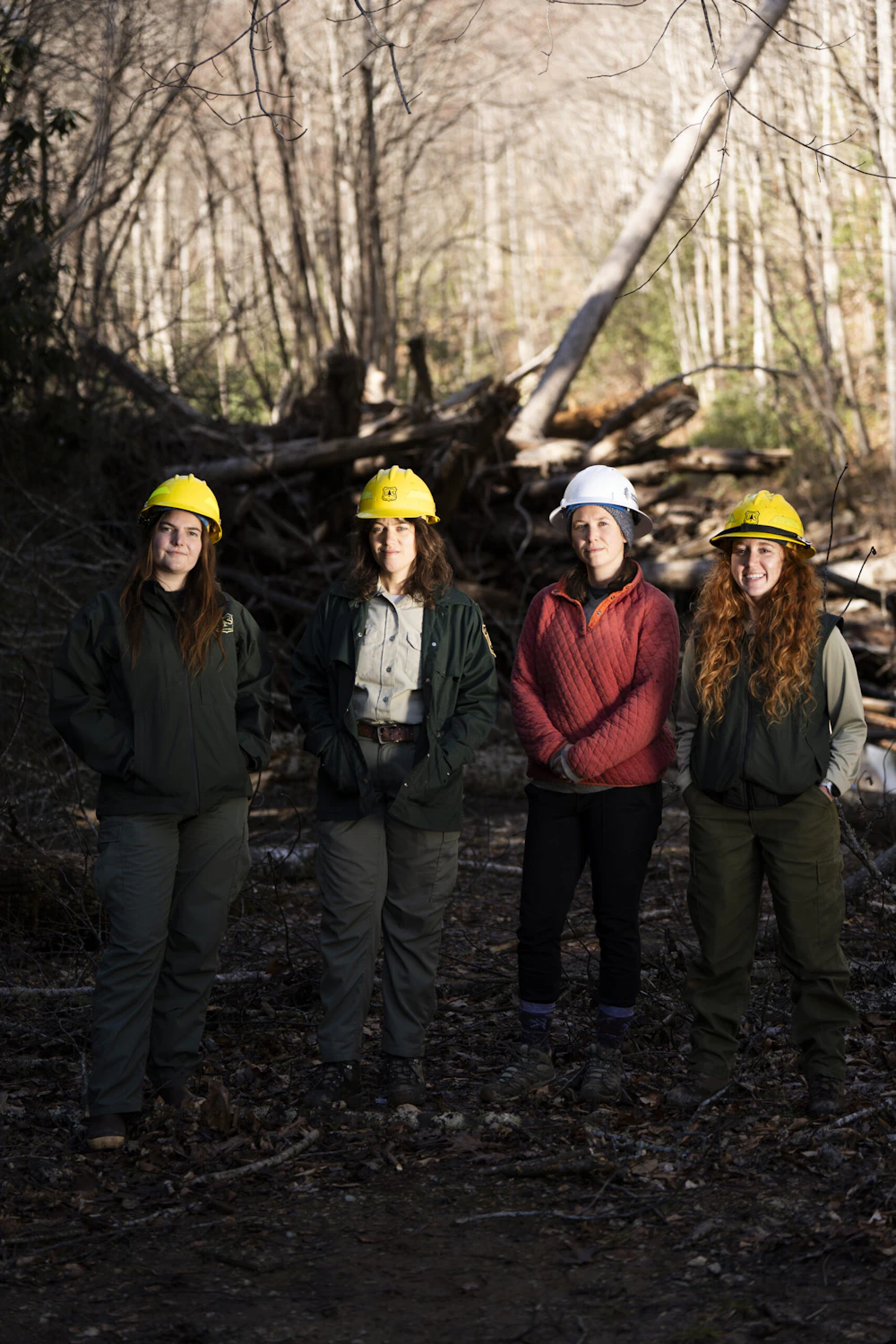
A few years out of college, Jennings secured one of the Forest Service’s most coveted roles in one of its most popular destinations. As the recreation and trails manager for the Grandfather District of the Pisgah National Forest, she achieved a standard in the past decade that’s unheard of for such a highly used district: almost clearing the area’s trail maintenance backlog. Then, Hurricane Helene made landfall in 2024.
We spoke to Jennings about her response after the storm hit, the immensity of the recovery effort, and the resiliency of Pisgah’s communities.
What was your experience of the immediate aftermath of the storm?
As Forest Service employees, most of us are also wildland firefighters and have been trained to respond to emergencies. After the hurricane, I went to the police department and they plugged me in right away.
I advised the police and fire chiefs through early incident management steps and helped the town get resources on the ground in the first few days. Then I stepped into a public information role, leading the first-ever radio broadcast in western North Carolina. It was one of the most meaningful things I’ve done.
How has your work changed since Hurricane Helene?
In one instant, the entire second half of my career changed. We have 300 miles of trails on the Grandfather Ranger District, and just before the storm, we had gotten to this amazing milestone where we had maintained every mile within a single year. Then the storm hit and set everything back.
What has the recovery work been like?
The complexity of identifying challenges on such a wide system that’s so highly used is immense, involving spreadsheets and rankings and hundreds of people from multiple organizations. We’ve opened 75 percent of our trails, but the greater recovery work will take decades.
What is your current focus?
One of our focus areas is the Old Fort Trails Project, a 42-mile system that broke ground in 2022. For every mile of trail that opened, a new business opened in Old Fort, (a former textile town 20 miles east of Asheville). Before Helene, the trails were welcoming an average of 250 visitors a day.
During the storm, every business flooded and the town was devastated. We’re still in that place of recovery where our local communities and businesses are saying, “Can we do this? Can we stay here?” So there’s been a lot of pressure to move as quickly as possible.
Is the trail system open to visitors?
We were able to open the trail system early on, and as of January, the main point of access to the trails—a 100-foot-bridge that flipped over from the force of Helene—has been rebuilt. It’s been amazing going into town and seeing bikes on the back of cars again, and seeing people come in and breathe new life into Old Fort.
What do the next decades of recovery look like?
You know, through crisis comes opportunity. We’ve had to start over, but we have each other, we have our network of partners. How do we use this opportunity to build something better and more resilient? So when this happens again, we’ll have the pieces in place.
Follow along with the restoration projects on the Grandfather Ranger District of the Pisgah National Forest on Instagram at @g5trailcollective. Check out the Southern National Forest Recovery Fund at nationalforests.org/southernforestsrecovery and contribute to the recovery of small communities around the Pisgah and Nantahala National Forests.
Want to receive a physical copy of Light & Seed® in your mailbox? Become an annual donor of $25 or more to start receiving your copy twice a year.
Our Forests Need Us Today.
Your donation powers critical, on-the-ground conservation—from wildfire recovery to watershed restoration—protecting forests for the future.