Forest Filter
Winter/Spring 2026
By Christina Nunez


Virginia’s mighty Shenandoah River forms from the confluence of its South and North Forks, which f low through the George Washington-Jefferson National Forest. For two decades the chemical company DuPont dumped mercury waste into the South Fork from its Waynesboro facility. Over 100 miles of river and thousands of acres of floodplain and riparian habitat were affected.
A decade ago, scientists tried a variety of approaches to cleanup, including applying a form of charcoal called biochar to the soil on the banks, where it could bind to mercury and keep it from washing into the river. According to a 2023 study published in the journal Toxics, the treatment reduced concentrations by a factor of about 200.
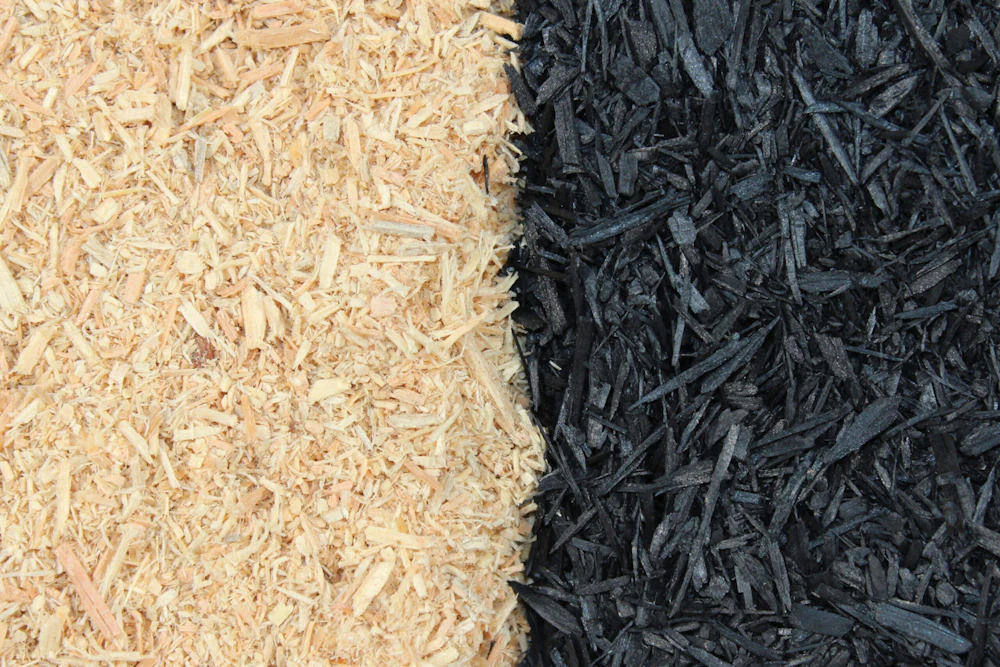
Biochar, which is organic matter heated with low oxygen in a special furnace until it becomes similar to charcoal, has been used to enrich depleted agricultural soils for centuries.
Its porous structure provides a large surface area for both nutrients and contaminants to bind to. But the simple technology has been getting renewed attention for its potential to address a range of environmental challenges, from removing contaminants to storing carbon.
The substance’s ability to purify water is established— household water-cleaning pitchers use a processed charcoal powder known as activated carbon. Now, researchers have begun testing charcoal to help clean larger water sources, such as rivers and storm runoff—with a twist.
“Now, researchers have begun testing charcoal to help clean larger water sources, such as rivers and storm runoff—but with a twist.”
Instead of conventional activated carbon, which is sometimes made from coal, the idea is to use the potentially more sustainable alternative of biochar, made from biomass waste such as wood—a material the U.S. currently has a surplus of. The Forest Service has recognized the need to remove over 600 million tons of biomass from National Forests to reduce fire risk.
According to Jeremy Yan, a research chemist with the agency’s Forest Products Laboratory (FPL), some of that wood will become timber for industry, but a “significant portion,” he said, has no market. “Piling and burning this material in place is not a favorable option due to high costs and emissions,” he said. “One emerging solution is making biochar from [that] biomass.”
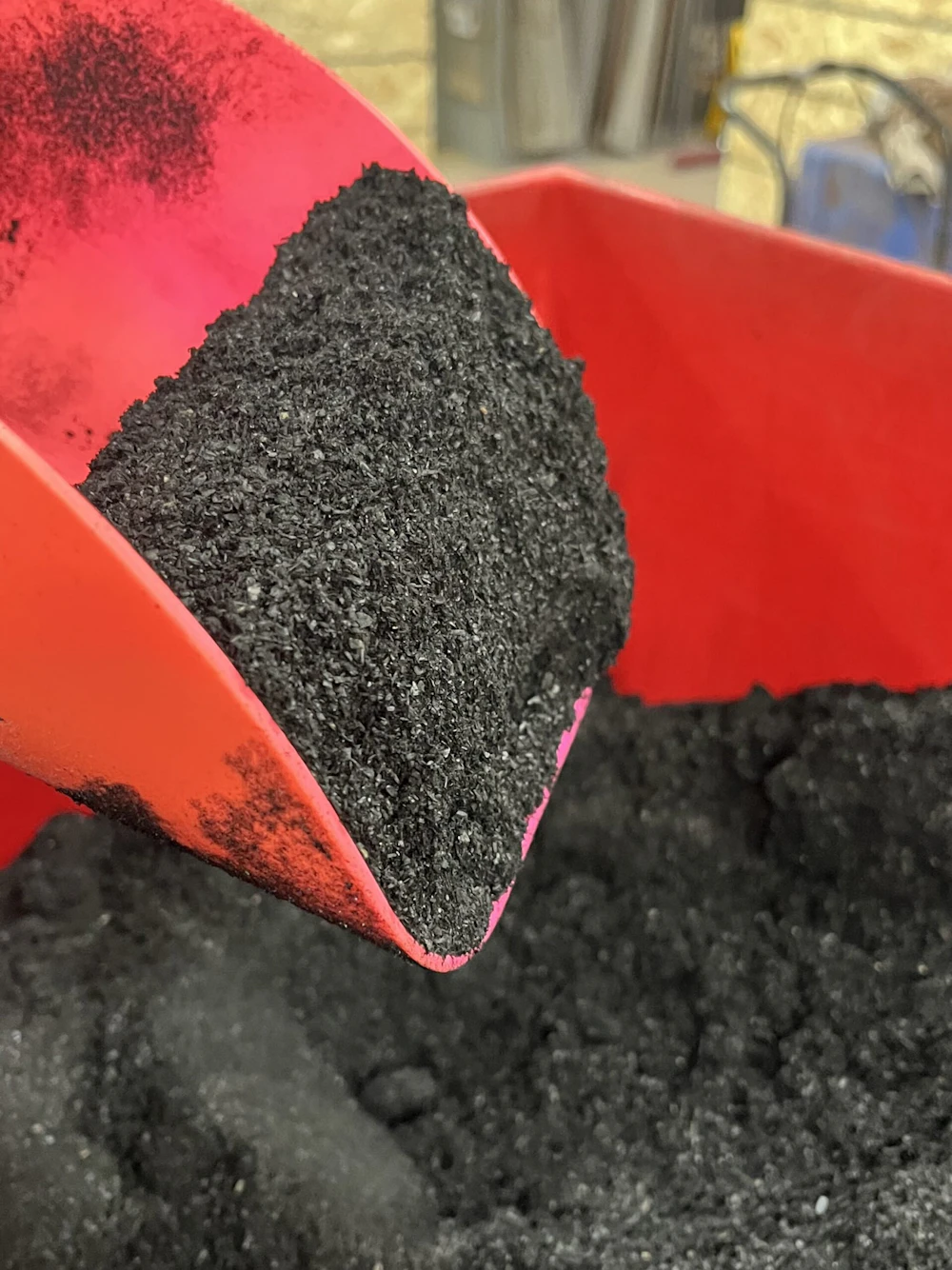
Scientists at FPL have been experimenting with making biochar from wood chips and waste wood through different processes over the last decade. Several active FPL research projects are evaluating biochar for making fire-resistant building materials, adding nutrients to soil, and removing toxins from the environment.
One such category of toxins is per- and polyfluoroalkyl substances, or PFAS, which have been linked to health problems including cancer, higher cholesterol, and lower One such category of toxins is per- and polyfluoroalkyl substances, or PFAS, which have been linked to health problems including cancer, higher cholesterol, and lower birth weights. These chemicals are a particularly sticky environmental problem. In addition to being long-lived, they are everywhere: the name refers to a group of thousands of chemicals that have leached into soil and water. Nearly half the country’s tap water has been found to have one or more PFAS in it.
The same properties that make biochar useful as a soil supplement also make it a magnet for toxins. Research has pointed to biochar’s ability to capture PFAS, which are nicknamed “forever chemicals” for their tendency to linger in the environment.
“Research has pointed to biochar’s ability to capture PFAS, which are nicknamed “forever chemicals” for their tendency to linger in the environment.”
But biochar’s tremendous flexibility and variety also make it a research challenge: there is no one-size-fits-all approach. Many variables, from how it’s processed to how it’s applied, can affect the results.
At the University of North Carolina at Greensboro, Professor Jianjun Wei is about halfway through a two-year FPL grant project to test modified wood-based biochar for removing mercury and PFAS from water. In the first phase, Wei studied the effectiveness of biochar panels enhanced with sodium carbonate and sulfur. The initial results, he said, are exciting: The biochar removed at least 96 percent of mercury at varying concentrations.
Biochar is often pulverized so that it can be scattered over soil. But FPL is investigating panels—effectively, a big piece of biochar—which Wei noted ”provides a big advantage” over a powder. “We just put the panel block itself into the water,” he said. “Then, after it absorbs all the mercury, we can easily get the panel back.” In the case of mercury, the metal could be rinsed out and disposed of, and the panel reused.

In the next phase of Wei’s project, set to be complete by July 2026, he will design a version of biochar that is modified to target PFAS. That experiment will be more complex, he said, because, unlike mercury, PFAS comprises many different toxins—some 15,000, according to the EPA. Adding to the complexity, detecting PFAS in water can be difficult at low concentrations, and some PFAS are harder to separate from water than others.
More research on effective types of biochar and their applications towards PFAs is required, but according to Pia Ramos, an environmental engineer for the consulting firm GSI Environmental, there’s a lot of promise.
When she was a postdoctoral research scientist in the U.S. Department of Agriculture’s Agricultural Water Efficiency and Salinity Research Unit, Ramos conducted experiments on commercial biochars’ ability to remove PFAS. The results, published in the journal Biochar in March 2025, found that the materials could indeed remove five types of PFAS with varying degrees of success.
Given the volumes of water that would need to be treated, both for agricultural and household use, Ramos said, “You need something that is the cheapest that it can be. I think that’s why biochar is pretty attractive.”
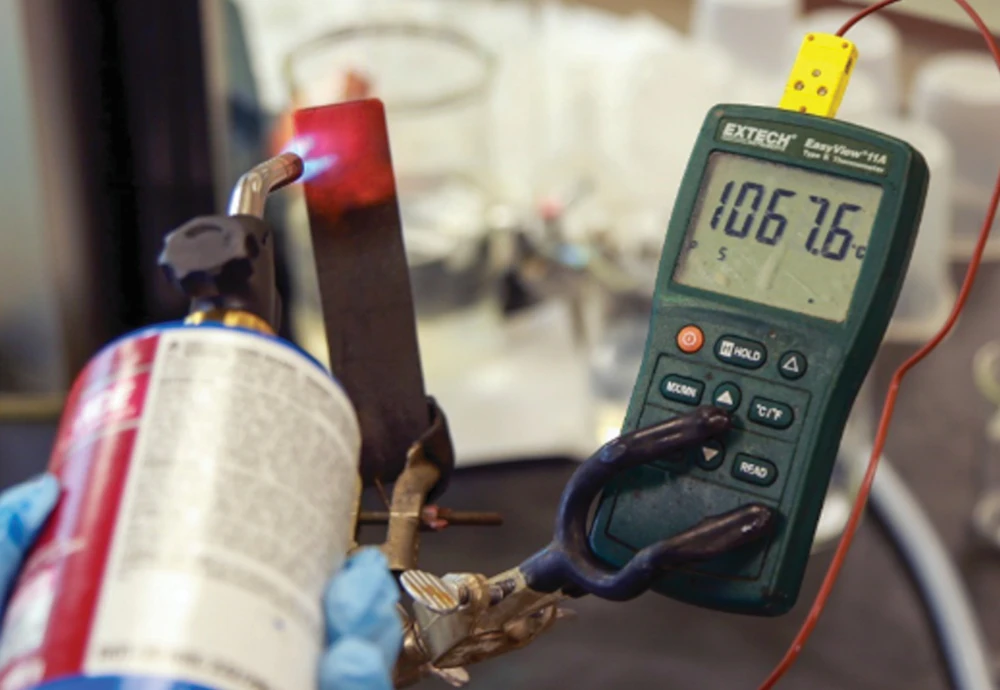
Ramos’s study highlighted one commercial product commonly used for improving soil health, called Rogue biochar, and found that it removed 86 to 98 percent of a subset of PFAS, depending on the type.
Oregon Biochar Solutions, which makes Rogue, has several trials in the works, but “until it has been proven with full-scale testing, we cannot say it is an effective treatment [for PFAS],” said Karl Strahl, the company’s chief operating officer. “Lab testing is showing promising results, though,” adds Strahl, referencing the results of Ramos’s study.
Strahl said that his company has been seeing more curiosity about toxin removal. “We are getting into the very early days of the early adoption of biochar,” he said. “It’s not mass market yet, but there is a high level of interest.”
Take advantage of the Forest Products Laboratory’s wood identification program, a free service that allows members of the public to send in wood samples to learn about their genus.
About the Author
Christina Nunez is a writer and editor who covers science, technology, and innovation.
Want to receive a physical copy of Light & See® in your mailbox? Become an annual donor of $25 or more to start receiving your copy twice a year.
Our Forests Need Us Today.
Your donation powers critical, on-the-ground conservation—from wildfire recovery to watershed restoration—protecting forests for the future.