The Ritual of Recovery
Summer/Fall 2026
Story and Photos by Marley Flueger
The portage looked finished before it was.
After a quarter-mile of ankle-breaking stones and hungry mosquitoes, the woods opened to a patch of light and water. I shifted the canoe, eager for the relief of bare shoulders, when the path veered right and narrowed into little more than a game trail.
So much for that.
I adjusted my grip and kept going, plowing through rib-high tallgrass that snagged my arms and calves like Velcro. The trail pitched upward into bare rock, slick and exposed, then dropped just as sharply.
The canoe felt heavier this year. No, it dawned on me. I’m weaker. It was my fifth year making this sacred, sticky pilgrimage.
Every summer, I return to the Boundary Waters Canoe Area Wilderness in Minnesota’s Superior National Forest with a shifting flotilla of women in our thirties. A few are old friends. Others are new. One I see only here, among the spruce and granite, and I cannot imagine her anywhere else.
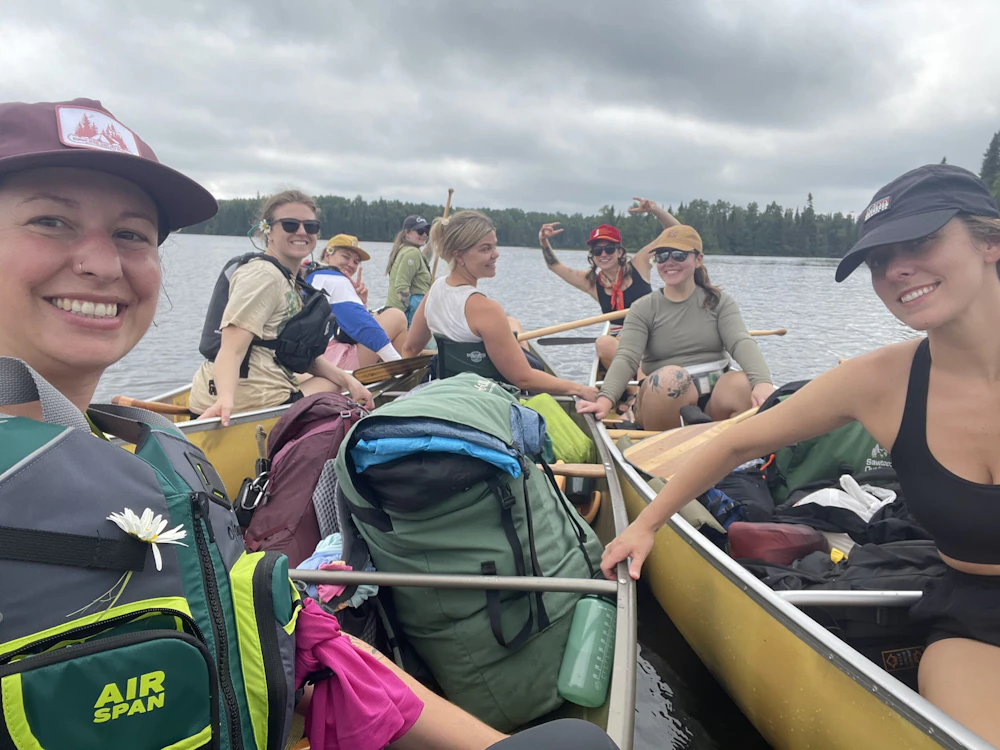
The group is never quite the same. Some have portaged beside me year after year. Others arrive wide-eyed, entering this endless wilderness for the very first time. We are nurses and hairdressers, mothers and talk-show hosts. Titles that matter less the farther we paddle.
Cell service is spotty at best deep in this million-acre chain of lakes as large as Yellowstone and Yosemite combined. I used to consider this a small inconvenience, a fair trade for the ritual of retreat. But in the summer of 2024, the silence felt like mercy.
In the year leading up to that trip, I’d learned what one phone call can do. A doctor on the other end asked if I was driving and told me to take a seat. Then she said words that made the floor drop: cervical cancer. Stage unclear.
After that, every ring trained my body to brace—for more testing, more treatment, more tears. Even months after my first all-clear, my stomach still dropped when the screen lit up, certain the trapdoor would open again.
But out on Lake Saganaga—a seventy-mile ribbon of blue stitched along the Canadian border—there was only one call to answer: keep going. Alive and delightfully unreachable, I sank into the steady work of moving forward, paddling headlong into the wind.
By late afternoon, we slipped into a narrow inlet, claimed a wide campsite in the jack pine, and got to work. As we pitched tents and hauled firewood, exhaustion quieted the fear and vigilance that had become my baseline.
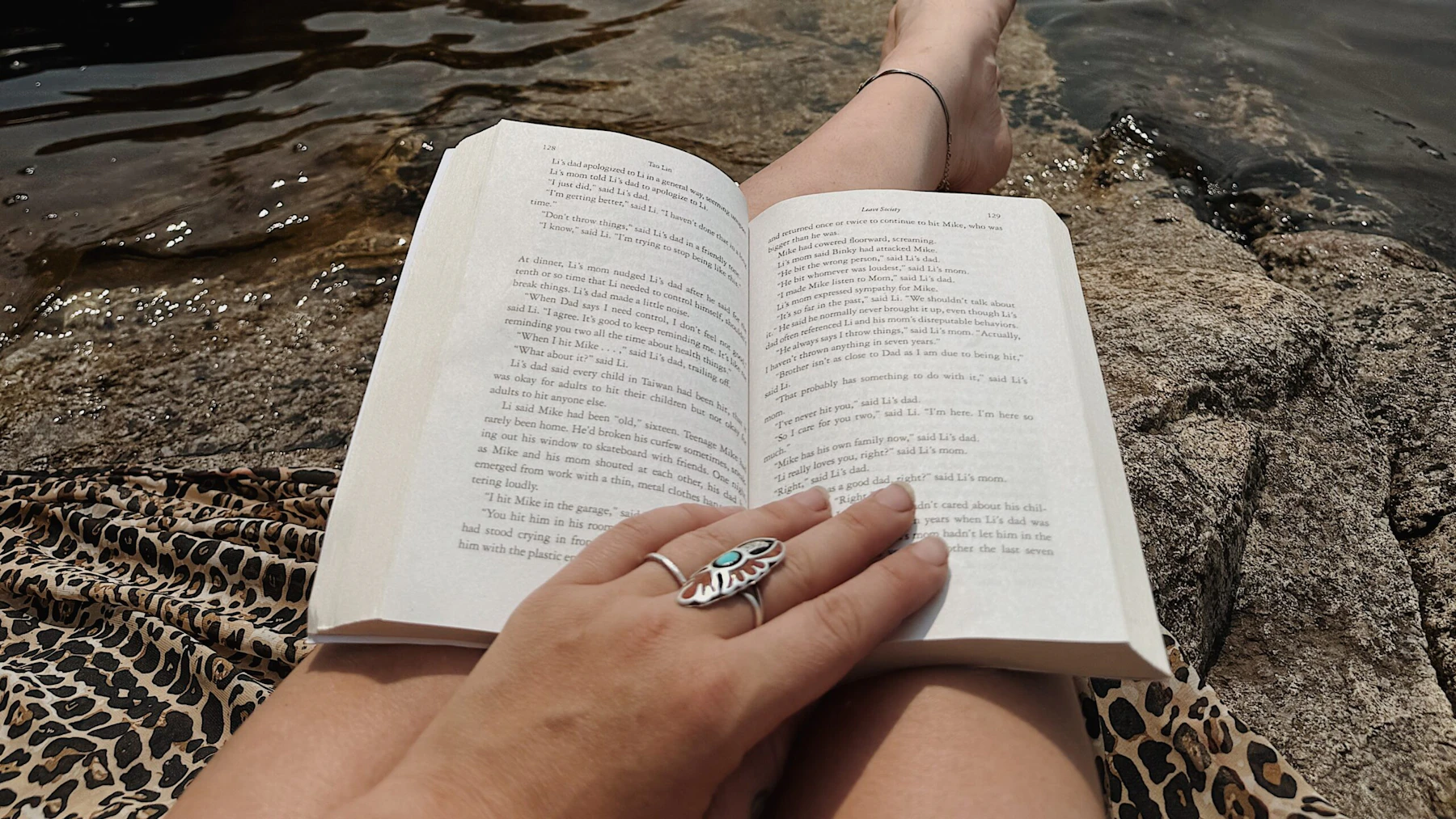
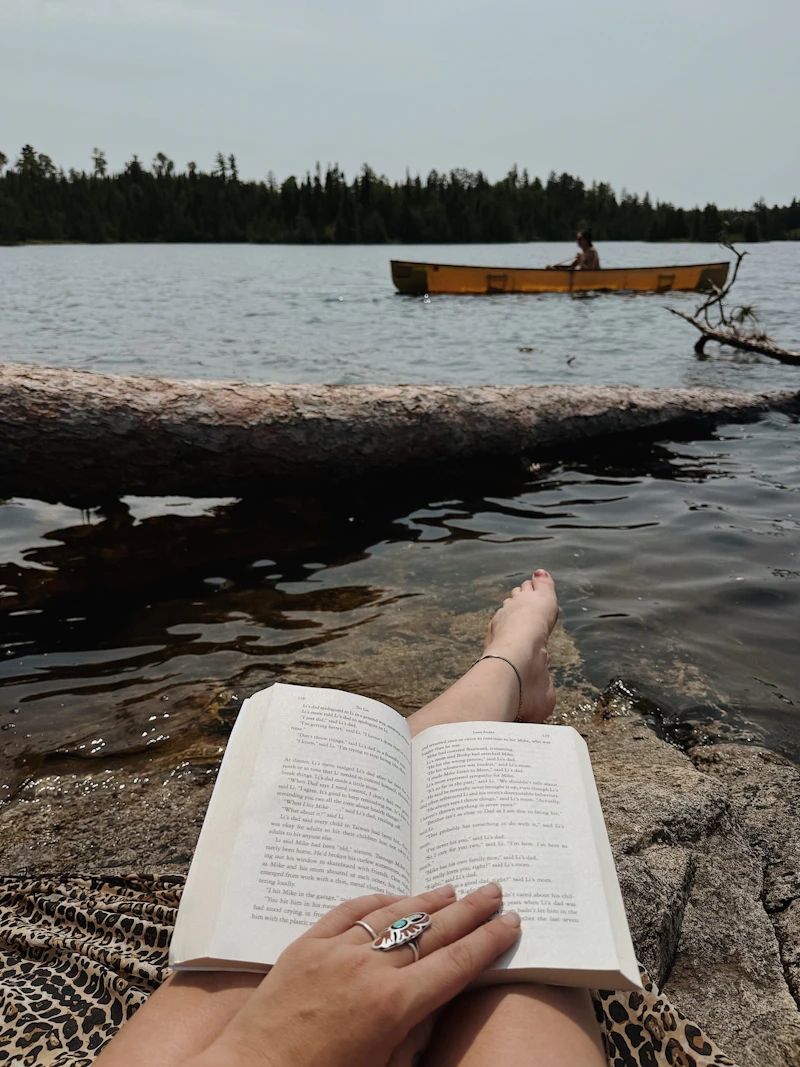
After camp was set, we dragged our chairs onto the great granite slabs that formed our island and sat facing west. The wind had let go. The lake lay still, dark and deep, swallowing the sinking sun.
The rock beneath us was among the oldest on Earth. The view, by contrast, was young.
For more than two billion years, this landscape bore an ancient mountain range worn nearly flat by rain and wind and entropy. Then the ice came. Mile-thick glaciers, slow and merciless, carved deep wounds along fractured fault lines and stripped the land to stone.
When the ice receded, life reorganized itself around the damage. Meltwater settled into the scars. Moose arrived. Loons. Dragonflies. Beaver, who looked at all that devastation and thought: I can work with this.
Cancer cleaves a life the same. There is a before. There is an after. And there is a deep gash fixed in time, around which everything must be rebuilt.
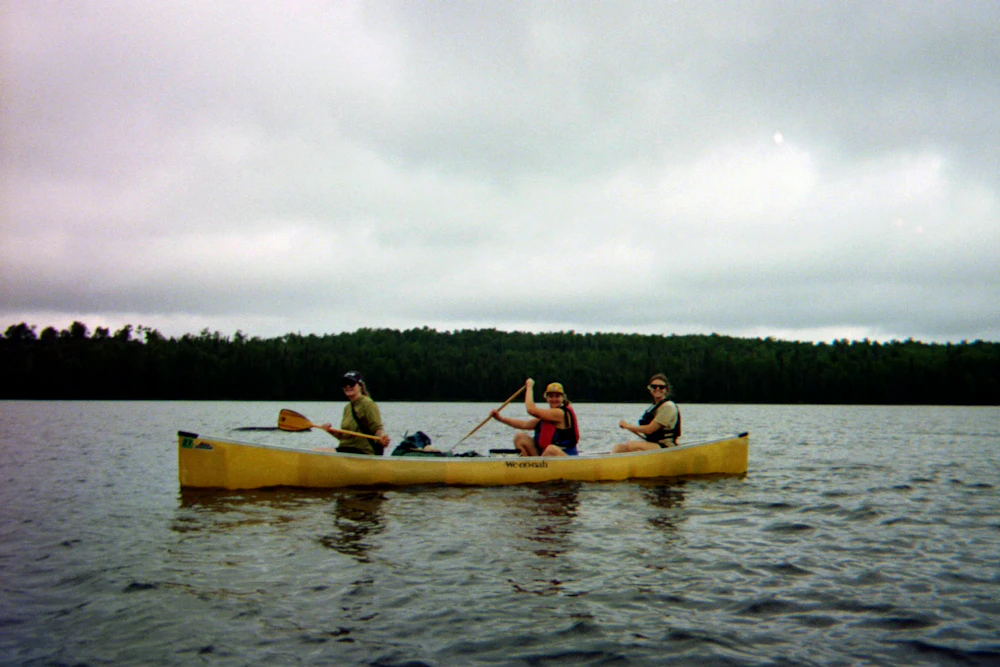
That first summer back, sitting at the edge of Lake Saganaga, I felt myself cross into the after. I didn’t yet know what it would look like—only that something had been taken, and whatever came next would have to adapt to altered ground.
But out here, there was no rush to solve these kinds of riddles. The women around me moved through the small rituals of evening—stoking the fire, passing around food and mugs and bug spray. Doing what needed doing. Asking nothing of me but to tie a few strong knots for the bear bag.
Each summer, I return to the same wilderness with a different circle. The friend who once wept over a miscarriage now beams, passing around photos of her toddler. The light-footed traveler arrives heavy with the grief of a dying father. Someone always comes unsure of what she can endure, and leaves surprised by the answer.
These annual returns have become a mirror held up to passing time. A practice in watching before become after, and in showing up—again and again—for the life you land in.
When I was diagnosed, survival came at the price of my fertility. I had assumed I could choose motherhood when I was ready, the way we all believe time is generous. When that choice slipped away, grief followed, along with a nagging sense that I was now, somehow, less of a woman.
But year after year, the Boundary Waters shows me otherwise.
Out here, womanhood isn’t measured by what a body can produce. In the glow of the fire, it becomes something lived and practiced—best shared beneath towering trees, loons singing like showgirls drunk on moonlight.
“Out here, womanhood isn’t measured by what a body can produce. In the glow of the fire, it becomes something lived and practiced.”
On the way out this year, I found myself alone on the long portage. It was early. Overcast. The wind sharp and insistent, the way it always seems to be on exit day.
The path was still narrow, still punishing. But deep in the tallgrass, the clouds broke, and light spilled through. Goldenrod nodded beside my boots. Purple asters lined a beaver-worked creek. I broke a few stems and tucked them into my kerchief. They wouldn’t last. That was the point.
I paused there, bent to the flowers on the empty trail. Then she appeared, triumphant. A woman, her first year out, charging through the tallgrass with a canoe on her shoulders, arms trembling, face split open in a grin.
As she passed, my wild bouquet brushed the hull of her canoe. And I thought of all the versions of womanhood I’d seen along those trails. All the versions I’d been. Before the rupture. After the reorganizing.
Beneath my boots lay land shaped by ancient damage.
Each year, I walk its old wounds.
Each year, I leave some of mine behind.
That seems to be the agreement.
Bring your binoculars when paddling through Superior National Forest. The Boundary Waters Canoe Area Wilderness is one of the country’s most biodiverse birding hotspots. Recognized by the National Audubon Society as a globally important bird area, the wilderness has 225 species, 163 of which nest in the area.
About the Author
Marley Flueger is a writer and copywriter based in Milwaukee, Wisconsin, and raised near Minnesota’s many lakes and rivers. She works with mission-driven organizations and writes about land, food, community, and the complicated art of being human.
Want to receive a physical copy of Light & Seed® in your mailbox? Become an annual donor of $25 or more to start receiving your copy twice a year.
Our Forests Need Us Today.
Your donation powers critical, on-the-ground conservation—from wildfire recovery to watershed restoration—protecting forests for the future.