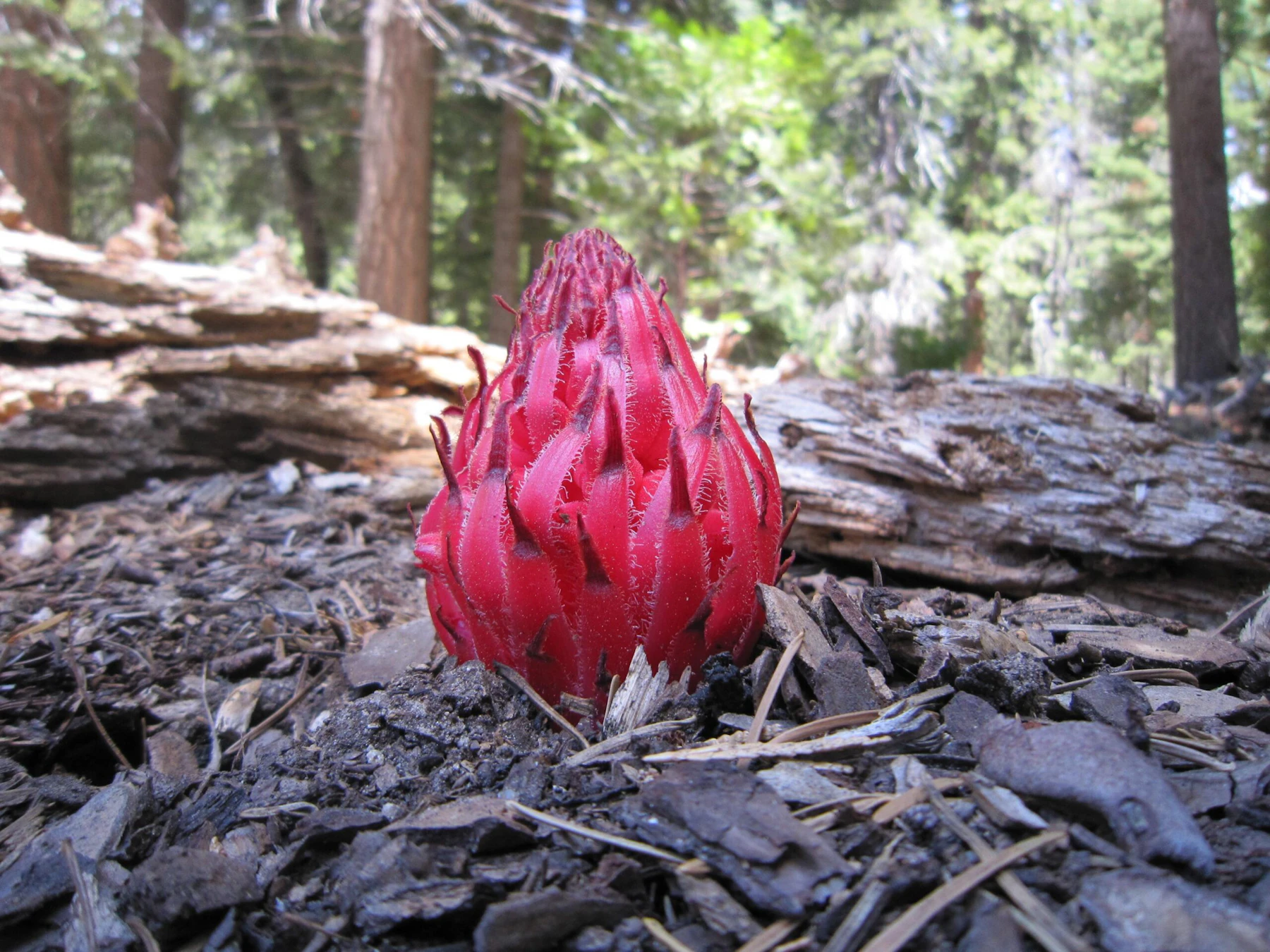
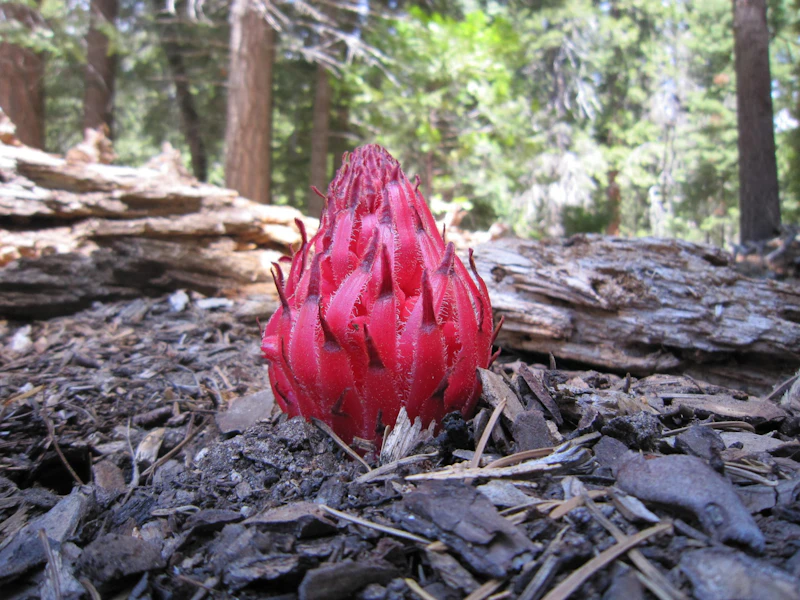
The snow plant’s scientific name, sarcodes sanguinea , roughly translates to “the bloody flesh-like thing.”
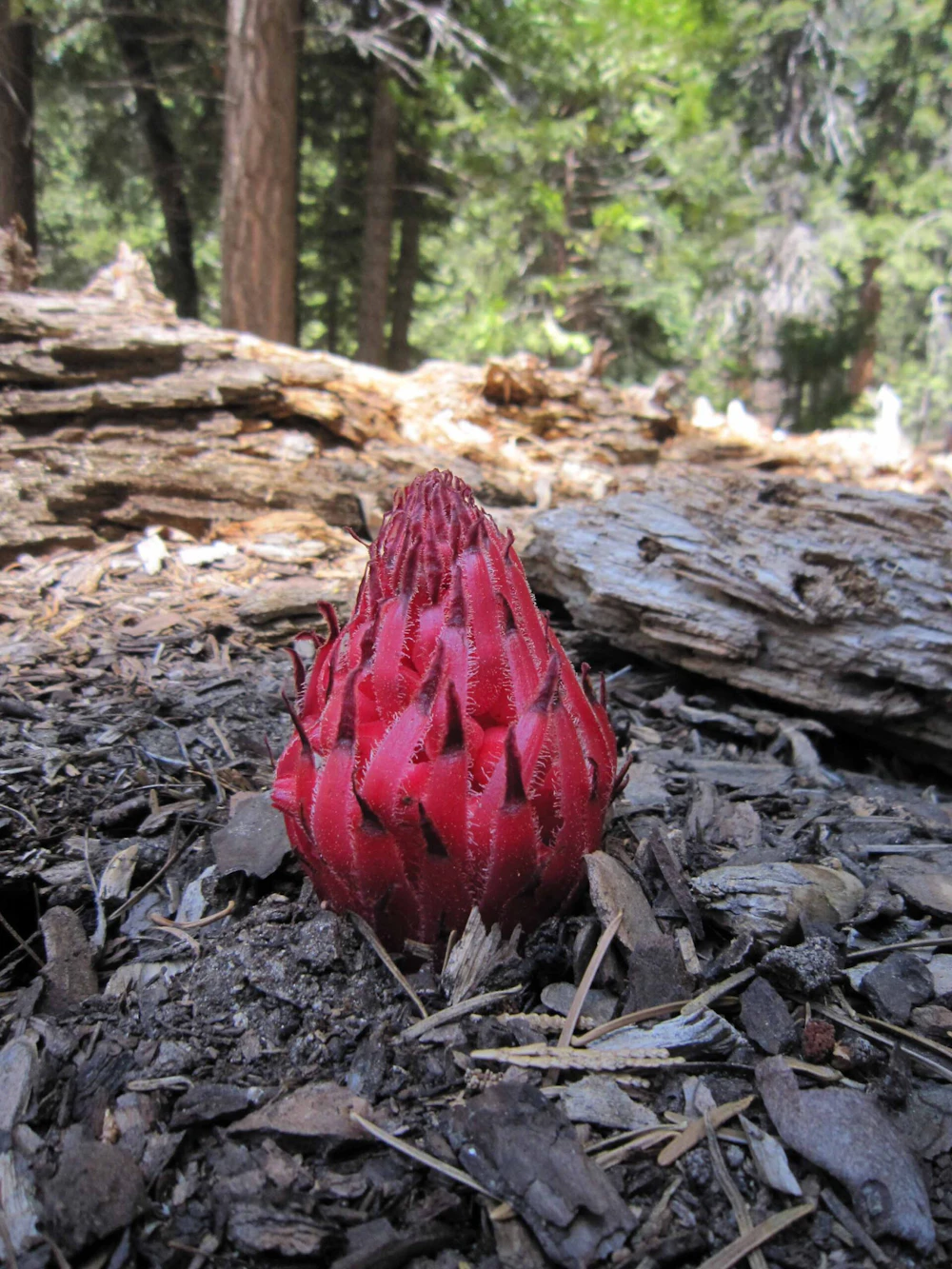
The snow plant does not need the sun to survive.
It derives its nutrients from fungi in the soil, placing it in the mycotrophic category.
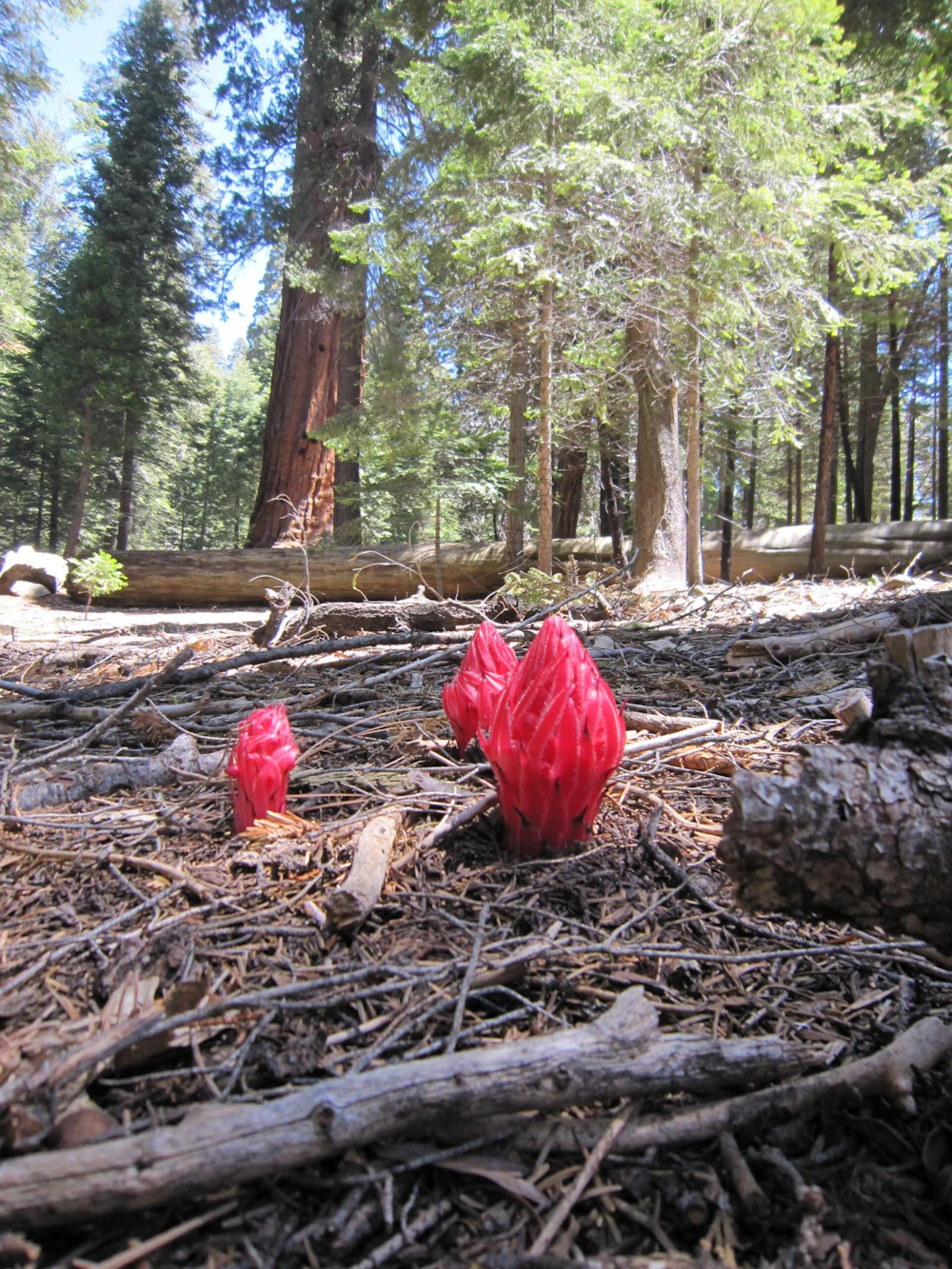
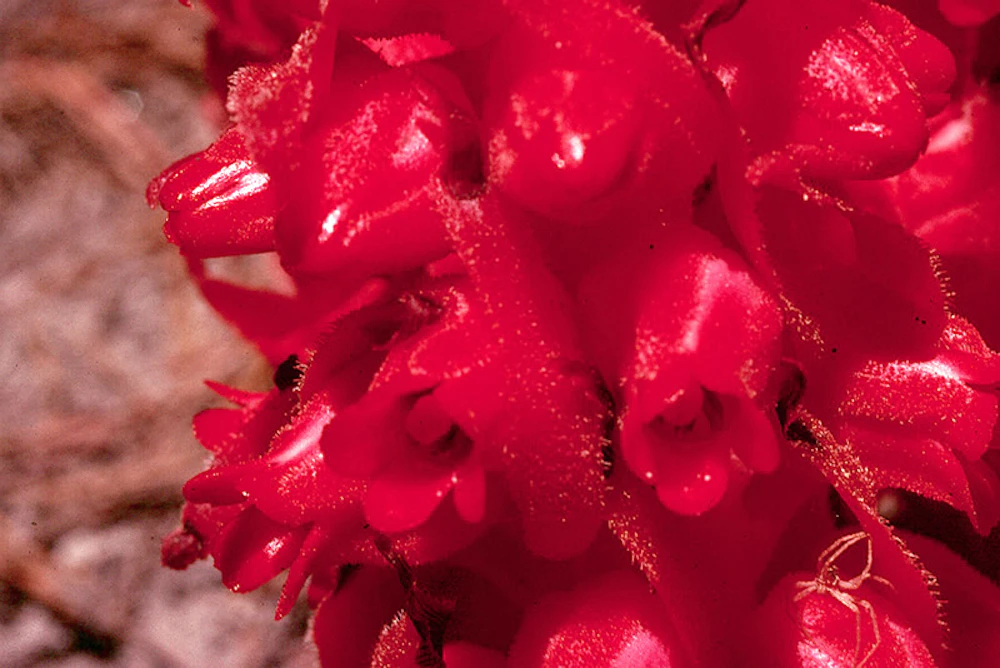
Snow plants pop out of the ground shortly after the snow melts in late spring.
It’s bright red. You’re unlikely to confuse it with anything else on the ground.
They usually grow in colonies.
California can nearly claim the snow plant as its own – they’re mostly found in conifer forests in the state. Portions of Western Nevada have also reported the snow plant.
Learn more about snow plants here and here.
Have you come across a snow plant? We’d love to hear about it! Let us know in the comments below or on our Facebook page.


Our Forests Need Us Today.
Your donation powers critical, on-the-ground conservation—from wildfire recovery to watershed restoration—protecting forests for the future.