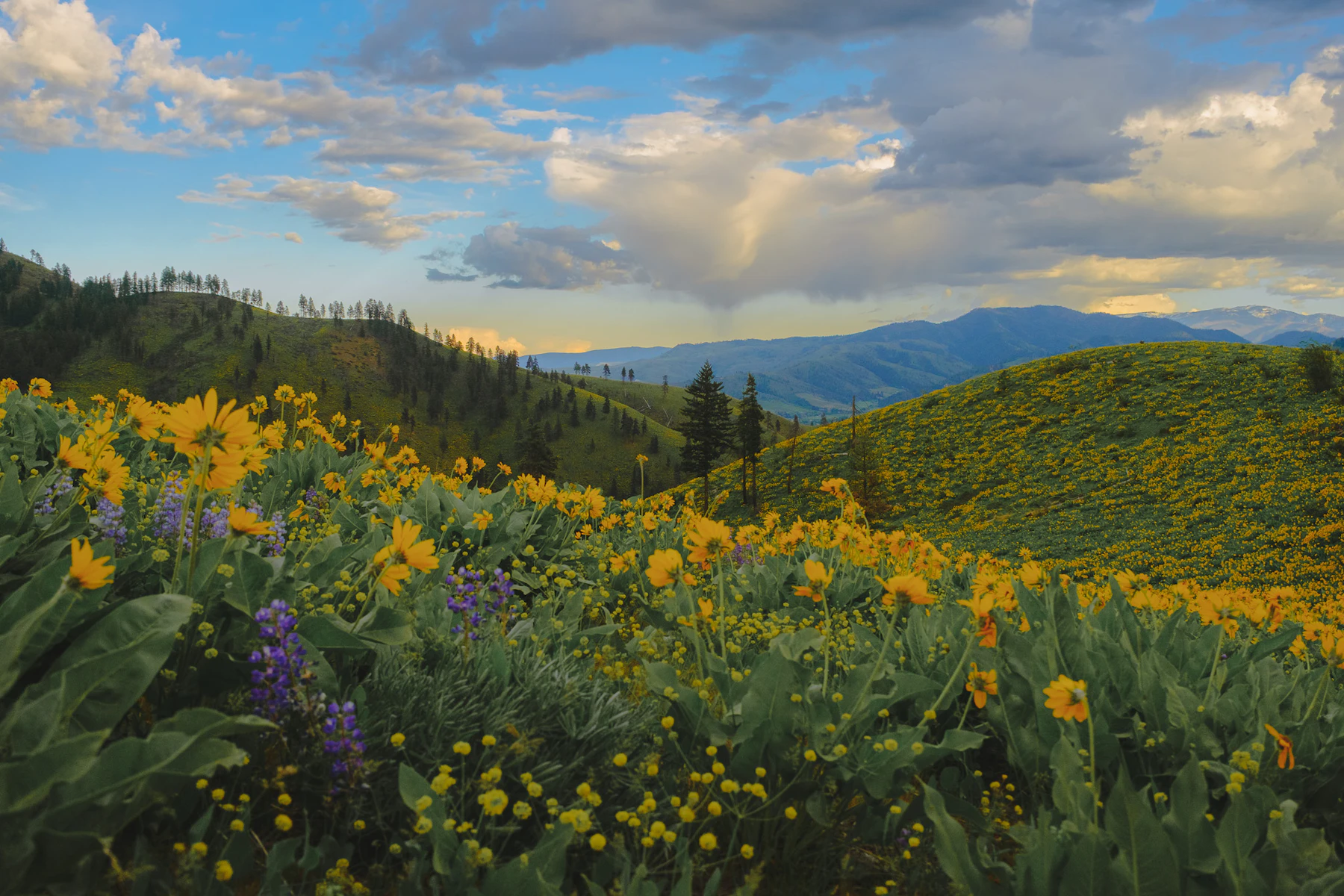

Meadows are more than scenic backdrops, they are ecological powerhouses. From sun-drenched alpine slopes to water-saturated lowlands, meadow ecosystems quietly sustain our forests and communities. Understanding what makes them thrive and what threatens them is the first step toward protecting them.
Upland Meadows
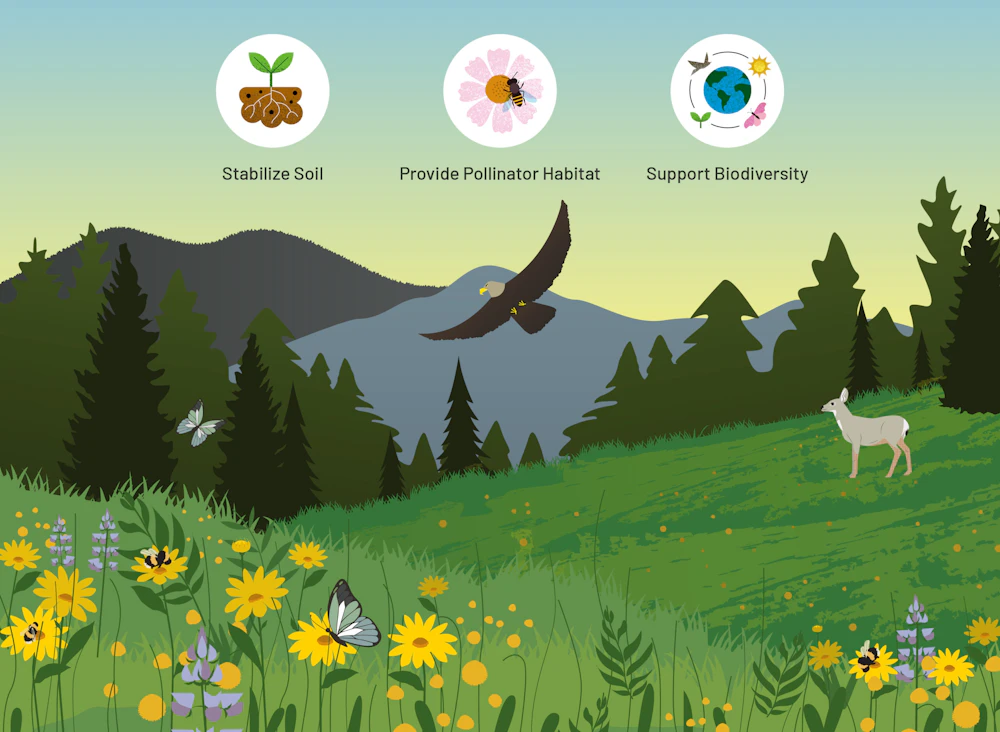
Upland meadow ecosystems are what many of us picture when we think ‘meadow’: sunny, open fields of native grasses and wildflowers tucked into a mountain side or high on a plateau. Exposure and elevation make these meadow ecosystems relatively dry, with well-drained soils and drought-tolerant vegetation that attract pollinators, grazers, and upland birds.
Native grasses and flowers have adapted to these harsh, dry conditions by developing deep root networks that deliver water and nutrients to the surface. These root networks stabilize soil, reducing erosion.
Above ground, flowers provide critical pollinator habitat while grasses provide a mosaic of meadow and woodland edge habitats within forests supporting an incredible array of biodiversity.
Wet Meadows
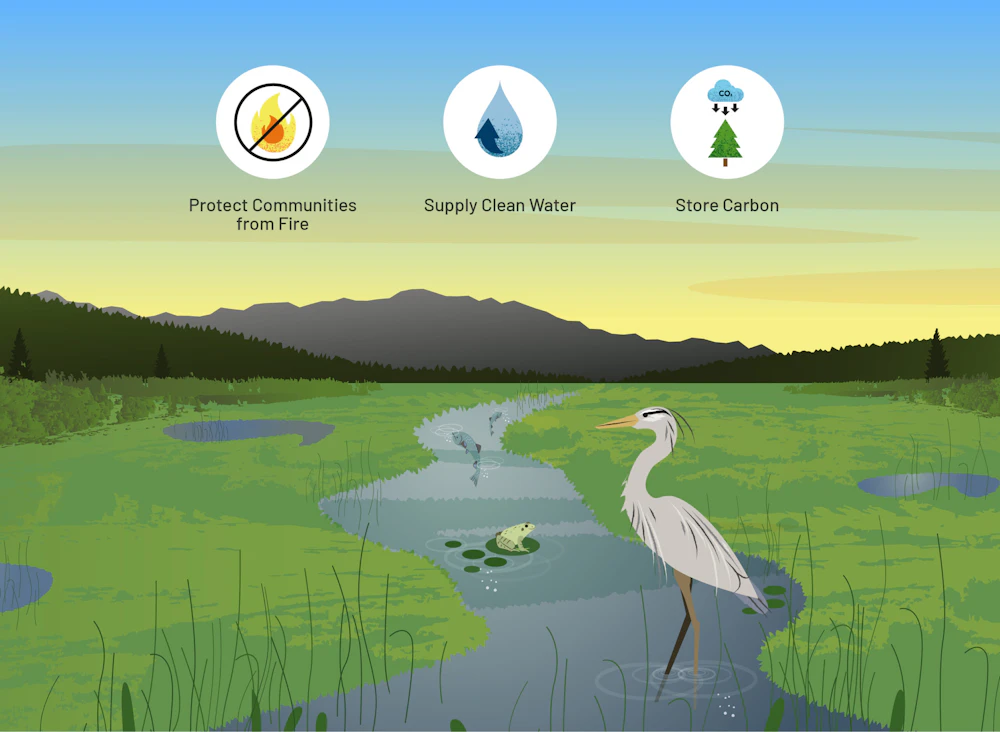
In contrast, wet meadow ecosystems are in low-lying areas between aquatic and upland habitats. Marshes, swamps, bogs, and fens and all types of wet meadow ecosystems. In these environments the water table remains close to the surface most of the year, and herbaceous plants like rushes and sedges and wildlife like amphibians, waterfowl, and riparian species thrive.
Wet meadows play a crucial role in our water supply by holding and filtering water like a sponge, supplying clean water to downstream communities, and creating a drought and flood resistant landscape. High water tables also provide natural fire breaks, protecting nearby communities from wildfire.
The wet conditions in these meadows also make great long-term carbon sinks. The high level of plant life supported by wet meadows can absorb greater amounts of carbon, and because the soil is so saturated, it takes longer for plants to decay and release that carbon back into the atmosphere.
Restoring Disappearing Ecosystems
Despite the invaluable benefits both upland and wet meadows provide to larger forest ecosystems and human communities, they face serious threats. Trees are encroaching on upland meadows, threatening crucial wildlife habitat and increasing wildfire risk. Many once productive wet meadows have been drained, plowed over, or channeled in efforts to control their waters without recognition of the storage and filtration benefits lost along the way.
At the National Forest Foundation (NFF), we are restoring the meadows that our National Forests and communities depend on. Across the Colorado River Basin, we are using low-tech and high-tech solutions to bring wet meadow ecosystems back to life and address the water crisis facing 40 million people in the West. And in the Sierra Nevada, we are beginning to apply fuels management practices to not only protect communities from wildfire but preserve upland meadows from encroaching vegetation.
Together, we can repair and heal the land and waters that sustain us by bringing back vibrant forests, flowing streams, and resilient habitats for future generations.

Our Forests Need Us Today.
Your donation powers critical, on-the-ground conservation—from wildfire recovery to watershed restoration—protecting forests for the future.