Restoring the Colorado River Watershed through Nature Based Solutions
Nature-based solutions are bringing life back to streams and wetlands in the Colorado River Watershed, securing water for people, wildlife, and the future.
The rivers and streams of the Colorado River Watershed are the lifeblood of the American West.
They supply clean drinking water to nearly 40 million people, support working lands and wildlife, and shape some of the region’s most iconic landscapes. But after decades of degradation from diversions, development, and drought, many waterways no longer function as they should. Without action, forests and communities face growing risks from wildfire and water scarcity.
The National Forest Foundation and its partners are taking action with innovative, process-based restoration techniques that work with nature to heal degraded streams, reconnect wetlands, and store precious water underground. From process-based restoration at Soda Creek to large-scale floodplain reconnection at Little Green Valley Wet Meadow, these projects show how simple, scalable solutions can make a big difference for water, wildlife, and the communities that depend on both.
How did we get here?
Long before towns, ranches, or human built dams, beavers were the natural engineers of the Colorado River and its many streams and rivers that flowed into it. Their dams slowed water, spread it across floodplains, and created lush wetlands teeming with life. But as beaver populations declined due to trapping for furs and streams were straightened or diverted, this natural storage system vanished.
In addition to the absence of beavers, increased agricultural and development pressures in the West have dramatically transformed the landscape. Now, many stream systems are cutting deeper channels and rushing the water downstream quickly instead of allowing it to soak into the surrounding area. When droughts hit, these systems dry out quickly, leaving wildlife and communities without adequate water and vulnerable to wildfire.
Using Nature’s Tools: What is Process-Based Restoration?
Process-based restoration means working with natural processes instead of fighting them. By implementing process-based restoration projects throughout the landscape, we are creating long-term sustainability by relying on natural processes rather than continuous human intervention.
In addition to providing direct habitat improvements, process-based restoration techniques also help reduce downstream flooding, filter sediment and pollutants, and act as natural buffers during drought and wildfire. They’re cost-effective, scalable, and built to adapt and evolve.

Why Process-Based Restoration Works
- Reconnects streams and rivers to their natural floodplains
- Slows and spreads water to reduce flood risk and recharge groundwater
- Supports habitat for fish, wildlife, and native plants
- Builds resilience to drought, fire, and climate extremes
- Uses simple, affordable techniques that let nature do the work
Two Different Approaches to Achieve the Same Outcome
Soda Creek, Colorado
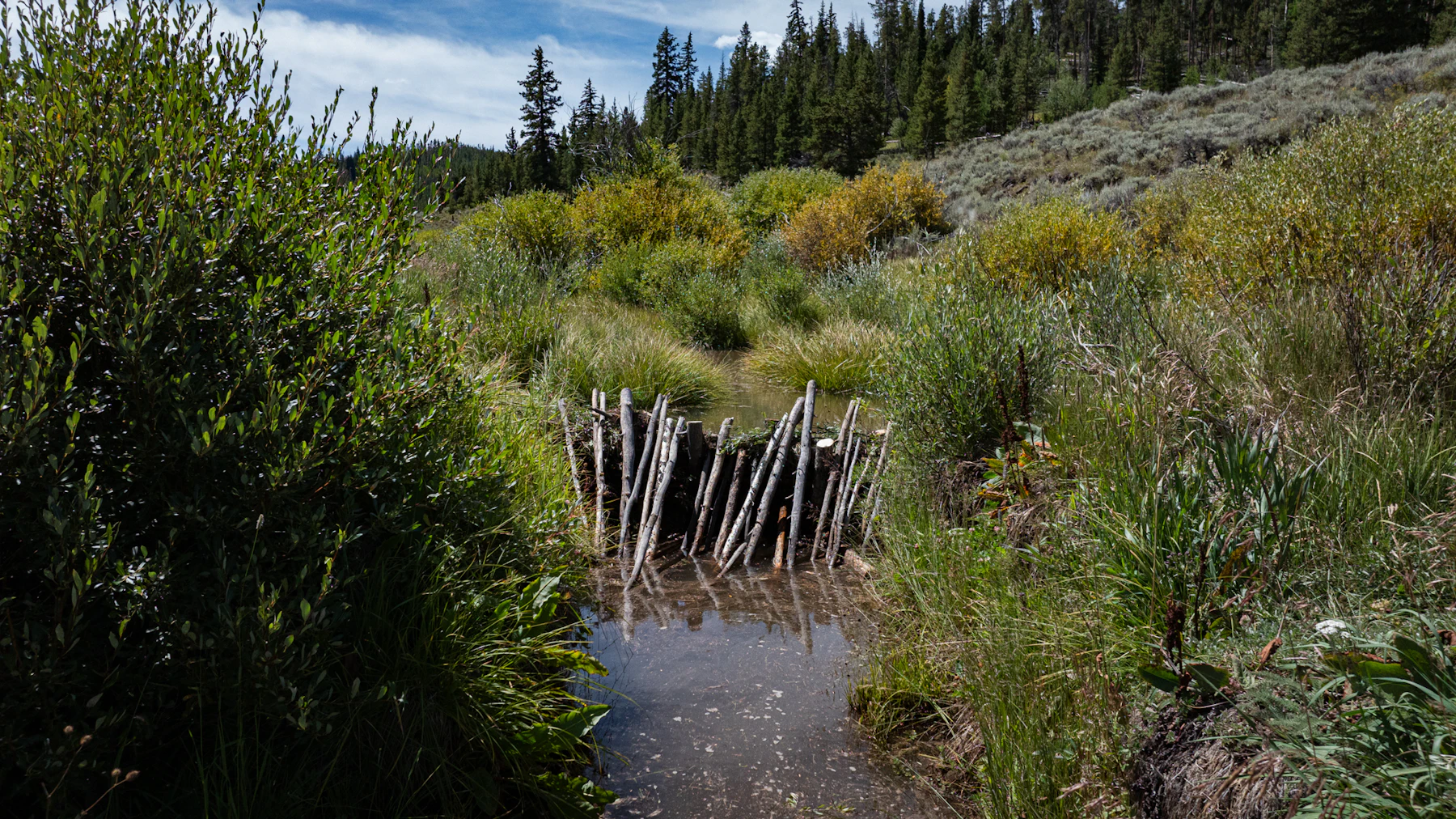
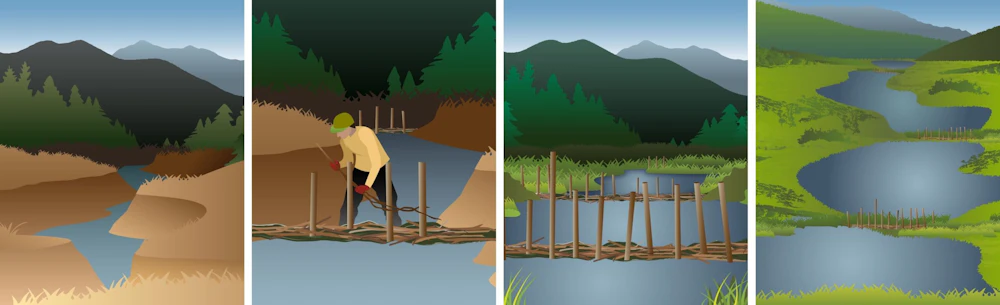
In Colorado’s headwaters, Soda Creek shows the power of nature-based solutions in action. Here, the National Forest Foundation and local partners installed a series of beaver dam analogs (BDAs), simple, human-built structures made by weaving sticks and woody material into stream channels to gently back up water and slow the flow.
Just like natural beaver dams, these BDAs hold water on the landscape longer, forcing it to spread it onto the floodplain, raise the water table, and create wet, resilient habitat for fish, birds, and other wildlife. Even where beavers are gone or slow to return, BDAs help streams heal themselves.
Already, the work at Soda Creek is paying off: crews have documented improved stream flows, cleaner water, and the return of native wetland plants that stabilize soil and filter runoff, all of which are critical building blocks for a healthier, more resilient watershed.
Little Green Valley Fen, Arizona
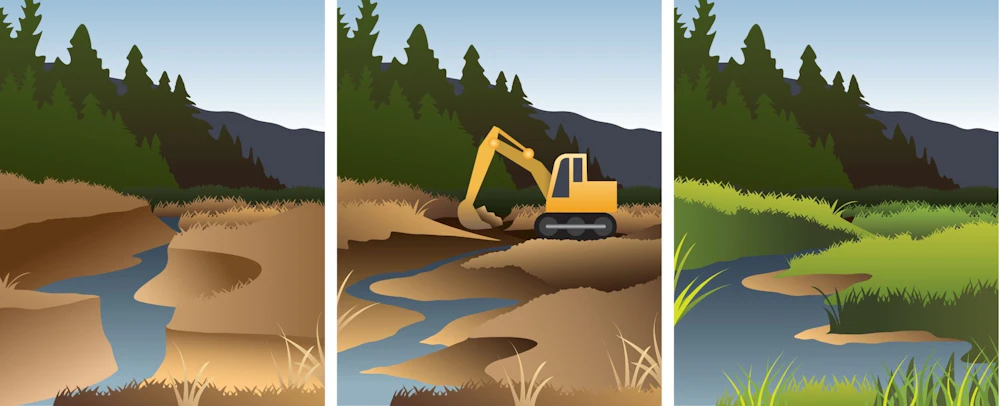
Farther south, in the high country of northern Arizona, the Little Green Valley Fen project takes process-based restoration to a bigger scale, using more intensive tools and heavy machinery to heal one of the region’s rarest wetland habitats.
Unlike low-tech BDAs, restoring the fen required regrading large sections of the floodplain and reshaping the landscape so water can once again spread out, soak in, and recharge the groundwater that feeds this unique wetland.
This innovative work is rebuilding natural water storage, boosting drought resilience, and bringing back healthy wetland plants and wildlife habitat. By combining high-tech machinery, local partnerships, and deep respect for the land’s natural processes, the project shows how process-based restoration can adapt to different places, always working toward the same goal: healthy streams, thriving habitat, and more resilient watersheds.
Healthy watersheds don’t stop at property lines. The NFF works with the U.S. Forest Service, local non-profits and youth corps, diverse funders, and private landowners to design, build, and monitor restoration that lasts.
From the Colorado Rockies to the forests of northern Arizona, these projects show what’s possible when people and partners come together to work with nature to secure clean water, healthy forests, and vibrant communities for generations to come.
The largest, most destructive wildfires in California’s history have occurred in the last ten years—everything is at stake for mountain…
The streams and creeks of the LBJ National Grassland flow into the Trinity River Basin, which supplies water for over…
Protecting biodiversity and fostering partnerships for resilient forests.
Field Ranger Program Connects Diverse Communities to Forests in Southern California
Seeing the impact first hand on the Grand Mesa, Uncompaghre and Gunnison National Forests
Anna's family has been planting trees for 50 years. Now she is helping build a sustainable model to meet the…
Nature-based solutions are bringing life back to streams and wetlands in the Colorado River Watershed, securing water for people, wildlife,…
Seven Years of Reopening Trails After the Eagle Creek Fire
Our Forests Need Us Today.
Your donation powers critical, on-the-ground conservation—from wildfire recovery to watershed restoration—protecting forests for the future.