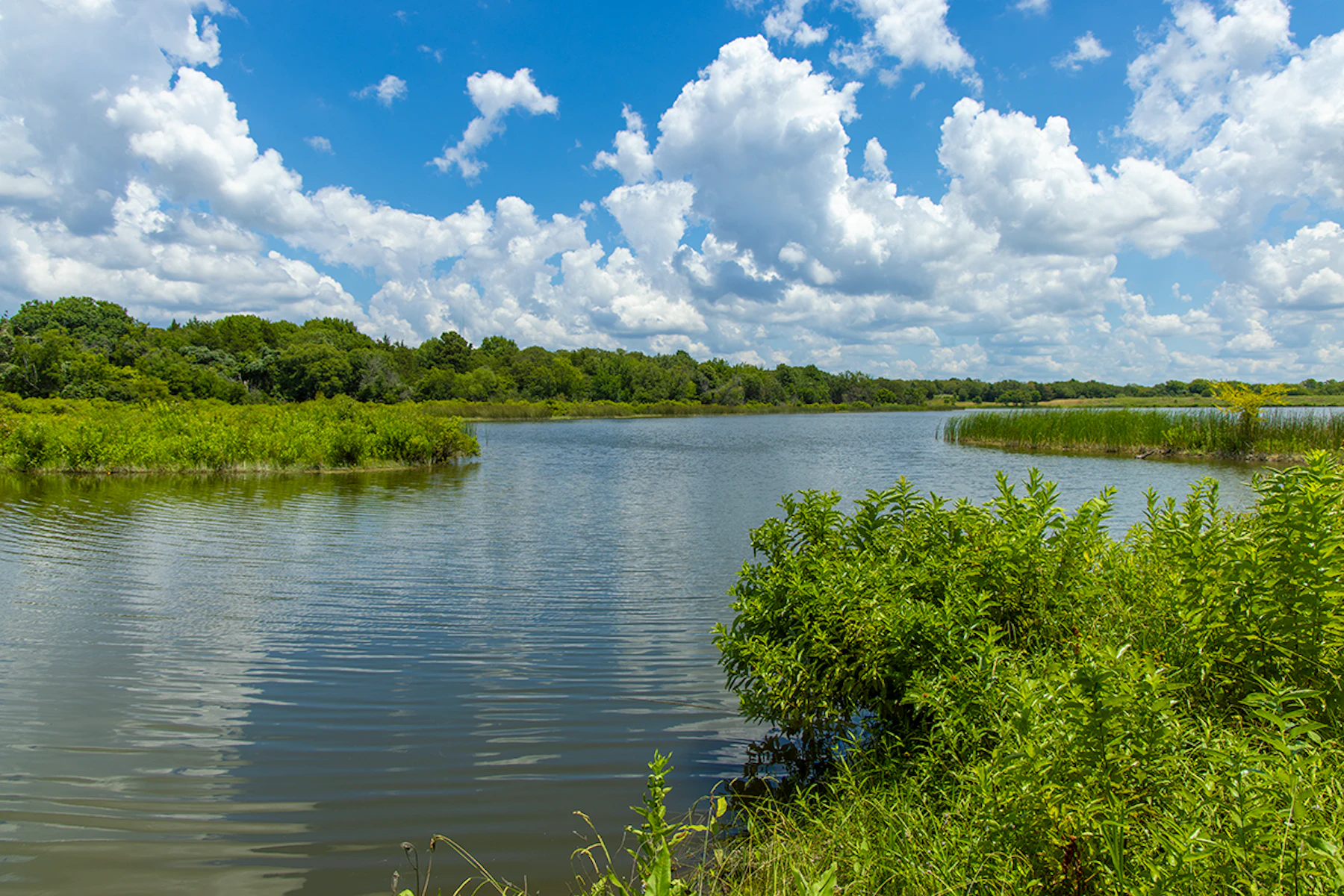
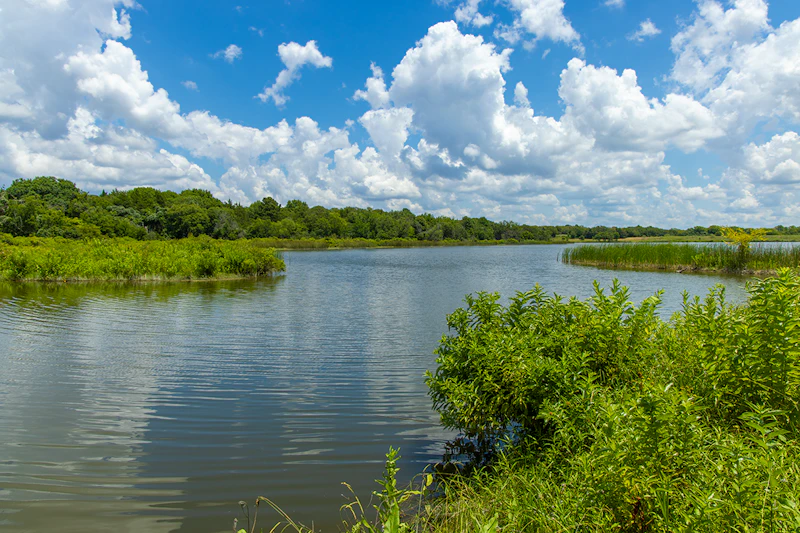
Just an hour’s drive from Dallas, the open plains and quiet waters of the Lyndon B. Johnson (LBJ) National Grassland have long been hidden gems of the North Texas prairie.
To many of its urban visitors, the LBJ National Grassland is an easy place to slip away from the city to hike, bike, fish, and enjoy nature. But the connection between the Grassland and the urban areas that surround it runs even deeper – in the region’s drinking water.
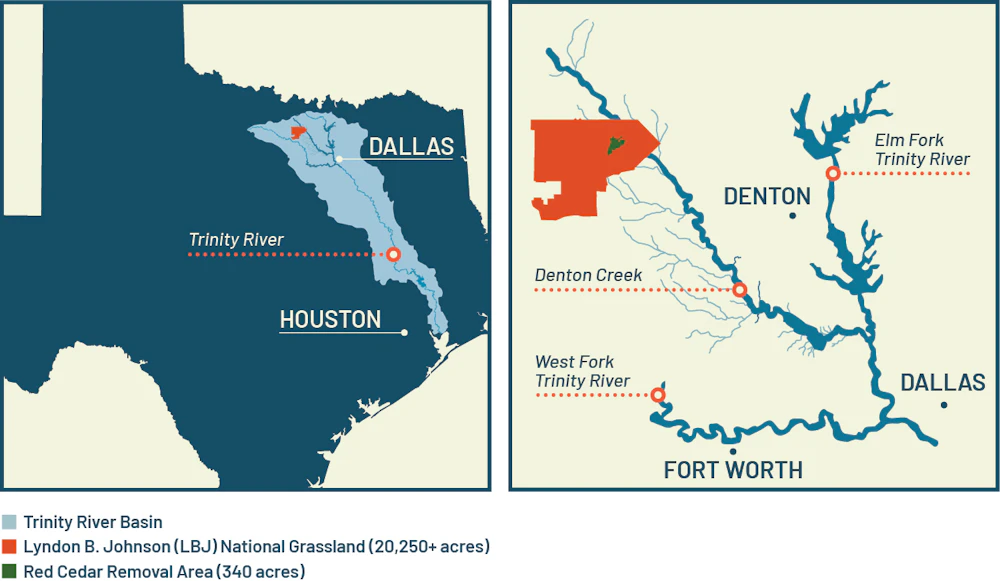
The streams and creeks of the LBJ National Grassland flow into the Trinity River Basin, which supplies water for over 6 million people across the Dallas-Fort Worth metropolitan area. At the Basin’s headwaters, the Grassland’s health directly impacts water supply in the region.
Seizing this unique opportunity to improve watershed resiliency in North Texas, in 2024 the NFF and the U.S. Forest Service began work on the first phase of our multi-year plan to repair degraded stream beds and remove encroaching Eastern red cedar on the Grassland.
By restoring this critical ecosystem, we can increase drought tolerance for the region, decrease the severity of downstream water shortages, and support the abundance and diversity of native plant and animal species.
Restoring Stream Beds
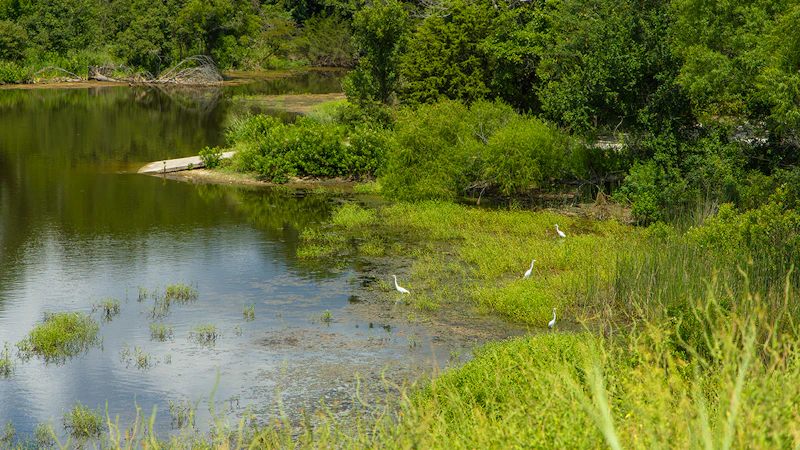
Watersheds with degraded streams do not store or supply as much clean water as streams in good condition. Unfortunately, many of the streams on the LBJ National Grassland are eroded far below their original channel.
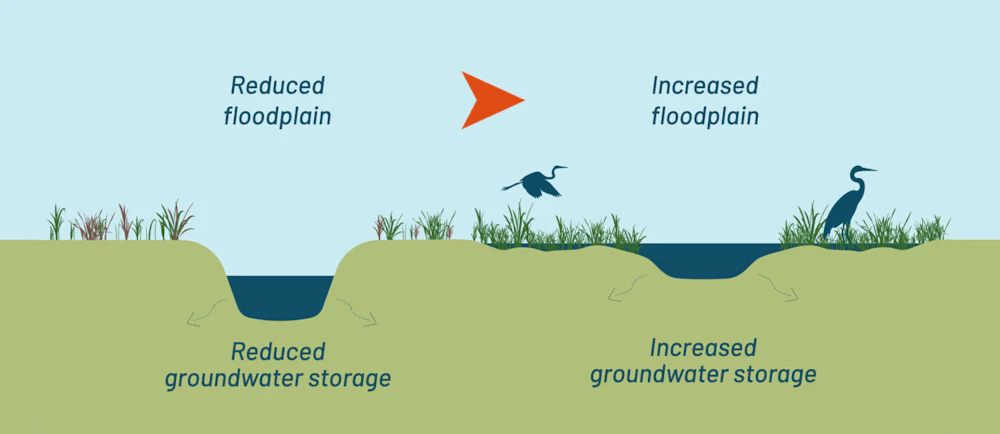
When streams are too deep, water moves faster and is less likely to overflow onto surrounding floodplains. This means there is less time and fewer places for water to be absorbed into the ground, resulting in an ecosystem with less water overall.
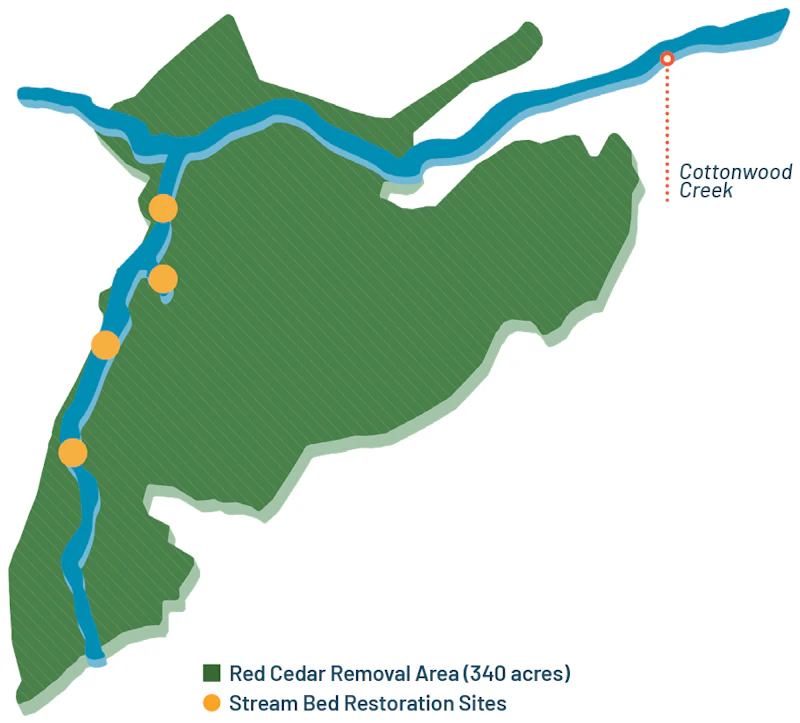
To restore this critical water supply for the area, the NFF is constructing natural barriers along the Grassland’s stream beds. These barriers will help slow water flow, increase groundwater storage, and reduce future erosion.
Removing Red Cedar
The encroachment of Eastern red cedar and other woody species on the Grassland’s native oak savanna has also impacted water supply in the area.
Before European settlement, periodic fires set by lightening or intentionally started by indigenous communities maintained the open prairies of the Great Plains. In the decades since that culture of fire was lost, Eastern red cedars and other woody species have crept across the region, converting grasslands into forests with devastating consequences for biodiversity.
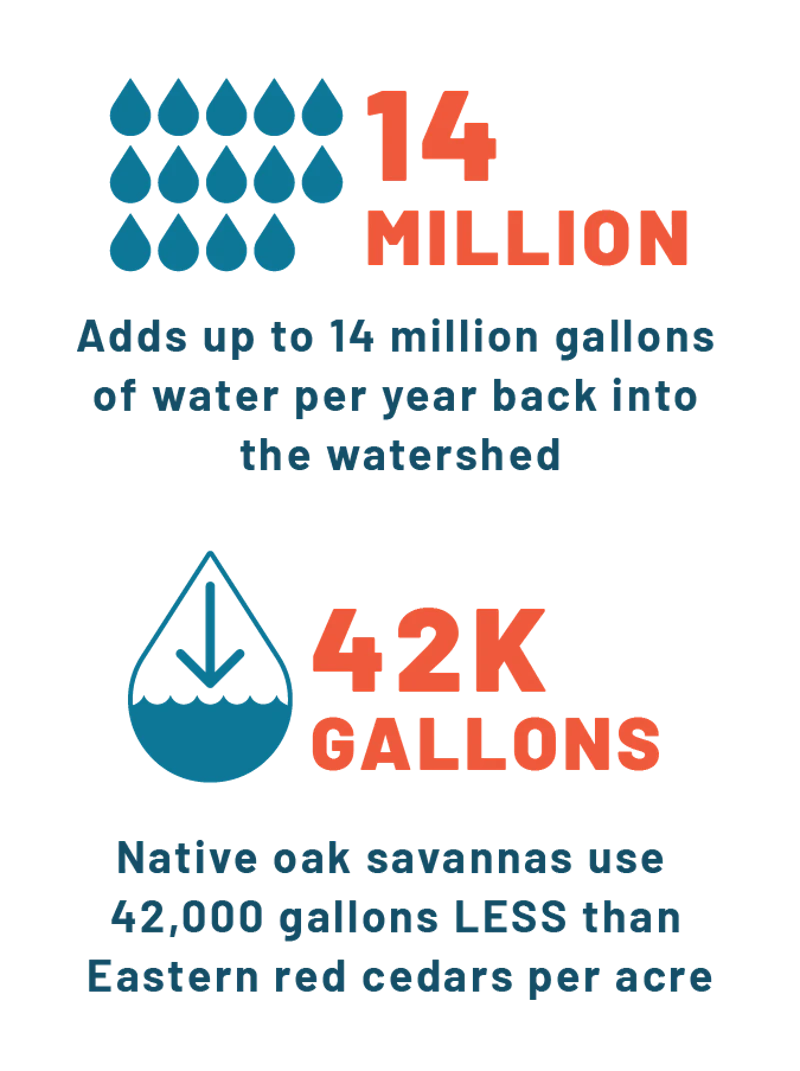
Eastern red cedars need significantly more water per-acre than the Grassland’s native oak savanna, putting a serious strain on groundwater resources. By removing 340 acres of red cedar from the Grassland, we can add nearly 14 million gallons of water back into the ecosystem to support native plant and animal life and improve drought tolerance across the region.
Forest Service lands are the largest source of municipal water in the U.S., providing water to over 60 million people in 33 states. Through our watershed restoration initiatives, the NFF is restoring streams and wetlands, repairing culverts and bridges, and putting water back into rivers so these lands can continue to provide clean water for future generations.
The largest, most destructive wildfires in California’s history have occurred in the last ten years—everything is at stake for mountain…
Protecting biodiversity and fostering partnerships for resilient forests.
Nature-based solutions are bringing life back to streams and wetlands in the Colorado River Watershed, securing water for people, wildlife,…
The streams and creeks of the LBJ National Grassland flow into the Trinity River Basin, which supplies water for over…
Seeing the impact first hand on the Grand Mesa, Uncompaghre and Gunnison National Forests
Field Ranger Program Connects Diverse Communities to Forests in Southern California
Anna's family has been planting trees for 50 years. Now she is helping build a sustainable model to meet the…
Seven Years of Reopening Trails After the Eagle Creek Fire
Our Forests Need Us Today.
Your donation powers critical, on-the-ground conservation—from wildfire recovery to watershed restoration—protecting forests for the future.