Restoring Red Spruce in the Southern Appalachians
Protecting biodiversity and fostering partnerships for resilient forests.
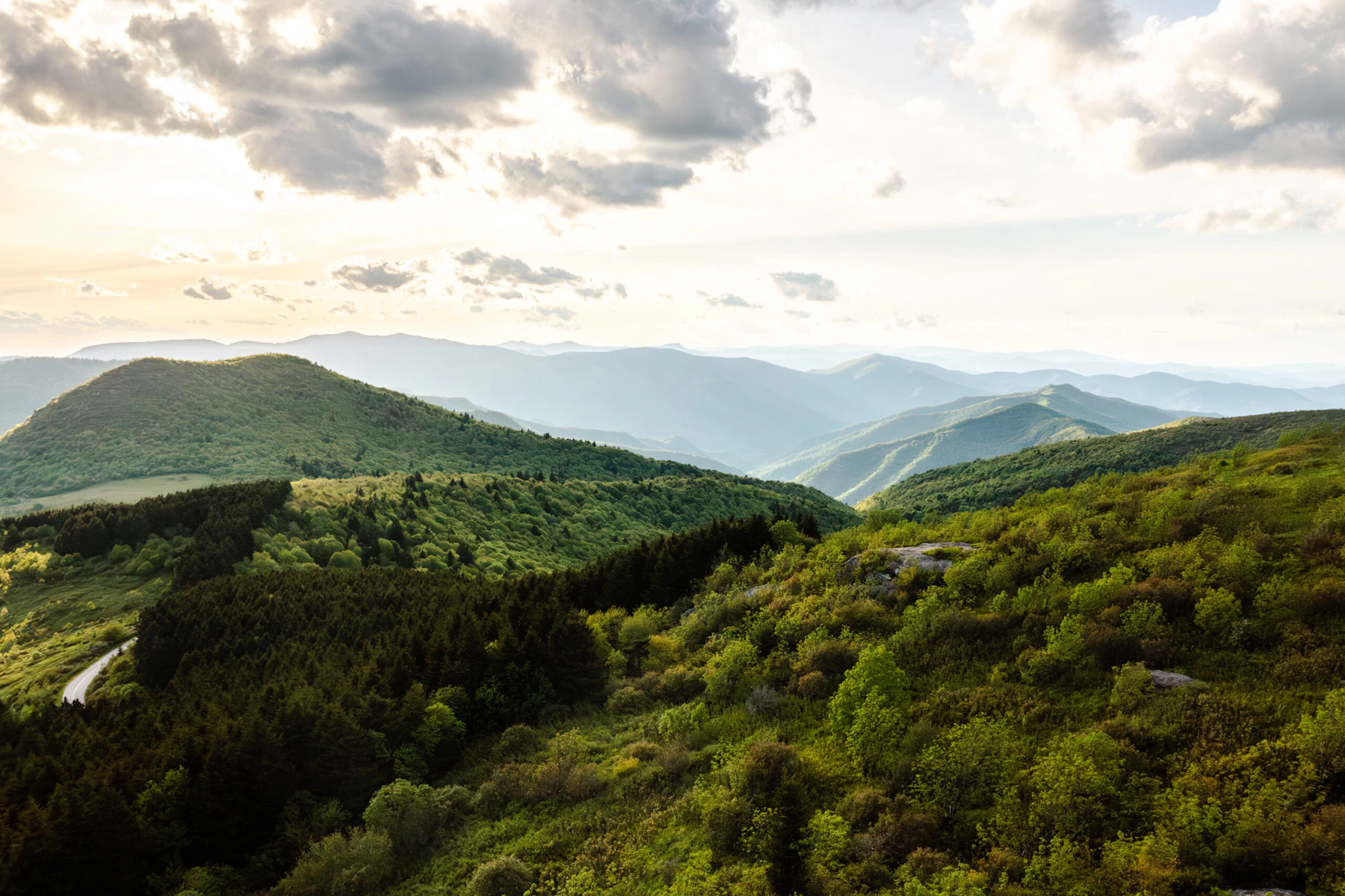
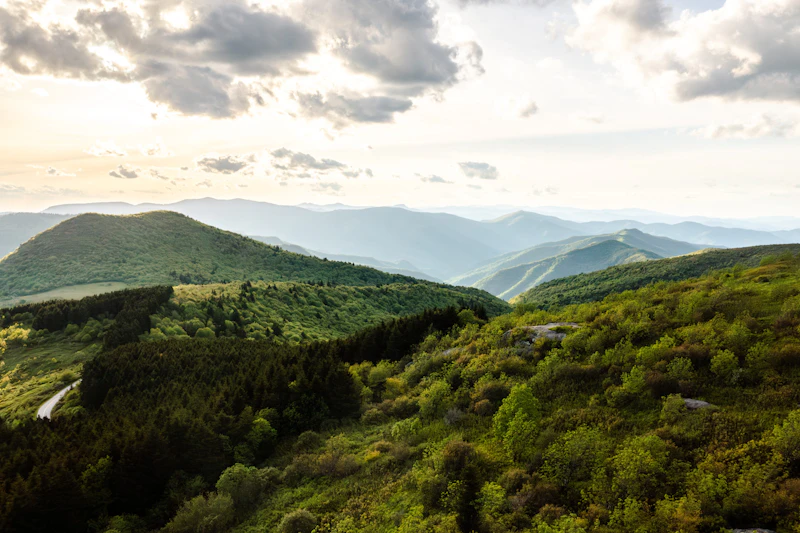
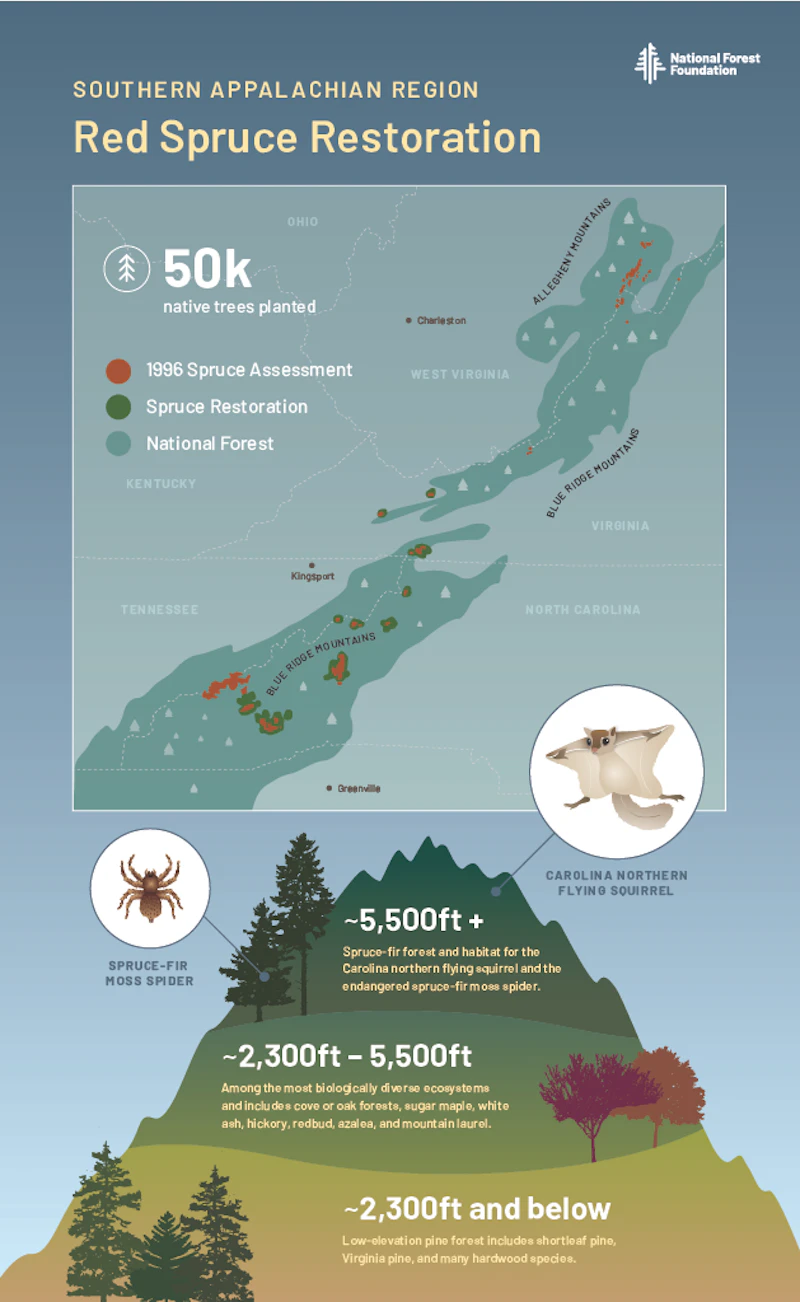
The Southern Appalachian spruce-fir forests are vital ecosystems found at the highest elevations of the Southern Blue Ridge Mountains. Dominated by red spruce and Fraser fir, these distinct high-elevation forests are home to unique flora and fauna, including the federally listed Carolina northern flying squirrel and spruce-fir moss spider.
However, extensive logging from the 1880s to the 1930s severely degraded these ecosystems by both removing a vast majority of the trees that made up the spruce-fir forests and leaving a wake of wildfires burning fueled by the scraps and debris left behind by the logging operations.
Because of this, these forests have been unable to recover over the last 100 years, leaving way for the National Forest Foundation (NFF), the Southern Highlands Reserve (SHR), and our partners at Southern Appalachian Spruce Restoration Initiative (SASRI), to join forces to protect these iconic forests.
The Role of Red Spruce
Red spruce forests create unique “sky island” ecosystems, supporting federally listed species like the northern flying squirrel and the spruce-fir moss spider. These high-elevation habitats act as corridors for migratory birds and help regulate the flow of water coming from forests.
Challenges and Restoration Efforts
The historical logging not only removed vast tracts of Red Spruce but also led to soil degradation, hindering natural regeneration over the last 100 years. In response, SASRI, a coalition of private, state, federal, and non-governmental organizations, is spearheading restoration across high-elevation landscapes to lend a helping hand to mother nature and work to restore these landscapes.
As a leader in high-elevation seedling cultivation, Southern Highlands Reserve has developed unmatched expertise in raising Red Spruce. With an impressive 90% survival rate for planted trees, their methods and high-elevation location ensure healthy, resilient seedlings that are well-suited to thrive in their native habitats.
The NFF supported Southern Highlands Reserve to expand the capacity for red spruce restoration with the construction of a state-of-the-art greenhouse. This new facility will more than double SHR’s ability to cultivate red spruce seedlings, providing a critical resource for large-scale reforestation efforts in the Southern Appalachians.
Partnerships Driving Success
Restoring Red Spruce forests in the Southern Appalachians is no small task—it requires a shared vision and collaboration across a diverse network of partners. The Southern Appalachian Spruce Restoration Initiative (SASRI) exemplifies the power of partnerships, bringing together federal agencies, nonprofits, private landowners, and research institutions to achieve landscape-scale restoration.
By combining expertise, resources, and innovation, SASRI and its partners are tackling challenges like seedling cultivation and degraded soils. Efforts like those at the Southern Highlands Reserve, with its high-elevation nursery and outstanding planting survival rates, showcase what’s possible when organizations work together.
Together, these partnerships are rebuilding forests, protecting endangered species, and ensuring red spruce thrives for generations to come. When it comes to conservation, collaboration is the foundation of success.
The largest, most destructive wildfires in California’s history have occurred in the last ten years—everything is at stake for mountain…
The streams and creeks of the LBJ National Grassland flow into the Trinity River Basin, which supplies water for over…
Nature-based solutions are bringing life back to streams and wetlands in the Colorado River Watershed, securing water for people, wildlife,…
Field Ranger Program Connects Diverse Communities to Forests in Southern California
Seeing the impact first hand on the Grand Mesa, Uncompaghre and Gunnison National Forests
Anna's family has been planting trees for 50 years. Now she is helping build a sustainable model to meet the…
Protecting biodiversity and fostering partnerships for resilient forests.
Seven Years of Reopening Trails After the Eagle Creek Fire
Our Forests Need Us Today.
Your donation powers critical, on-the-ground conservation—from wildfire recovery to watershed restoration—protecting forests for the future.