Telling the Story: Nature-Based Solutions to Improve the Resilience of the Colorado River Basin
2025 Conservation Connect Fellow, Alyssa Lutker, shares her experience supporting communications and storytelling efforts for NFF projects in the Colorado River Basin.
As a Conservation Connect Fellow, I had the privilege of gaining more knowledge in ecology, communications, and national organization operations.
From virtual meetings while working from my home in Wisconsin to driving down dirt roads to visit project sites in Colorado and Arizona, my experience was an adventure, both in the field and on the computer.
Throughout my fellowship, I worked across multiple teams, helping develop stories that highlight the importance of NFF’s work.
Learn it, then share it
When I started my fellowship, I had never heard of process-based restoration. That changed quickly.
After a crash source in process-based restoration and its implementation at NFF project sites throughout the Colorado River Basin, I started working on communications to help others understand it. One product of this work is a blog post I wrote explaining how high-tech process-based restoration differs from low-tech process-based restoration (LTPBR).
In addition to the benefits of process-based restoration on its own, I learned how these restoration project sites benefit each other, increasing the impact of one another. I was able to include this connection piece when drafting the webpage for the Stringtown Wash-Pine Creek LTPBR project, a current project site in Prescott, Arizona.
Capturing moments: landscapes, rocks, and amazing people
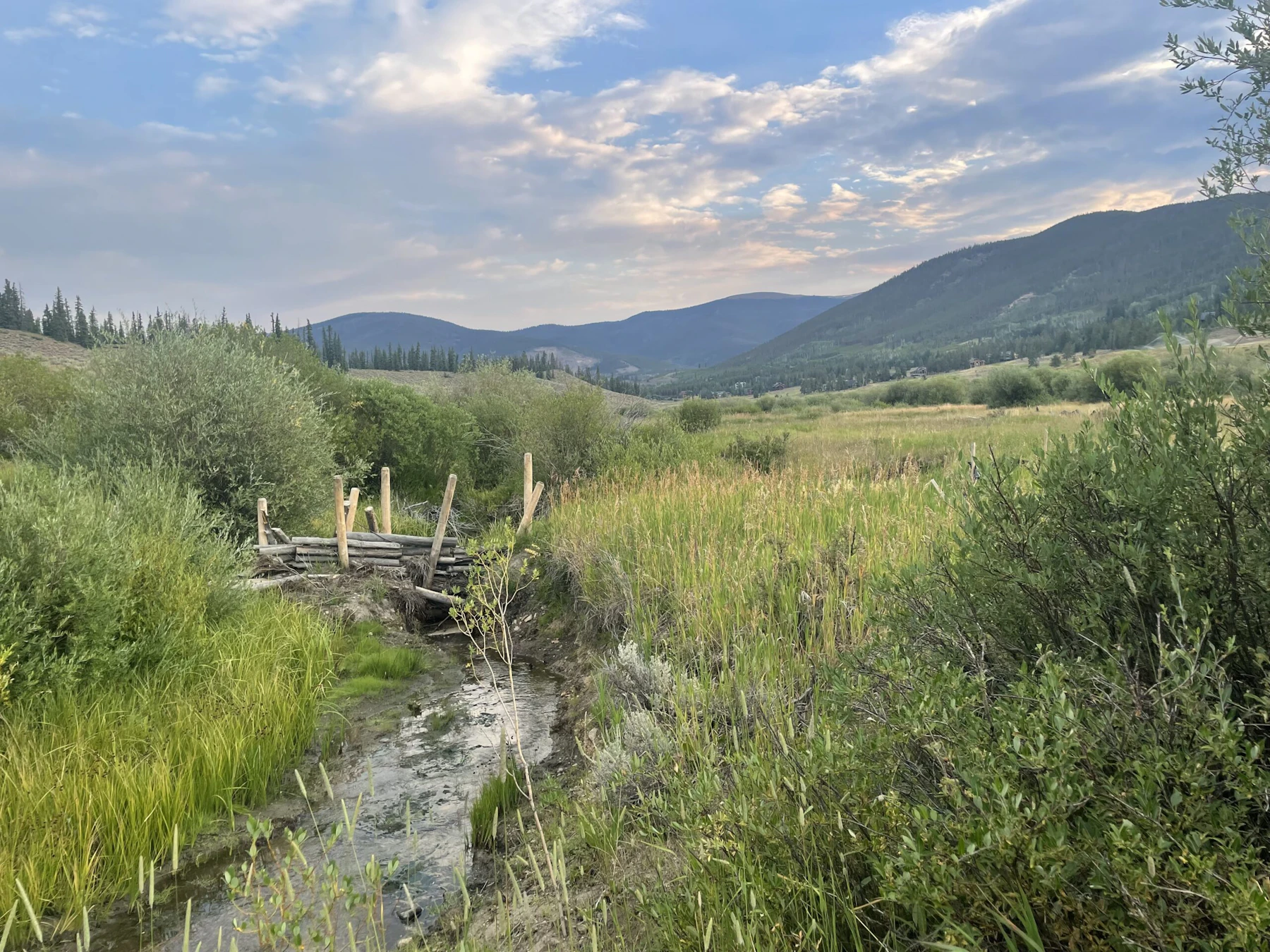
Storytelling for the Colorado River Basin wouldn’t be complete without visiting the region. In August, I traveled to Colorado to visit the completed Soda Creek project site near Silverthorne. Everything was lush and green, and I was able to see and capture photos of the beaver dam analogs, one example of LTPBR in action.
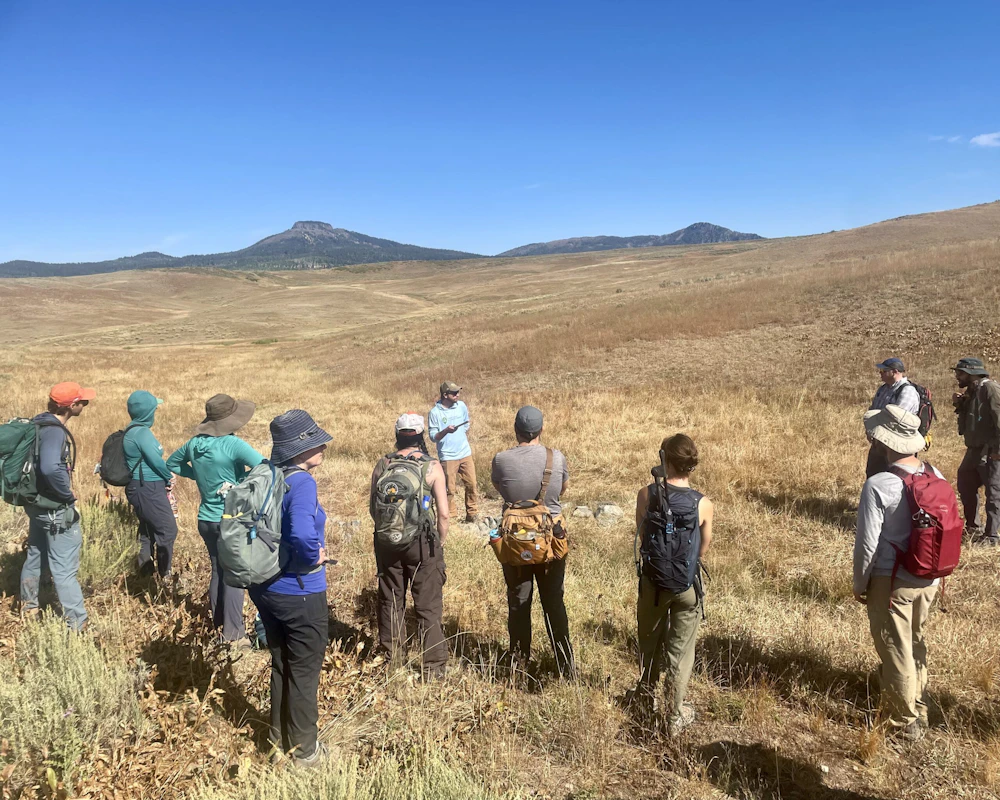
After visiting Soda Creek, I drove up to California Park on the Medicine Bow-Routt National Forest to capture photos and video footage of meadow restoration work carried out by Volunteers for Outdoor Colorado and Western Resilience Center (formerly known as Yampa Valley Sustainability Council).
While learning alongside the volunteers about rock structures used as a process-based restoration technique, I captured the process of building these structures from start to finish.
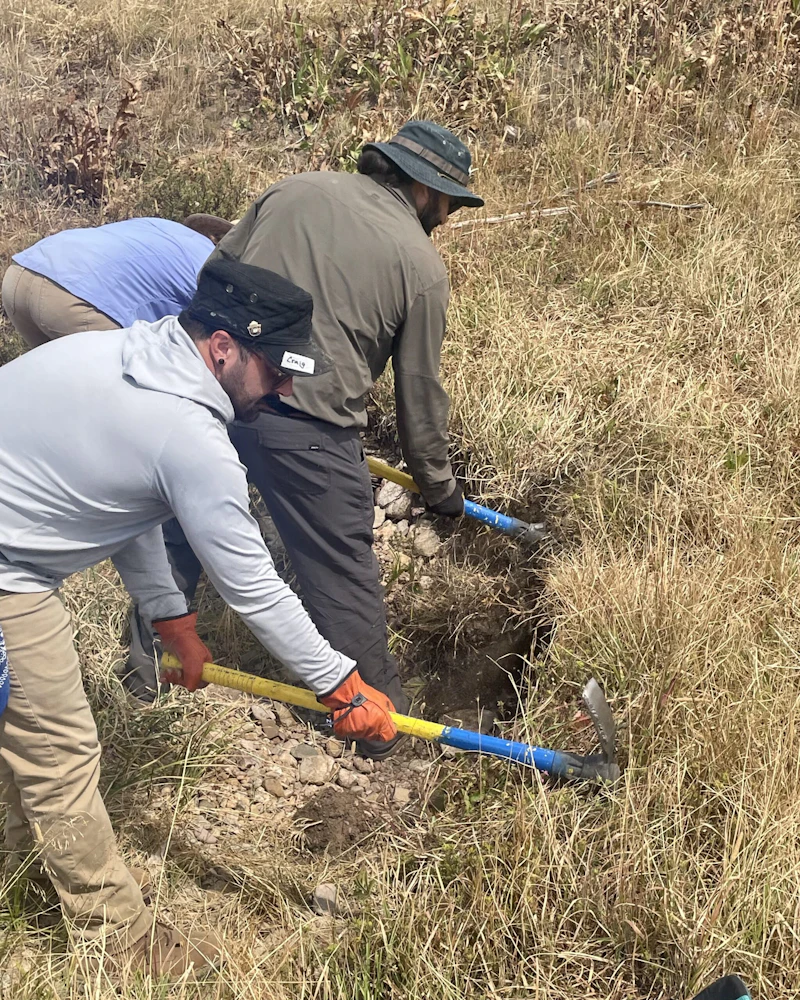
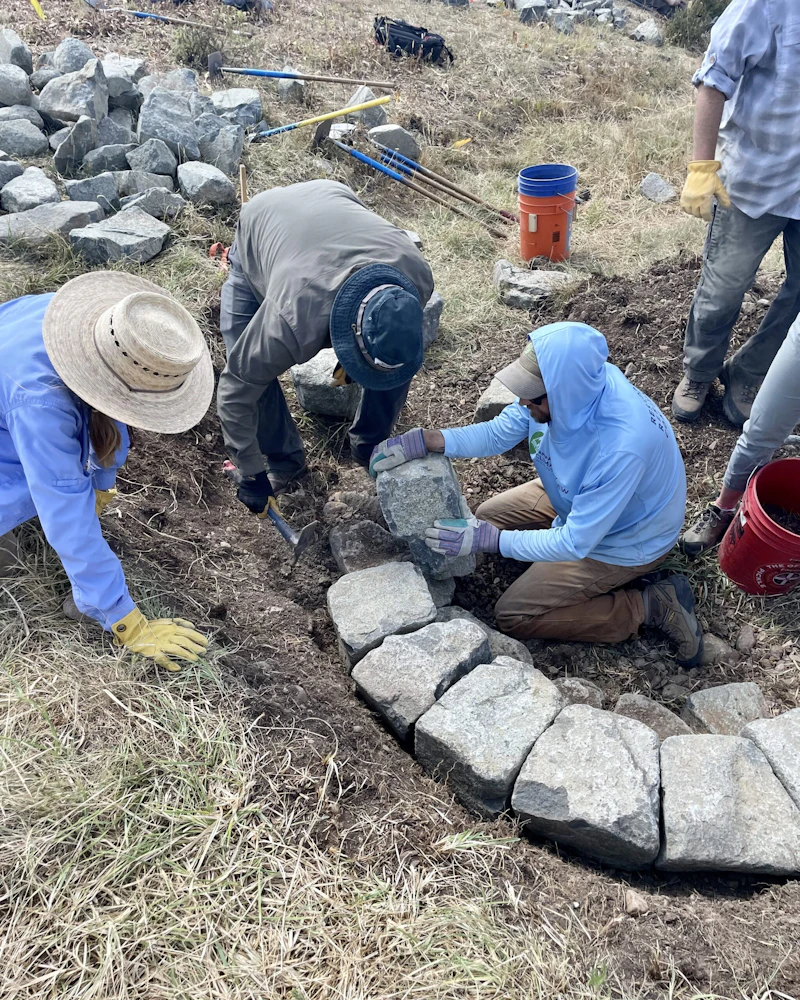 Volunteers for Outdoor Colorado build a Zuni Bowl as part of the California Park high-elevation meadow restoration project in August 2025. Photos by Alyssa Lutker.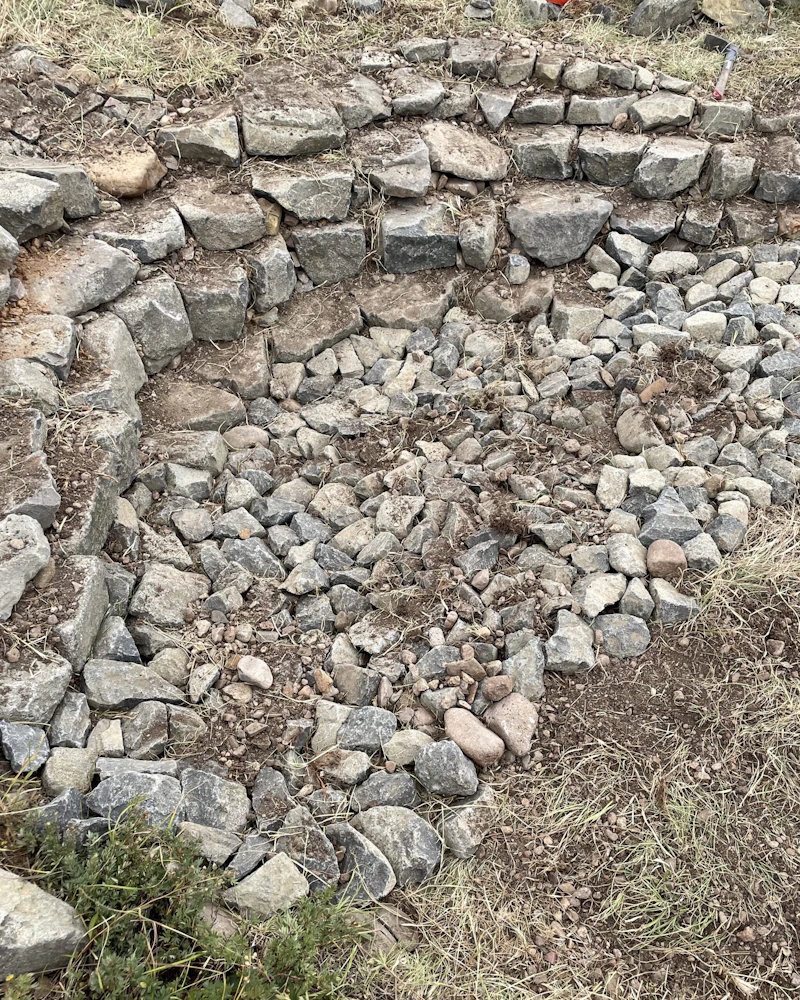
Several months later, in January I visited Prescott, Arizona, a place I was quite familiar with after living in central Arizona just a few years ago. While there, I experienced the area in a whole new way when visiting the Stringtown Wash – Pine Creek watershed project site as I was able to see, firsthand, the rock structures in use, filling the landscape with water as intended
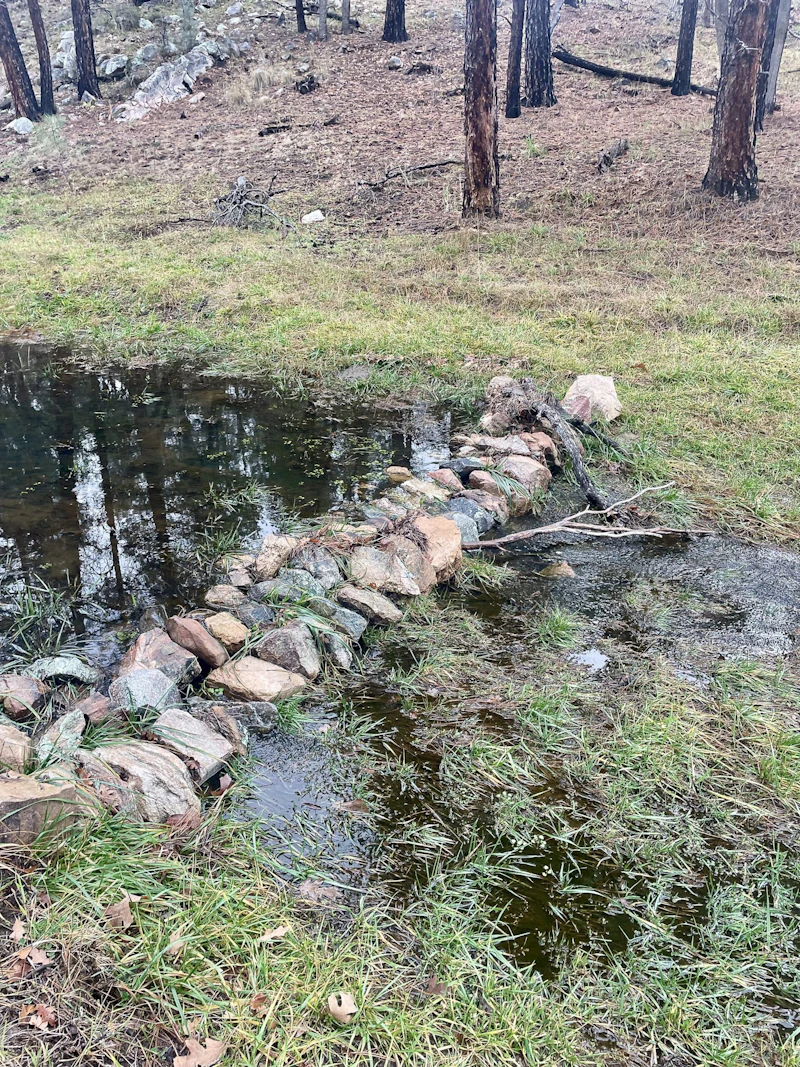
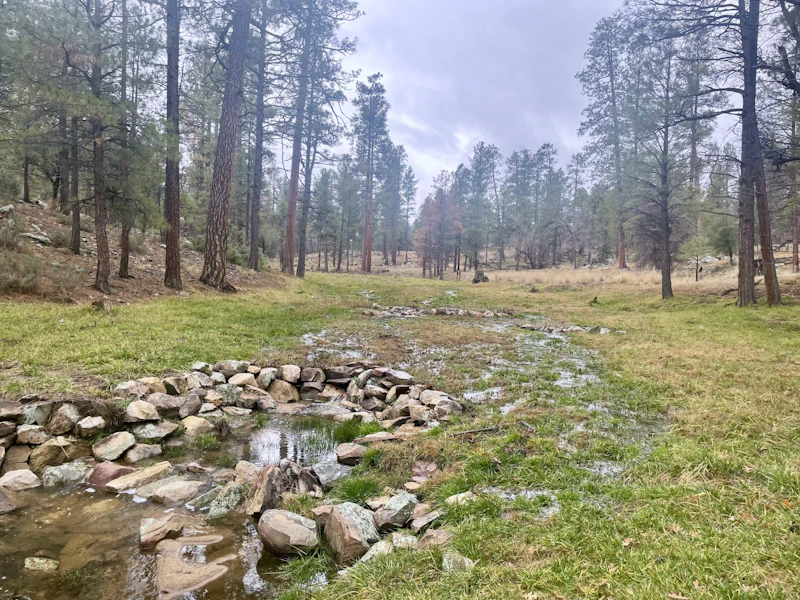 A one-rock dam (left) and rock rundown (right) help slow the water coming through the Stringtown Wash – Pine Creek watershed, allowing it to spread and soak into the ground, recharging the groundwater for the landscape. Photos by Alyssa Lutker.
 I am thankful for all the experiences I gained and the people I was able to meet while working at NFF. Whether it be watershed ecology, annual reports, social media, or collaborating with individuals stretching from the East Coast to the Southwest, I will carry what I have learned with me throughout my career.
Alyssa Lutker is a 2025 Conservation Connect Fellow working across multiple NFF teams related to Colorado River Basin communications and storytelling. She is a graduate student at the University of Wisconsin – Madison studying journalism and mass communication, with specializations in environmental communications and multimedia storytelling.
Our Forests Need Us Today.
Your donation powers critical, on-the-ground conservation—from wildfire recovery to watershed restoration—protecting forests for the future.