Forest Restoration Protecting Communities and Downstream Water Supplies
Forest restoration near Flagstaff is reducing wildfire risk for local communities and safeguarding the water supply for millions across the Southwest.


The forests of the Coconino National Forest near Flagstaff, Arizona, are not only scenic recreation areas; they are also the headwaters supplying water to both local communities and millions of people across the Phoenix metro area.
After a century of fire suppression, these forests have grown overcrowded and are vulnerable. The recent Tunnel and Pipeline Fires showed what’s at stake: not just trees and habitat, but neighborhoods, water quality, and downstream communities exposed to post-fire flooding.
The National Forest Foundation is working with the U.S. Forest Service, Coconino County, the City of Flagstaff, the Salt River Project, local landowners, and multigenerational contractors at the Derffer Fuels Reduction Project to restore forest health here — and to ensure water quantity and quality for cities hundreds of miles away.
How Did We Get Here?
For thousands of years, low-intensity fires moved regularly through the ponderosa pine forests of northern Arizona, clearing undergrowth and keeping forests open and resilient.
A century of fire suppression changed that. Without regular fire, forests grew dense with small-diameter trees and woody fuels. What were once open, fire-adapted stands became overgrown and primed for high intensity, catastrophic wildfire.
The recent Tunnel and Pipeline Fires made the consequences visible. Both burned hot and fast, scarring slopes above Flagstaff and triggering destructive post-fire flooding through neighborhoods downstream. Without proactive restoration, those events become more frequent and more severe.

What Is Forest Restoration?
Forest restoration is not logging. It is careful, science-based work that helps return overgrown forests to a healthier state — selectively removing small-diameter trees and dense undergrowth so that fires, when they come, will be less intense and destructive.

On the Ground: The Derffer Fuels Reduction Project
On the Coconino National Forest just outside Flagstaff at the base of the San Francisco Peaks, crews at the Derffer site worked to thin overgrown stands of trees, removing fuels, and creating space for the forest to function the way it once did.
This is collaborative work. Local government partners, utilities like Salt River Project, and the Forest Service bring funding, priorities, and land management expertise to the table. The team at Babbitt Ranches and the Arizona Nordic Village, the local land owners, have opened their property to support staging operations. And multigenerational contractors, families who have made a living working these forests for decades, are doing the on-the-ground work making forests healthier.
Downstream: Why This Matters Hundreds of Miles Away
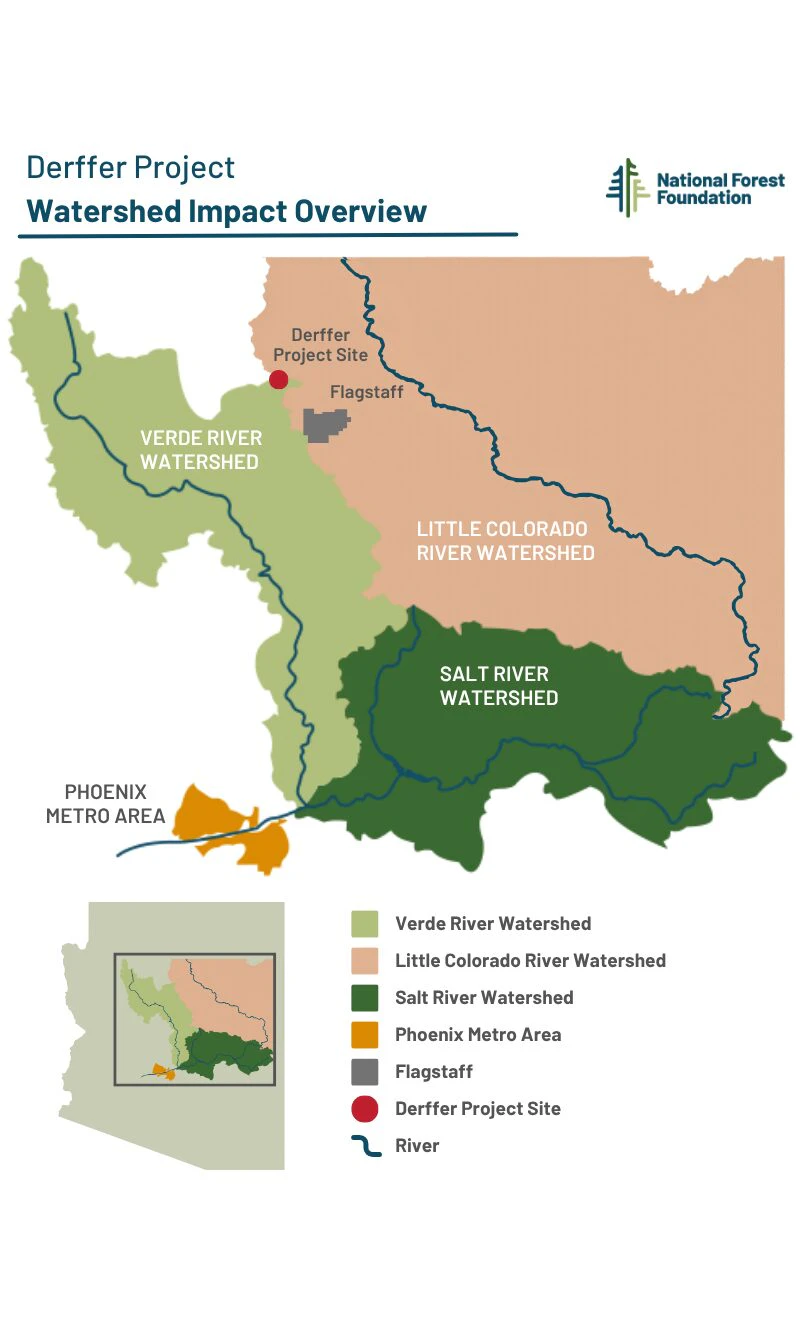
The forests above Flagstaff are the headwaters of multiple watersheds in Arizona. Snowmelt from the San Francisco Peaks feeds rivers that provide drinking water to millions across the state.
When fires burn through unhealthy forests, the consequences travel with the water. Ash and sediment foul reservoirs. Post-fire floods damage utility infrastructure. Drinking water becomes more expensive and less reliable for cities far from the source.
Collaboration Is Key
This work is only possible because of the people and organizations who bring it together: the U.S. Forest Service, Coconino County, the City of Flagstaff Fire Department, the Salt River Project, Babbitt Ranches and the Arizona Nordic Village, multigenerational local contractors, and the National Forest Foundation.
Healthy forests, safe communities, and secure water don’t follow property lines. They depend on partners willing to work across them.
If you would like to learn more about the work NFF is doing to create healthy forests across northern Arizona and how you can support, check out the Northern Arizona Forest Fund.

Want to dive deeper? Read more about wildfire risk reduction, watershed restoration, and the partnerships behind this work.
The National Forest Foundation works with partners across Northern Colorado to restore forests, reduce wildfire risk, and care for the…
After years of damage, recovery, and reconstruction, the trail to Hanging Lake has been fully rebuilt, creating a more durable,…
Erosion and wildfire had left Arizona's historic Highline Trail rutted and unsafe. After five years of work with the Tonto…
Colorado's 14ers draw thousands of visitors each year, and the pressure on these fragile alpine landscapes is growing. Here's a…
Visitors of all ages can explore forest trails and sparkling waters, discover wildlife and underwater habitats, and connect with Tahoe’s…
A partnership-driven program connecting youth on Montana’s Flathead Reservation with hands-on conservation work, heritage education, and pathways in natural resource…
Seeing the impact first hand on the Grand Mesa, Uncompaghre and Gunnison National Forests
Seven Years of Reopening Trails After the Eagle Creek Fire
Our Forests Need Us Today.
Your donation powers critical, on-the-ground conservation—from wildfire recovery to watershed restoration—protecting forests for the future.