Protecting Colorado’s 14ers for the Future
These world-renown peaks are facing increasing recreation pressure, and we are working to restore and protect these alpine landscapes for the future.
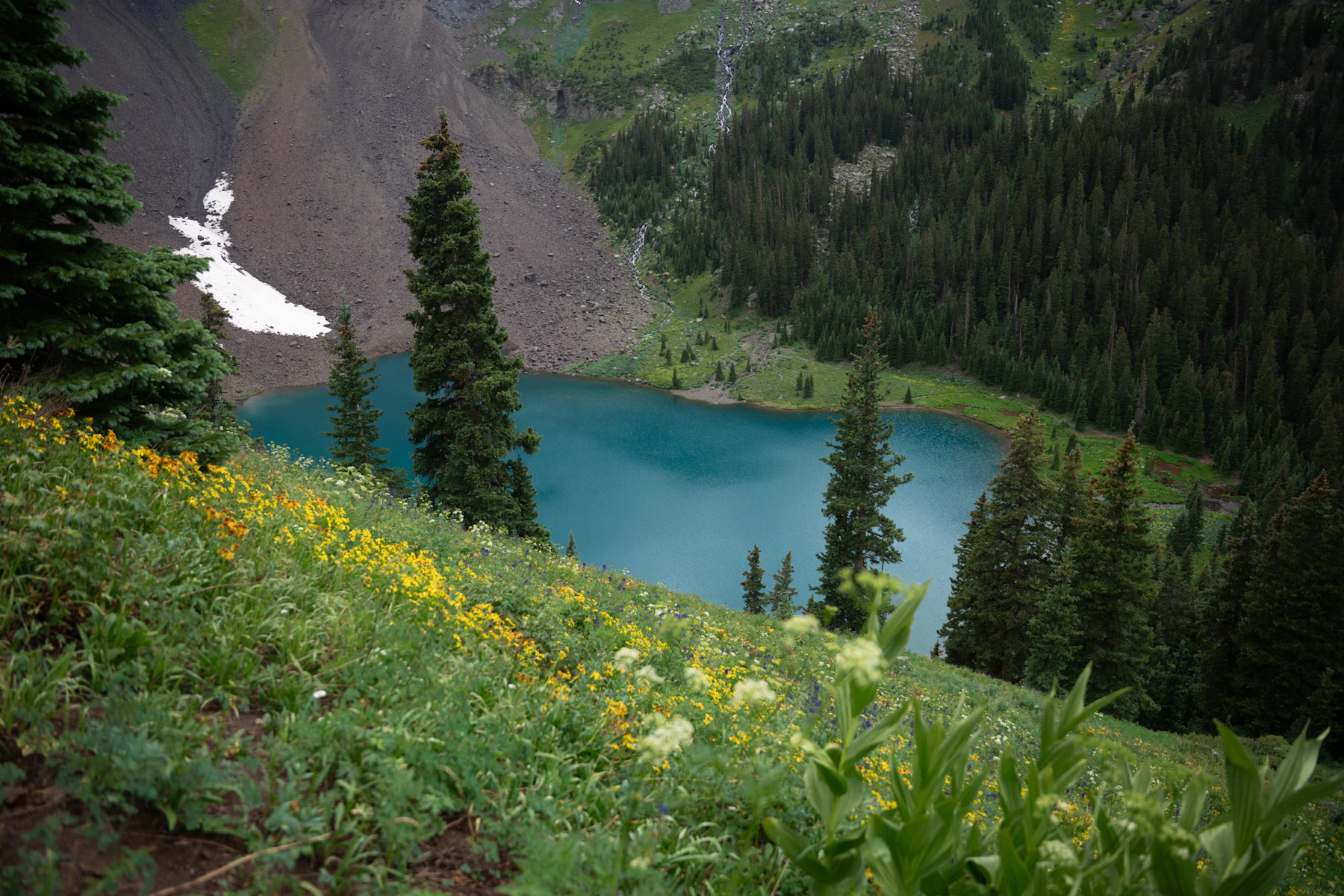

Colorado’s 14ers are among the most iconic alpine destinations in the United States.
Rising above 14,000 feet across the Colorado Rockies, these peaks, many of which include well-known routes within the National Forest system, draw thousands of visitors each year seeking access to high-alpine terrain, scenic views, and physically demanding backcountry experiences.
The National Forest Foundation and its partners are working across these landscapes to restore impacted areas, support sustainable recreation, and help ensure that these public lands remain both accessible and resilient over time.
Projects in high-use areas such as the Blue Lakes basin below Mount Sneffels in the San Juan Mountains (Uncompahgre National Forest) and the Kite Lake corridor below Mount Democrat in the Mosquito Range (Pike-San Isabel National Forest) reflect this ongoing effort to balance recreation with long-term stewardship.
How Did We Get Here?
Colorado’s 14er environments are naturally fragile.
At elevations above 11,000–14,000 feet, growing seasons are short, soils are thin, and vegetation recovers slowly from disturbance. These conditions make alpine ecosystems especially sensitive to concentrated recreation.
As visitation has increased over time (driven by growing interest in hiking, peak-bagging, and accessible backcountry recreation), the impact on trails, campsites, and surrounding terrain has intensified.
In high-use areas like Blue Lakes below Mount Sneffels and Kite Lake below Mount Democrat, this has contributed to:
- Widening and erosion of heavily traveled trails
- Soil compaction in popular resting and camping areas
- Loss and trampling of fragile alpine vegetation
- Dispersed recreation outside of durable or designated areas
- Localized impacts to water quality in headwater drainages
- These are headwater landscapes that feed larger watershed systems across Colorado and the West, making their condition especially important for downstream ecosystems and communities
- At the same time, these are deeply valued places that continue to see strong and sustained public use
Restoring and Caring for High-Use 14er Landscapes
Restoration efforts in Colorado’s 14er regions focus on improving the durability and sustainability of heavily used alpine areas while maintaining public access.
Work supported by the National Forest Foundation and partners is generally centered on:
- Restoring disturbed alpine ground in high-use basins
- Improving resilience of heavily traveled approach corridors
- Addressing impacts from dispersed recreation and informal camping
- Supporting recovery of alpine soils and vegetation in sensitive zones

In the Blue Lakes basin below Mount Sneffels, efforts focus on a heavily visited alpine lake system accessed from the Ridgway/Ouray region, an area known for its steep terrain, high scenic value, and concentrated recreational use.

In the Kite Lake corridor below Mount Democrat, work focuses on one of the most commonly-used access points for Colorado 14ers, where high visitation levels create ongoing pressure on surrounding alpine terrain.

Together, these projects reflect a broader statewide effort to address recreation impacts in some of Colorado’s most visited high-country landscapes.
 Photo by James "Q" Martin
 Photo by James "Q" Martin
 Photo by James "Q" Martin
 Photo by James "Q" Martin
 Photo by James "Q" Martin
 Photo by James "Q" Martin
Why This Work Matters
Alpine ecosystems are among the most sensitive environments in the Rocky Mountains.
Because of their elevation and climatic conditions, these landscapes recover slowly from disturbance. When impacts accumulate faster than natural recovery can occur, long-term changes to vegetation, soils, and hydrology can result.
Without sustained stewardship, heavily used areas can experience:
- Long-term vegetation loss in alpine zones
- Increased erosion and sediment movement
- Degraded water quality in headwater systems
- Reduced ecological resilience under continued recreation pressure
At the same time, these landscapes remain central to outdoor recreation in Colorado and continue to see growing visitation each year.

Working with Partners Across Colorado
The National Forest Foundation works in close partnership with the U.S. Forest Service and a broad network of regional partners to support stewardship across Colorado’s 14ers.
This includes coordinating funding, supporting on-the-ground restoration, and helping align conservation efforts across multiple high-use recreation areas.
Together, these partnerships help ensure that management approaches reflect both the ecological sensitivity of alpine environments and the continued public demand for access.

Looking Ahead
Colorado’s 14ers will continue to be among the most sought-after outdoor destinations in the country.
The challenge moving forward is not whether these landscapes will be visited, but how they can be cared for in a way that maintains both access and ecological integrity.
Through long-term restoration, partnership, and stewardship, the National Forest Foundation and its partners are working to ensure these alpine landscapes remain resilient, accessible, and meaningful for generations to come.

The National Forest Foundation works with partners across Northern Colorado to restore forests, reduce wildfire risk, and care for the…
After years of damage, recovery, and reconstruction, the trail to Hanging Lake has been fully rebuilt, creating a more durable,…
Erosion and wildfire had left Arizona's historic Highline Trail rutted and unsafe. After five years of work with the Tonto…
Forest restoration near Flagstaff is reducing wildfire risk for local communities and safeguarding the water supply for millions across the…
Visitors of all ages can explore forest trails and sparkling waters, discover wildlife and underwater habitats, and connect with Tahoe’s…
A partnership-driven program connecting youth on Montana’s Flathead Reservation with hands-on conservation work, heritage education, and pathways in natural resource…
Seeing the impact first hand on the Grand Mesa, Uncompaghre and Gunnison National Forests
Seven Years of Reopening Trails After the Eagle Creek Fire
Our Forests Need Us Today.
Your donation powers critical, on-the-ground conservation—from wildfire recovery to watershed restoration—protecting forests for the future.