Restoring Southwest Idaho’s Forests for a Fire-Resilient Future
The National Forest Foundation and our partners are accelerating restoration across the Boise and Payette National Forests and neighboring, private land. Through the Southwest Idaho All-Lands Partnership (ALP), we’re reducing wildfire risk, improving watershed health, and strengthening rural economies—creating a model for collaborative stewardship that benefits communities and landscapes alike.
Why Southwest Idaho? A Landscape at Risk—and an Opportunity for Leadership
Southwest Idaho has been identified by the U.S. Forest Service as one of the nation’s most at-risk wildfire regions. Spanning over two million acres across the Boise and Payette National Forests and neighboring lands, this region faces a higher likelihood of wildfire than 98% of U.S. communities. Rapid population growth, diverse land ownership, and changing fire behavior demand a coordinated response.
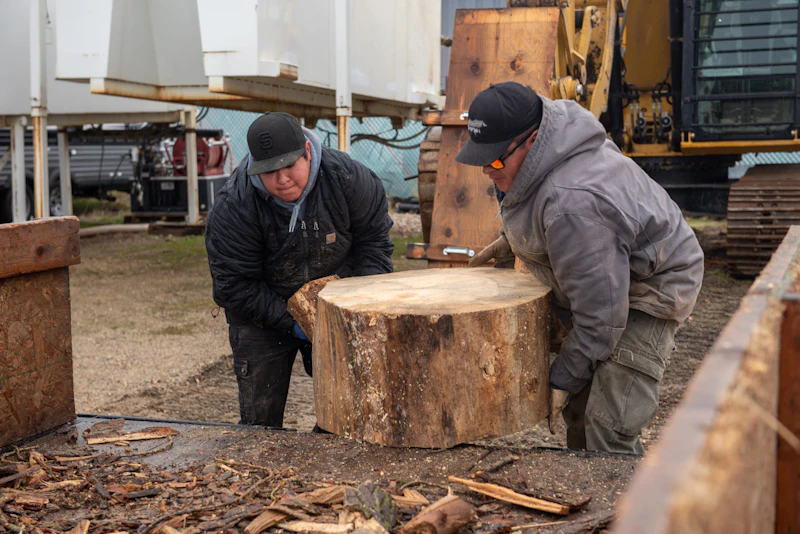 A Sho-Pai Tribal sawyer crew cut and load trailers with timber rounds for the Wood For Life wood bank. Photo by Dave Walsh
 Memebers of the All-Lands Partnership tour the Clear Creek Community in Boise County, Idaho. Photo by Dave Walsh
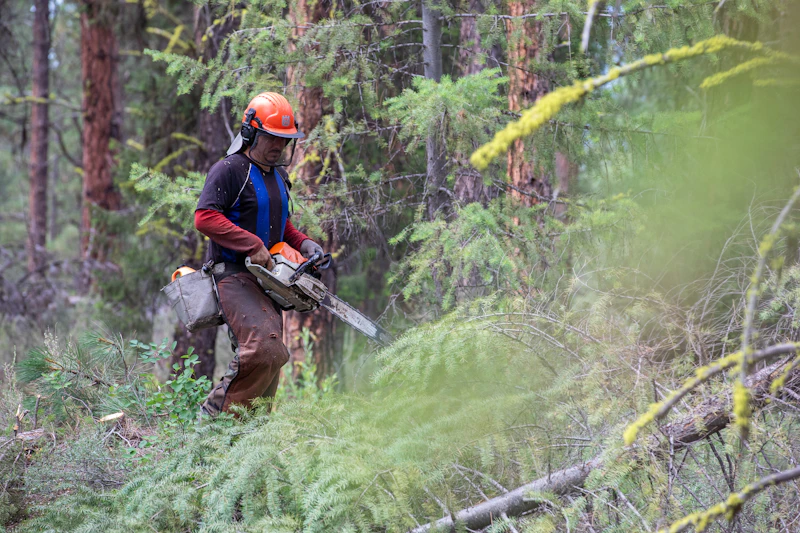 Crew member hand thins a section of forest. Photo by Dave Walsh
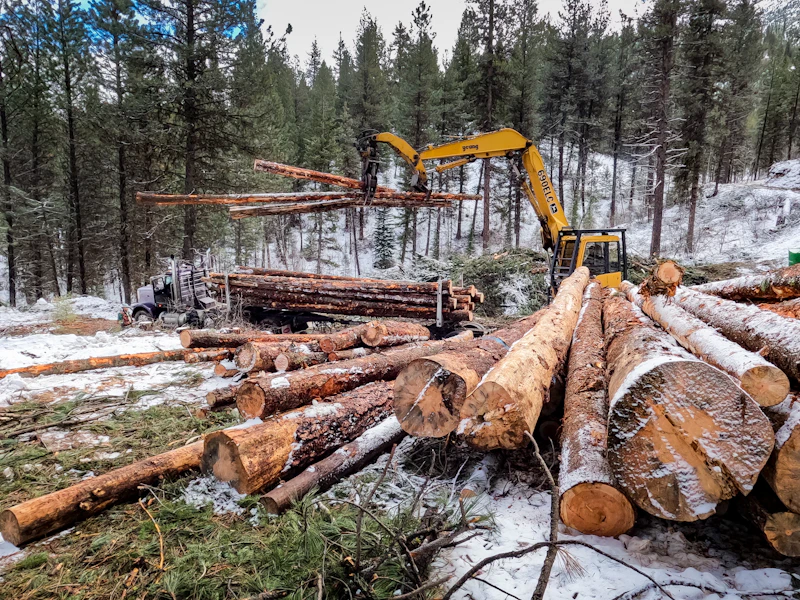 Loading a flatbed with logs from a thinning operation. Photo by Dave Walsh
The National Forest Foundation is answering that call. Together with the U.S. Forest Service and more than a dozen partners who are coming together through the ALP, we are accelerating forest restoration and fuels reduction to reduce wildfire risk, improve watershed health, limit risk to communities, and protect world-class recreation and wildlife habitat. The National Forest Foundation is not only an implementation partner, but administers the Southwest Idaho Forest Fund, a tool to aggregate and distribute supporting funds across the landscape. Our shared roadmap prioritizes restoring 25% of the landscape,over the next decade, focusing on areas significantly departed from historic conditions .
This work goes beyond fuels reduction. It supports local wood products industries, fosters innovation, and strengthens rural economies. It also demonstrates how collaboration can deliver measurable results. By leveraging science-based planning and community engagement, we’re creating a resilient future for Southwest Idaho—and a model for landscapes nationwide.

- Goal: Thinning and fuels reduction to protect communities and restore watershed health; wood will be hauled to the Duck Valley Reservation for Shoshone Paiute Tribal members to heat their homes throughout the winter through our Wood For Life program
- Timeline: Ongoing
- Goal: Reduce wildfire risk, strengthen forest condition, and protect private lands
- Timeline: Ongoing
- Goal: Create shaded fuel breaks, thin forests, and utilize biomass near Brundage Ski Area and key corridors; prescribed fire to follow
- Timeline: Phase 1 in 2026; Phase 2 in 2027
- Goal: Hand thinning and slash treatment to reduce small-tree density and wildfire risk
- Timeline: July–November 2026
- Goal: Prepare USFS/private boundaries for future cross-boundary fuels work
- Timeline: June 2026–June 2028
- Goal: Leverage $20.3M in funding to support private landowners in developing Forest Management Plans (100-acre minimum) and implement fuels treatments
- Timeline: Ongoing
Behind every project is a story about the people that love and rely on their National Forest for clean water, strong economies, and safe communities.
Anna's family has been planting trees for 50 years. Now she is helping build a sustainable model to meet the…
The largest, most destructive wildfires in California’s history have occurred in the last ten years—everything is at stake for mountain…
Seven Years of Reopening Trails After the Eagle Creek Fire
Our Forests Need Us Today.
Your donation powers critical, on-the-ground conservation—from wildfire recovery to watershed restoration—protecting forests for the future.