You probably remember the last time you sloshed through a puddle on a trail, or checked for ticks after hiking through overgrown bush. When a trail is well maintained, we remember the breathtaking views, the delicate wildflowers on the edge of a clearing, the quite solitude among the trees—rarely the ground under our feet.
Trails are how most of us connect with National Forests, but the best trail experiences are the ones where we don’t notice the path—or the work it took to create and maintain—at all.
What causes trails to fall into disrepair, and what goes into fixing them?
The next time you hit the trail, notice how the path follows the landscape to improve drainage, or look for signs of wear and tear, and appreciate the planning and work that goes into making trails sustainable for us and the landscapes we are passing through.

What Makes a Trail (Un)Sustainable?
How long a trail stays in good condition is largely up to how quickly the path, or tread, erodes. The factors that contribute to trail erosion include:
- Drainage. When water flows down a trail, it can create deep ruts in the tread that accelerate erosion and sweep sediments downhill. On a sustainable trail, drainage structures, grade reversals, and ditches help capture and divert water across and off the tread as quickly as possible.
- Trail Grade. How steep the trail and the surrounding landscape are will impact how fast water will flow over, and eventually erode the tread. Steep trails erode much more quickly than gentle ones. The sustainable grade for a trail varies depending on other factors like soil type and drainage patterns, but can be as steep as seven percent.
- Soil type. A sandy soil is more likely to wash away, leaving the trail rutted, while a clay soil is more likely to hold water, making the trail overly muddy. Trails built on loamy soil are the most sustainable because they are compact enough to be not washed away, but loose enough that they dry out.
- Use. How trails are used can be just as important for sustainability as the drainage, trail grade, and soil type. On any trail, people will compact and displace soil over time. But trails can be designed to encourage people to travel in the center of the tread where they won’t contribute to widening the trail or creating new paths.
All trails will need maintenance, but when trails are built with these factors in mind, they last longer and take fewer resources to upkeep.

Repairing and Rebuilding Trails
Some erosion caused by users hiking, biking, or riding their horses or ATVs on a trail, as well as overgrown vegetation and fallen limbs, are normal and routine signs of wear and tear. They require maintenance to prevent erosion from becoming worse and to return the trail to an enjoyable and functional state, but don’t pose persistent problems.
Routine trail maintenance for this kind of wear include:
-
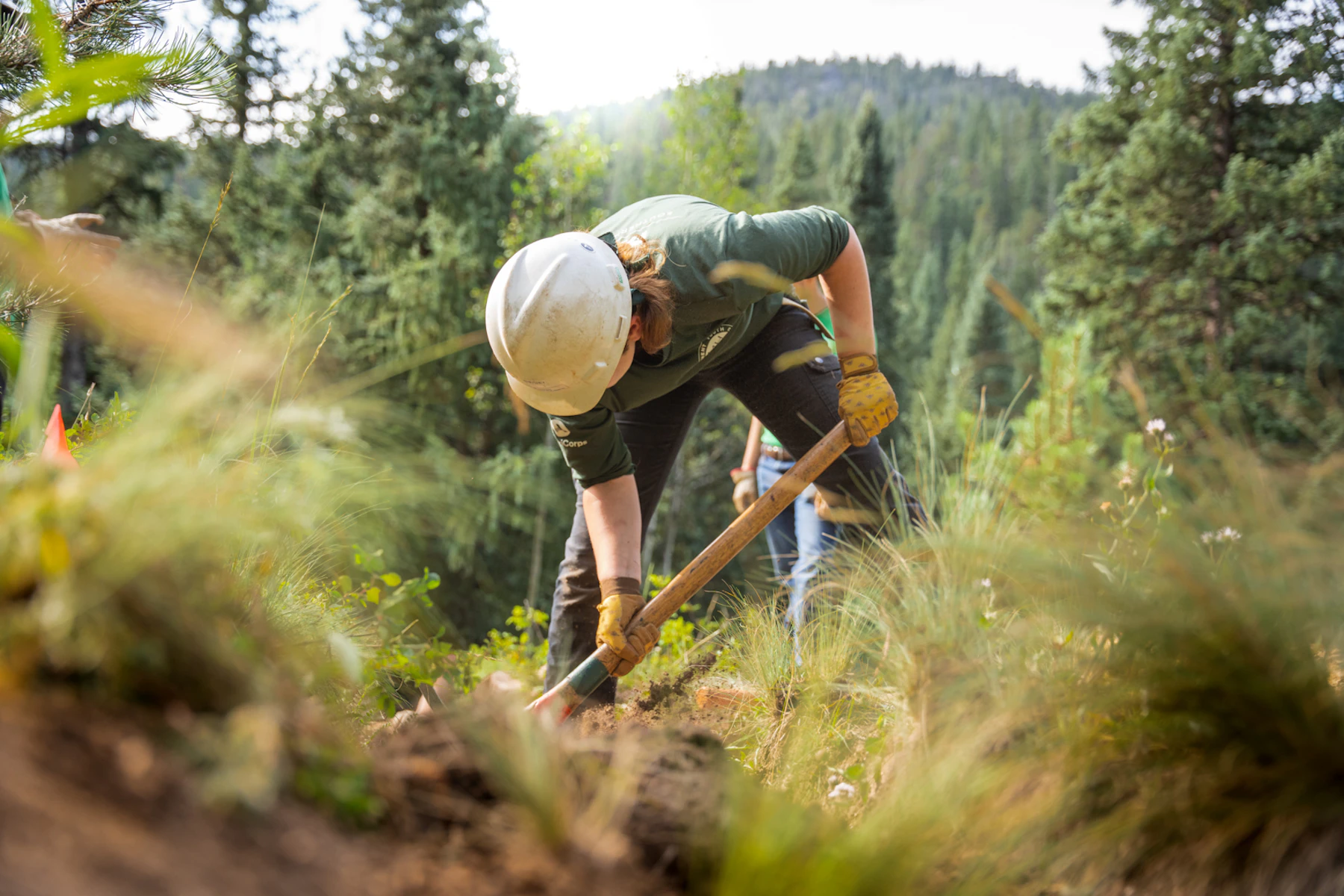
- Maintaining the trail corridor by cutting back encroaching vegetation and removing other objects like rocks and trees from the path.
-
- Repairing the tread by reestablishing a solid, outsloped trail surface to drain water off the trail, and strategically placing obstacles like rocks on the side of the trail to prevent widening.

Other signs of wear—such as deep ruts and gullies or parts of a trail that have been noticeably widened for users to avoid mud—reveal an underlying problem with a trail’s construction that needs to be addressed. Deep ruts and gullies are a sign that water is draining off the trail too quickly, while mud is a sign that water is not draining quickly enough.
The options for repairing trails with this kind of persistent wear include:
-
- Possible rerouting for more sustainable drainage, grade, and soil conditions.
-
- Installing stabilizing structures such as culverts, turnpikes, bridges, retaining walls, and stairs.
Leaving Trails—And Landscapes—Better Than We Found Them
There is a lot more to trail sustainability than designing paths that stay in good condition for the people who use them. A sustainable trail also minimizes the impact of the trail itself—and its users—on the surrounding landscape.

A trail that resists erosion improves user experience, safety, and accessibility by providing an even pathway to follow, but it also protects local water quality by reducing the amount of sediment washed into nearby streams. When trails keep users in the center of the path, instead of the edge to avoid mud, native plants are less likely to be trampled, and wildlife habitat goes undisturbed.
Ultimately, a sustainable trail provides a great user experience for people to come alive in nature today, a legacy of access to our nation’s natural treasures tomorrow, and the benefits of a healthy, thriving ecosystem for all.
📖 Want to continue reading? Check out the U.S. Forest Service’s 2025 Trail Maintenance and Construction Notebook to learn more about the science behind trail sustainability.
–
Cover photo by Kellon Spencer

Our Forests Need Us Today.
Your donation powers critical, on-the-ground conservation—from wildfire recovery to watershed restoration—protecting forests for the future.