Stronger Streams, Safer Roads in Northern Wisconsin
In northern Wisconsin, culverts play a critical role in keeping roads open, protecting communities from flooding, and supporting healthy streams and fish habitat.
The Northern Wisconsin Culvert Improvement Project is an ongoing effort led by the National Forest Foundation (NFF) and the Chequamegon–Nicolet National Forest to replace undersized and failing culverts and build resilience for the future.
Why Culverts Matter in the Northwoods
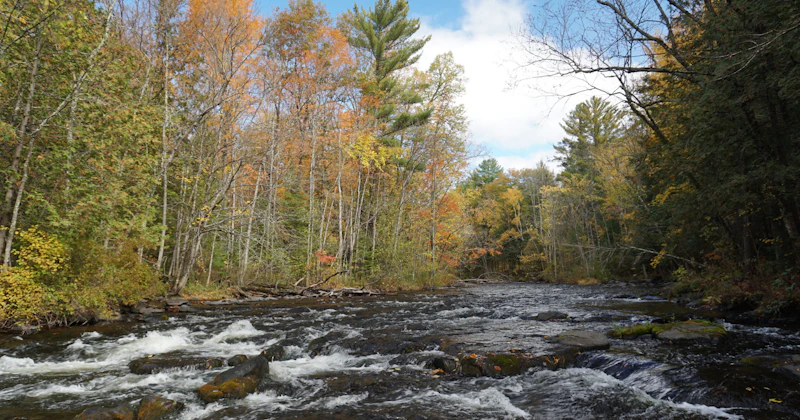
Although they are often out of sight, culverts are essential infrastructure in northern Wisconsin. They allow water to move safely under roads, reduce flood risk, and keep streams connected for native fish like brook trout. Recreation, tourism, and daily life in the Northwoods all depend on these small but vital structures.
Over the next decade, nearly 500 culverts on the Chequamegon–Nicolet National Forest are expected to fail. When culverts collapse, they can damage roads, degrade water quality, block fish passage, and cut off access to communities and recreation areas.
Building Resilience to Flooding
The importance of resilient culverts became clear during the 2016 Marengo Flood, a 500-year flood event that caused widespread culvert failures and shut down U.S. Highway 2 — the only major highway serving parts of northern Wisconsin. Some communities were isolated for weeks with limited access to electricity and clean water.
With extreme rainfall events becoming more frequent, the risk of catastrophic culvert failure continues to grow. This project focuses on replacing undersized and failing culverts in high-risk locations to help prevent future road washouts, protect downstream waters, and keep communities connected.
Local Solutions With Lasting Impact
The Northern Wisconsin Culvert Improvement Project prioritizes cost-effective, community-driven solutions. By partnering with local municipalities and using local expertise and equipment, projects cost significantly less than traditional contractor approaches and help keep skilled workers employed year-round.
Upgrading to flood-resilient, fish-friendly culverts supports local economies, protects cherished lakes and rivers, and ensures continued access to recreation throughout the Northwoods. Each culvert replaced is a long-term investment in safer roads, healthier streams, and stronger communities.
Behind every project is a story about the people that love and rely on their National Forest for clean water, strong economies, and safe communities.
The National Forest Foundation works with partners across Northern Colorado to restore forests, reduce wildfire risk, and care for the…
After years of damage, recovery, and reconstruction, the trail to Hanging Lake has been fully rebuilt, creating a more durable,…
Erosion and wildfire had left Arizona's historic Highline Trail rutted and unsafe. After five years of work with the Tonto…
Forest restoration near Flagstaff is reducing wildfire risk for local communities and safeguarding the water supply for millions across the…
Colorado's 14ers draw thousands of visitors each year, and the pressure on these fragile alpine landscapes is growing. Here's a…
Visitors of all ages can explore forest trails and sparkling waters, discover wildlife and underwater habitats, and connect with Tahoe’s…
A partnership-driven program connecting youth on Montana’s Flathead Reservation with hands-on conservation work, heritage education, and pathways in natural resource…
Seeing the impact first hand on the Grand Mesa, Uncompaghre and Gunnison National Forests
Seven Years of Reopening Trails After the Eagle Creek Fire
Field Ranger Program Connects Diverse Communities to Forests in Southern California
Our Forests Need Us Today.
Your donation powers critical, on-the-ground conservation—from wildfire recovery to watershed restoration—protecting forests for the future.