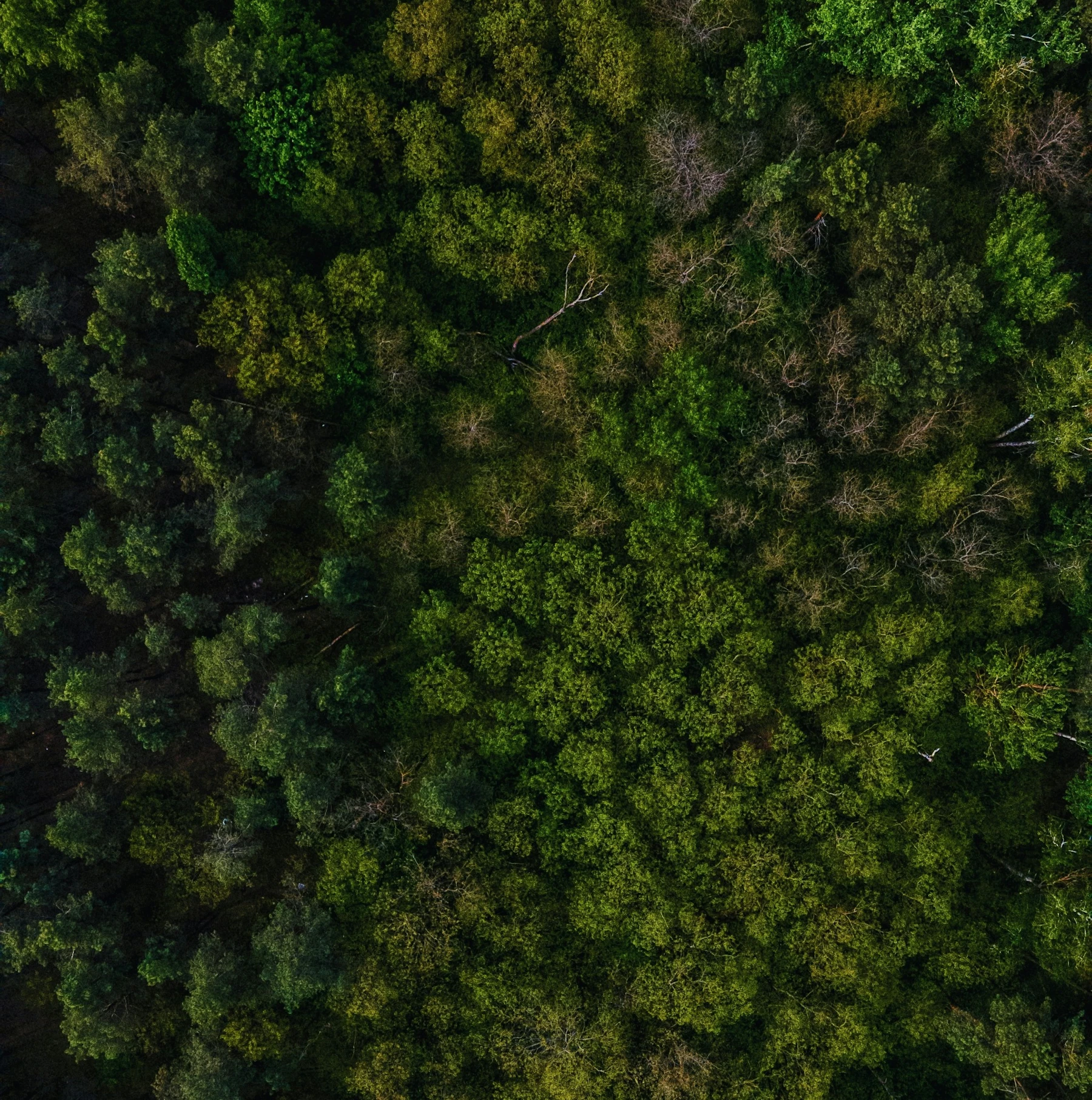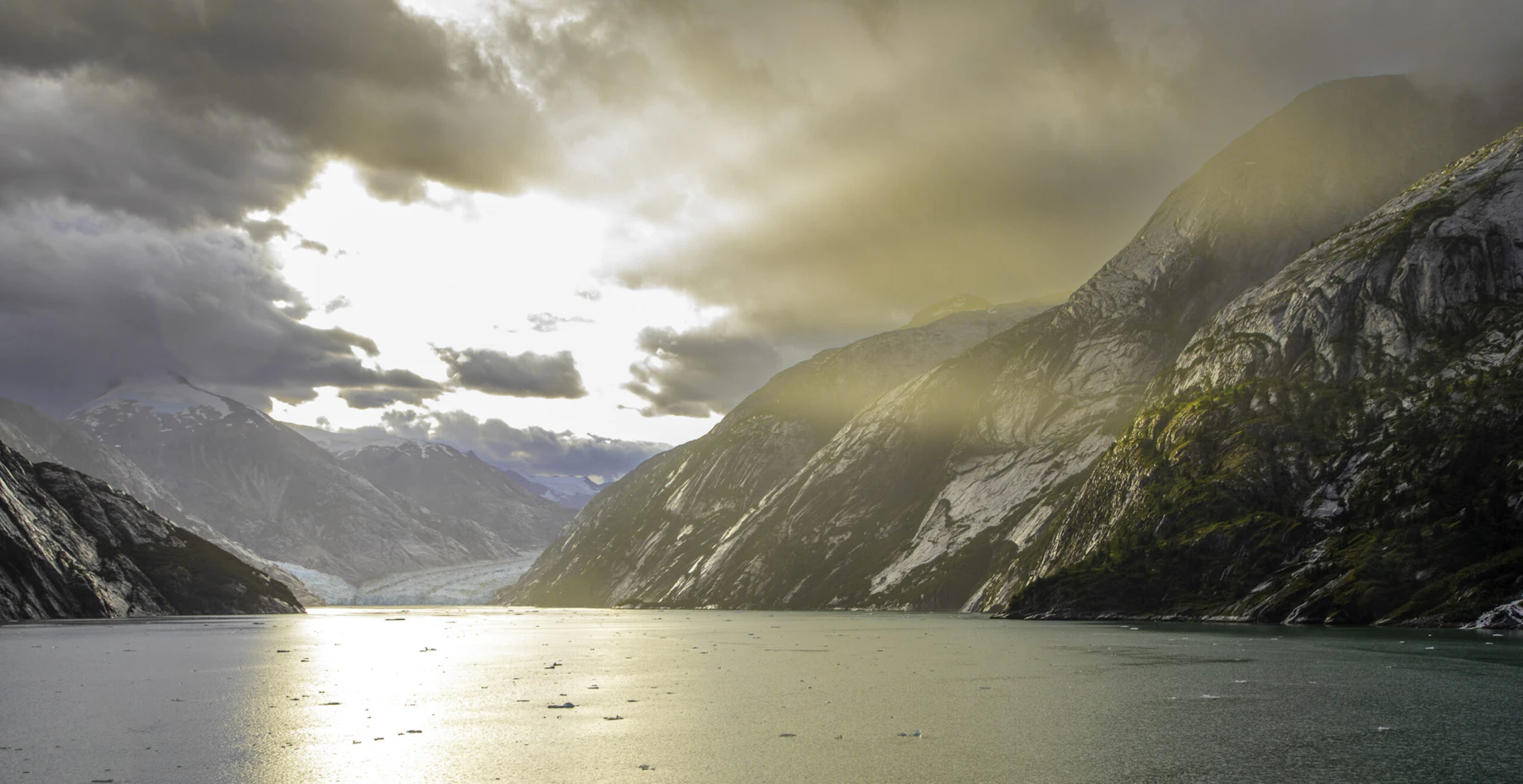
Discover the Tongass National Forest, the nation’s largest with 17 million acres, surrounding the famous Inside Passage and covering most of Southeast Alaska. The magnificent Tongass is part of the largest intact temperate rainforest system on earth, with landscapes that range from rugged coastlines and glacial fjords to snow-capped mountains lush old-growth forests of Sitka spruce and western hemlock. There are 19 Wilderness Areas spanning nearly six million acres, accounting for approximately one-third of the forest.
Much of the Tongass National Forest looks as it has for centuries. The icefields and glaciers of the Tongass National Forest are some of the few remnants of the once-vast ice sheets that covered a large expanse of the earth during the Pleistocene age. These glaciers are one of the forest’s main attractions, and a number features trails and viewing platforms, including Mendenhall Glacier Visitor Center near Juneau.
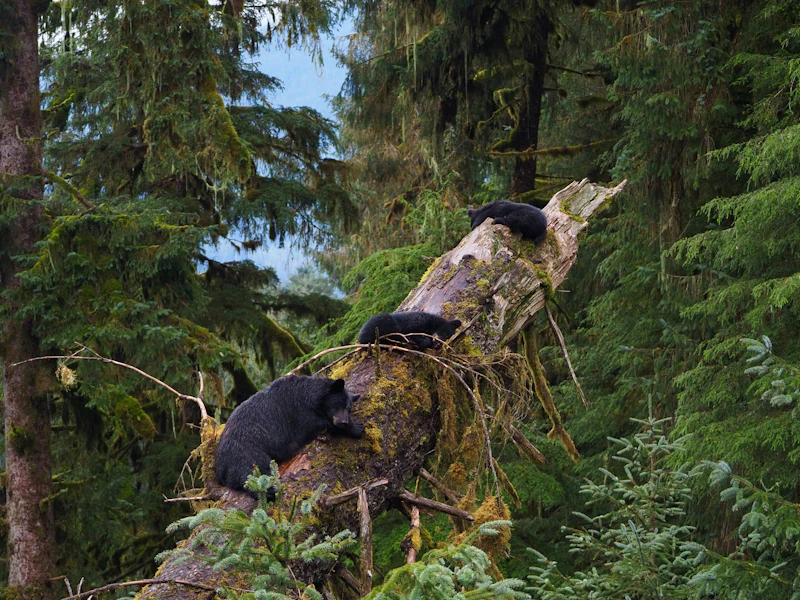
The Tongass offers great wildlife-viewing opportunities. Bears live throughout the region and often gather around fish streams. The Forest Service maintains bear-viewing facilities at Fish Creek (Hyder), Margaret Creek (Ketchikan), Anan Creek (Wrangell), and Pack Creek (Juneau).
The Tongass has more than 200 rental cabins scattered along remote lakes and seaside locations, from Humpback Lake, south of Ketchikan, to Situk Lake, north of Yakutat. The forest contains 700 miles of hiking trails, including routes through old-growth forests and along 17,000 miles of salmon- and steelhead-filled streams and rivers. Kayaking or boating along 11,000 miles of coastal waterways provides access to remote islands, fjords, and glaciers. Winter activities include snowshoeing, snowmobiling, and cross-country skiing.
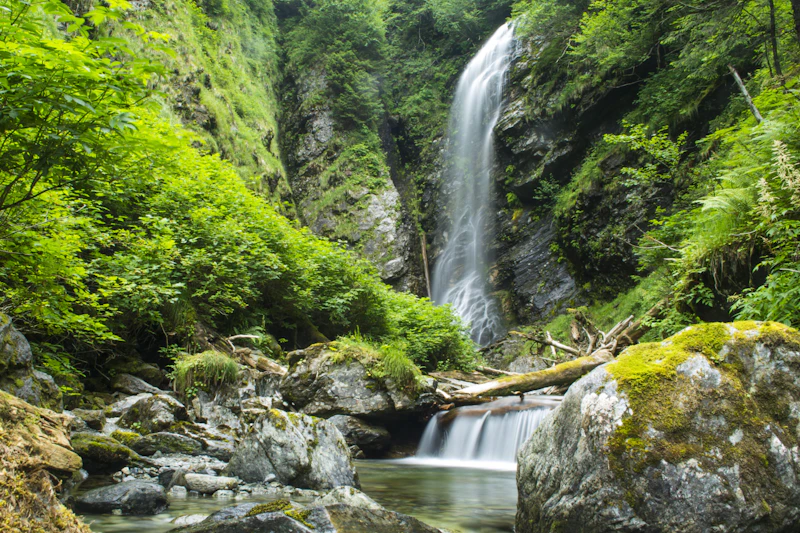 Photo by Lione Clare
 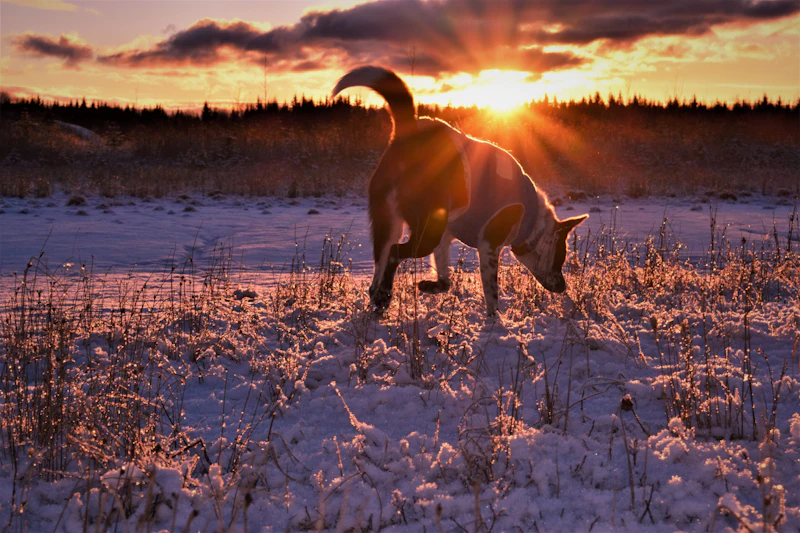 Mendenhall Recreation Area. Photo by Melissa Kulack, courtesy of the U.S. Forest Service
 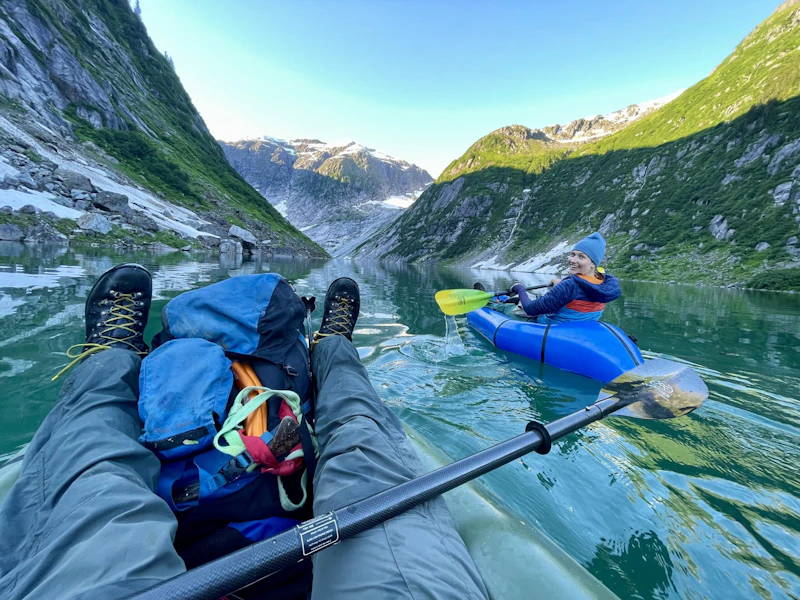 Packrafters on Long Lake. Photo by the U.S. Forest Service
 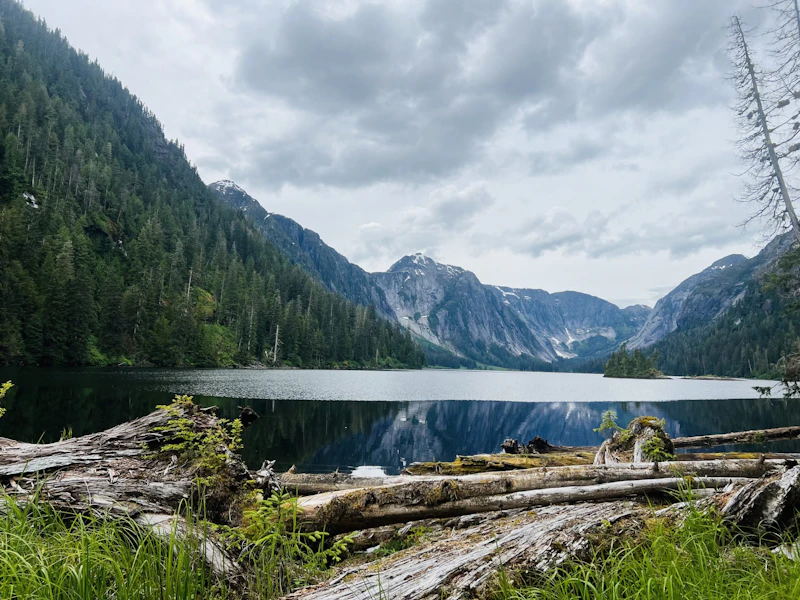 Nooya Lake. Photo by Anne McTurner, courtesy of the U.S. Forest Service
 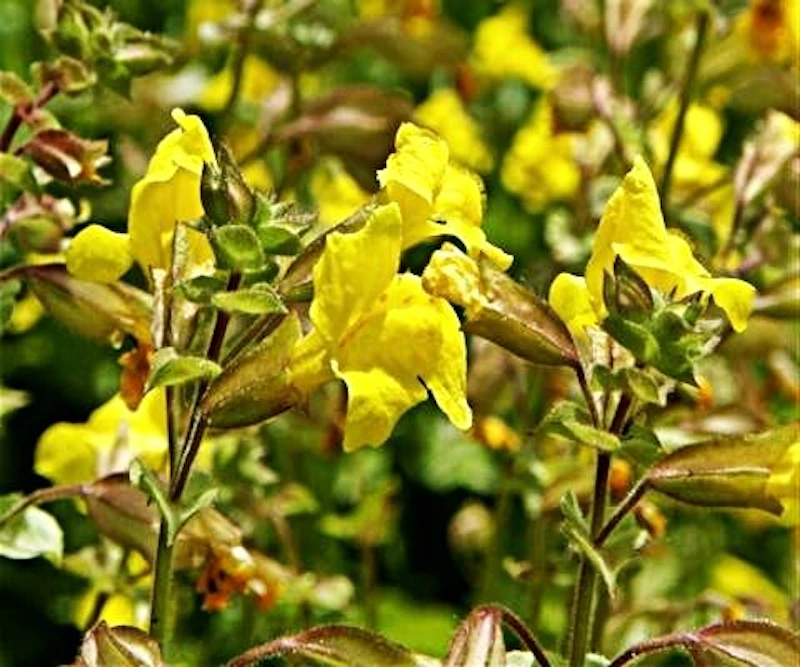 Monkeyflower. Photo by the U.S. Forest Service
 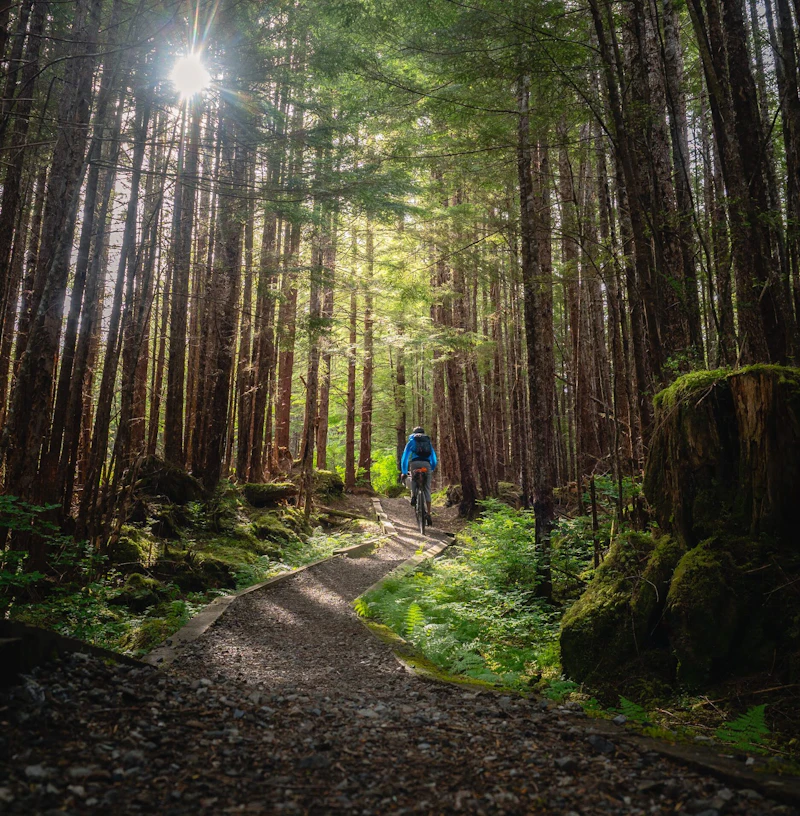 Bikepacking Prince of Wales Island. Photo by Sarah Conlin
 What is the History of the Tongass National Forest?
The history of the Tongass National Forest is deeply tied to its Indigenous heritage, particularly the Tlingit, Haida, and Tsimshian, who have lived in the region for thousands of years.
The modern history of the Tongass began in the 19th century, when Alaska was purchased from Russia by the United States in 1867. In 1902, President Theodore Roosevelt created the Alexander Archipelago Forest Reserve.
By 1907, it was officially designated as Tongass National Forest, and subsequent expansions brought it to its present size.
How to Get to the Tongass National Forest
The most common gateways are the southeast Alaskan towns of Juneau, Ketchikan, Sitka, Petersburg, and Wrangel, all of which are served by regional air service. Alaska Airlines operates year-round service to Juneau and Ketchikan, while smaller commuter and float planes connect to more remote forest outposts.
Because road access is very limited in southeast Alaska, most use the Alaska Marine Highway, the state ferry system, to reach the forest. The ferry drops off travelers in towns like Ketchikan, Juneau, and Petersburg.
To drive, Alaska Route 7 travels the Alexander Archipelago. It includes segments known as the South and North Tongass Highways, in Ketchikan, and the Glacier Highway, in Juneau.
- Anchorage, Alaska: 1.5 to 2 hours by plane
- Seattle, Washington: 3 to 5 hours by plane

This 32-mile paddling route is an epic journey for more experienced adventurers, as it winds through Kootznoowoo Wilderness in the bear-filled Admiralty Island National Monument. Stay at four rental cabins available for rent along the route.
Anan Wildlife Observatory is one of the best places to view bears but requires a bit of extra travel to get to. Take a boat or floatplane to a drop-off site, where a short walk will bring you one of five bear-viewing areas in the forest. From the observatory, watch as black and brown bears feed on spawning salmon.
From the town of Skagway, hop aboard this historic railroad for a breathtaking journey—and to access remote areas of the Tongass National Forest. The rail journey is also a great way for campers and hikers to access backpacking trails, with a number of rental cabins available along the route.
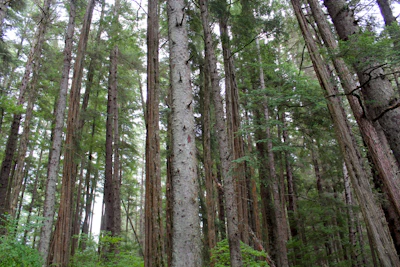 Sitka spruce This hallmark of Alaska’s coastal system thrives in cool, wet climate, it often grows over 200 feet tall.
 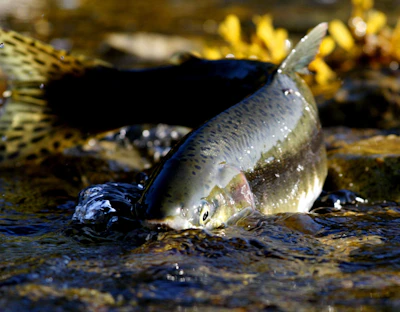 Salmon All five of North America’s Pacific salmon species—chinook, coho, pink, sockeye and chum—are found in the Tongass National Forest.
  Sea otter Found in rich kelp forests and sheltered bays, this playful mammal plays a vital ecological role by controlling sea urchin populations.
 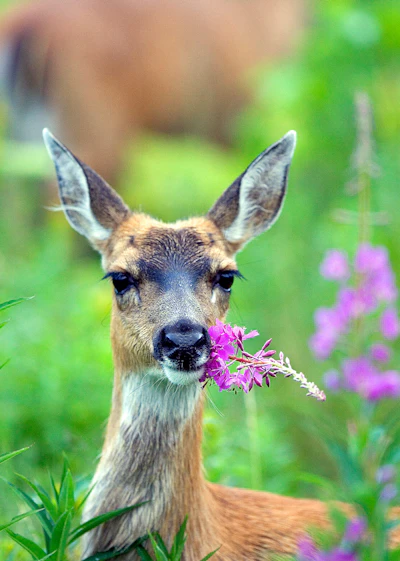 Sitka black-tailed deer This small, agile deer thrives in the forest’s dense understory, feeding on shrubs and lichens, and providing a source of sustenance for Alaskan residents.
 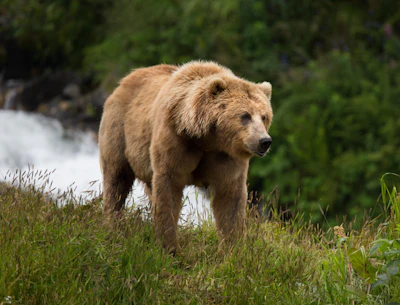 Brown bear Sustained by abundant salmon runs, lush vegetation, and vast stretches of intact habitat, this mighty bear averages 500 to 900 pounds.
 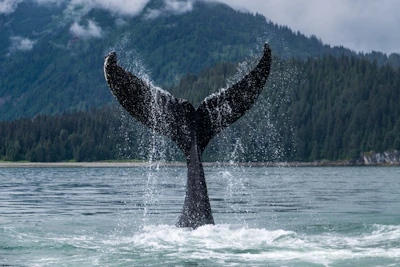 Humpback whale The forest’s nutrient-rich channels and bays provide great feeding grounds for this whale, which migrate to these waters in the summer.
 What’s the Best First-Timer’s Adventure in the Tongass National Forest
For one of the most accessible—and worthwhile—experiences on the Tongass, make your way to Mendenhall Glacier, one of five glaciers in the forest. This 13.6-mile formation is just 12 miles from downtown Juneau, making it one of the most reachable in the forest. Hike one of the trails around the glacier or simply take in the view from one of the accessible paths and platforms. The glacier feeds into Mendenhall Lake where visitors can sometimes spot brown bears feeding on the salmon.

Where to Find More Information on the Tongass National Forest
For more information or questions, visit https://www.fs.usda.gov/r10/tongass.
Discover how communities, volunteers, and partners are shaping the future of our National Forests and Grasslands.
The National Forest Foundation works with partners across Northern Colorado to restore forests, reduce wildfire risk, and care for the…
After years of damage, recovery, and reconstruction, the trail to Hanging Lake has been fully rebuilt, creating a more durable,…
Erosion and wildfire had left Arizona's historic Highline Trail rutted and unsafe. After five years of work with the Tonto…
Forest restoration near Flagstaff is reducing wildfire risk for local communities and safeguarding the water supply for millions across the…
Colorado's 14ers draw thousands of visitors each year, and the pressure on these fragile alpine landscapes is growing. Here's a…
Visitors of all ages can explore forest trails and sparkling waters, discover wildlife and underwater habitats, and connect with Tahoe’s…
A partnership-driven program connecting youth on Montana’s Flathead Reservation with hands-on conservation work, heritage education, and pathways in natural resource…
Seeing the impact first hand on the Grand Mesa, Uncompaghre and Gunnison National Forests
Seven Years of Reopening Trails After the Eagle Creek Fire
Field Ranger Program Connects Diverse Communities to Forests in Southern California
Our Forests Need Us Today.
Your donation powers critical, on-the-ground conservation—from wildfire recovery to watershed restoration—protecting forests for the future.