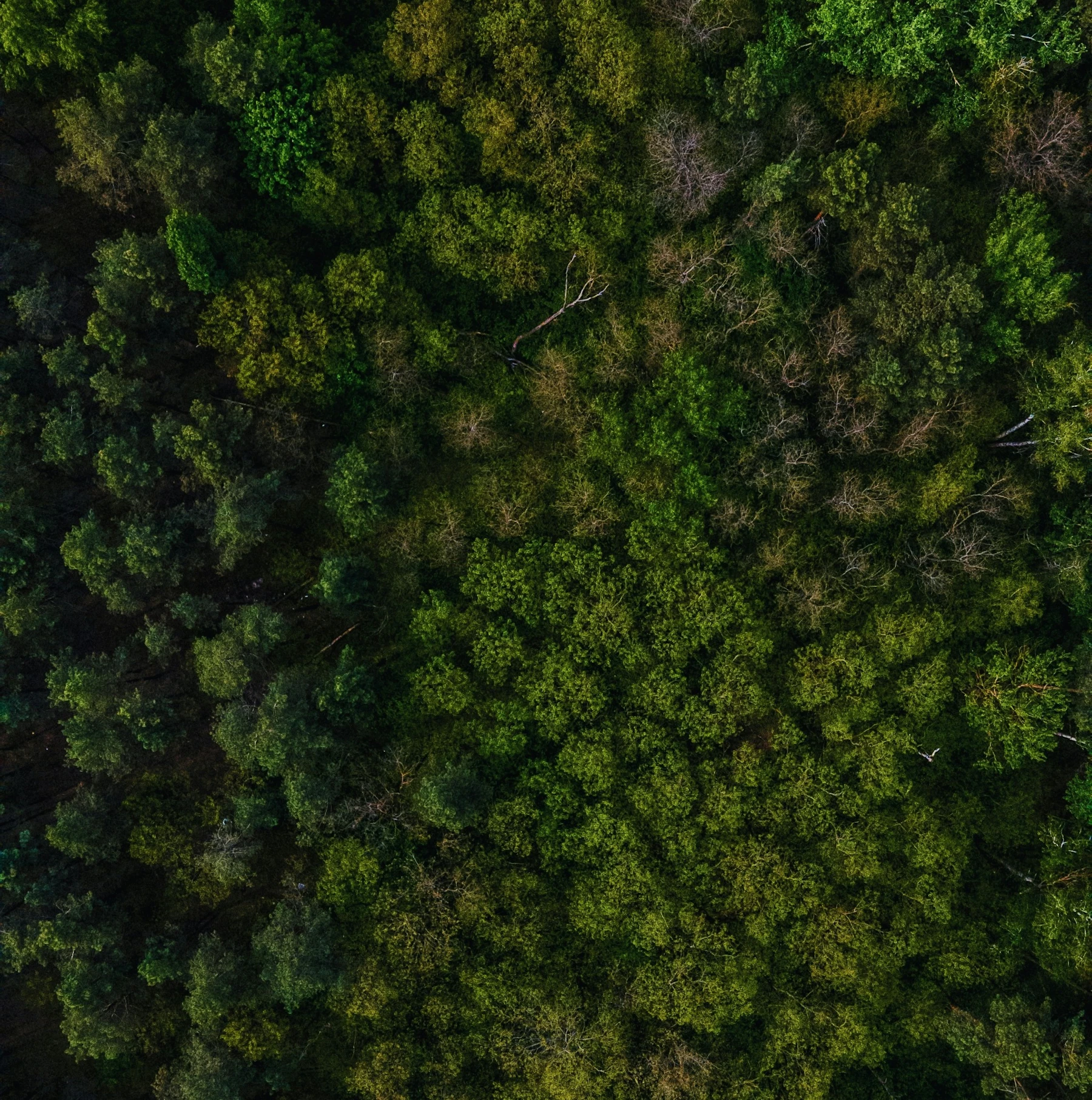
Explore the Black Hills National Forest in western South Dakota and northeastern Wyoming, encompassing 1.2 million acres of rugged rock formations, canyons and gulches, open grassland parks, deep-blue lakes, and unique caves.
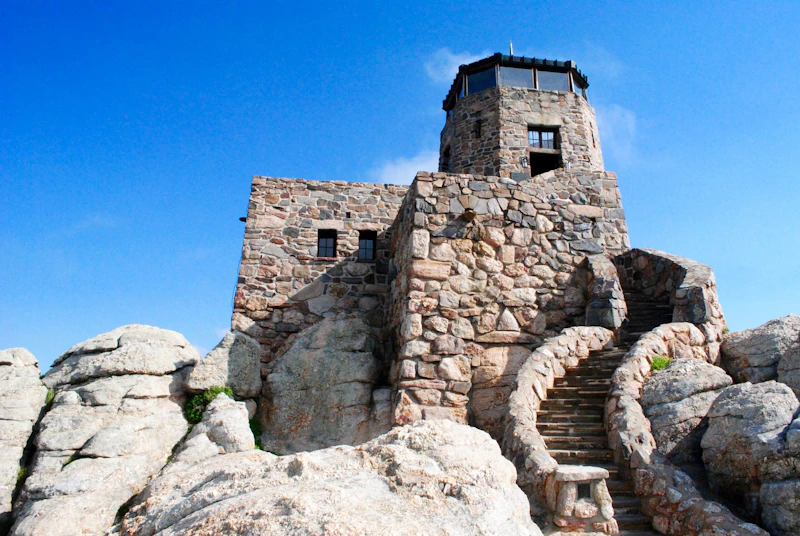
The forest is home to 7,244-foot Black Elk Peak, the highest point in the United States east of the Rockies. From a historic lookout tower on the summit, one has a panoramic view of parts of South Dakota, Nebraska, Wyoming, and Montana, as well as the granite formations and cliffs of the Black Elk Wilderness.
Amid this spectacular scenery are 11 reservoirs, 30 campgrounds, two scenic byways, 1,300 miles of streams, and 450 miles of trails. Explore the third-largest cave system in the world, horseback through unique geological formations, and experience infamous Wild West history.
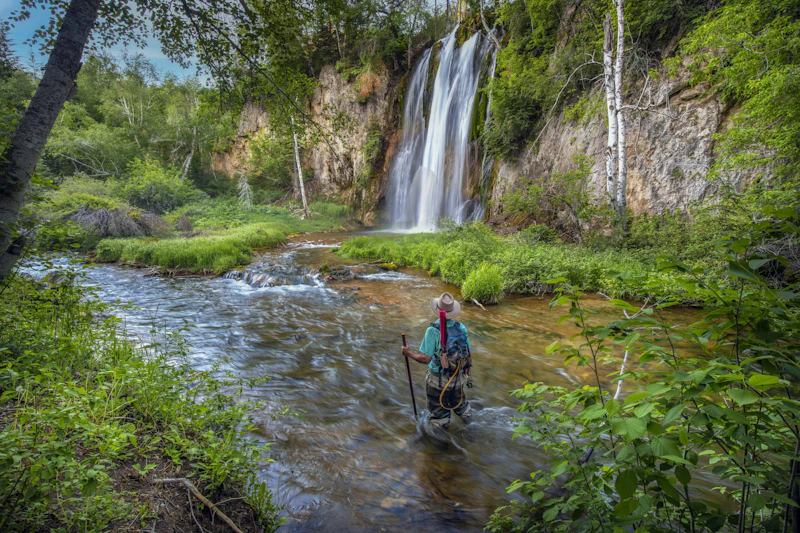 Photo by Phil Reedy
 Photo by Alice Jones
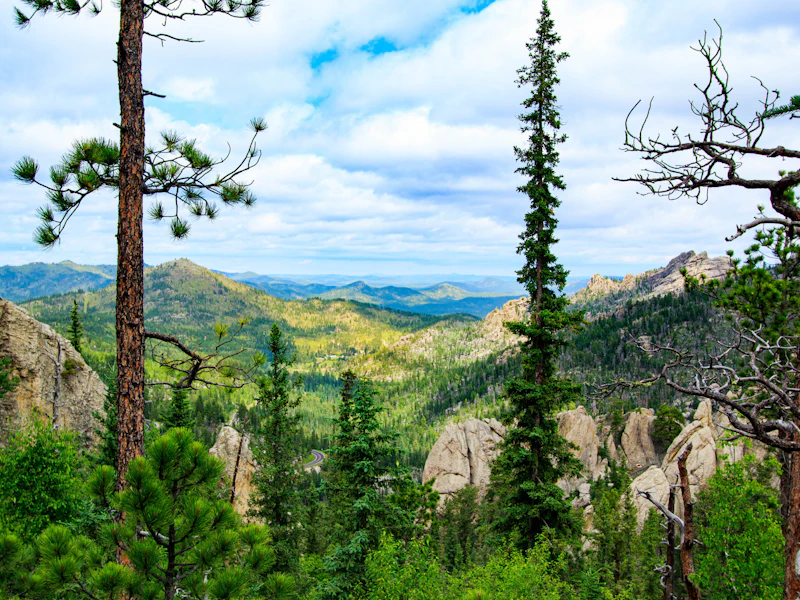 Photo by Angelica Davila
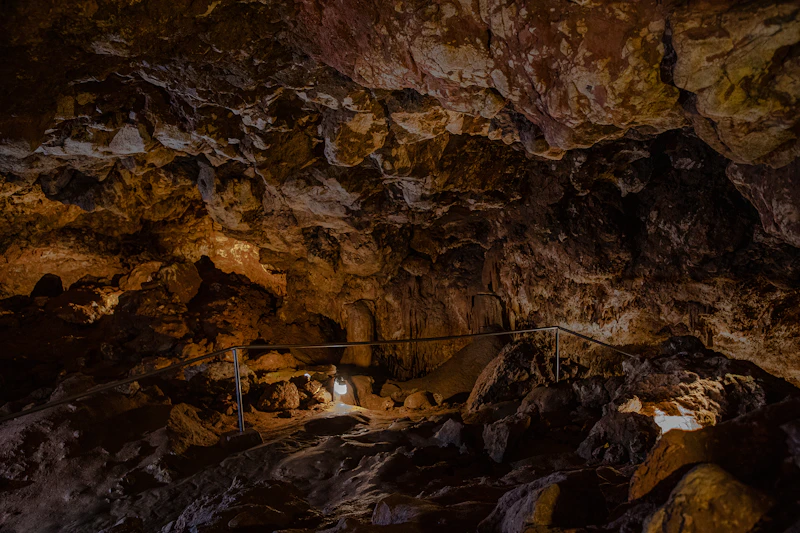 Photo by Kaden Franke
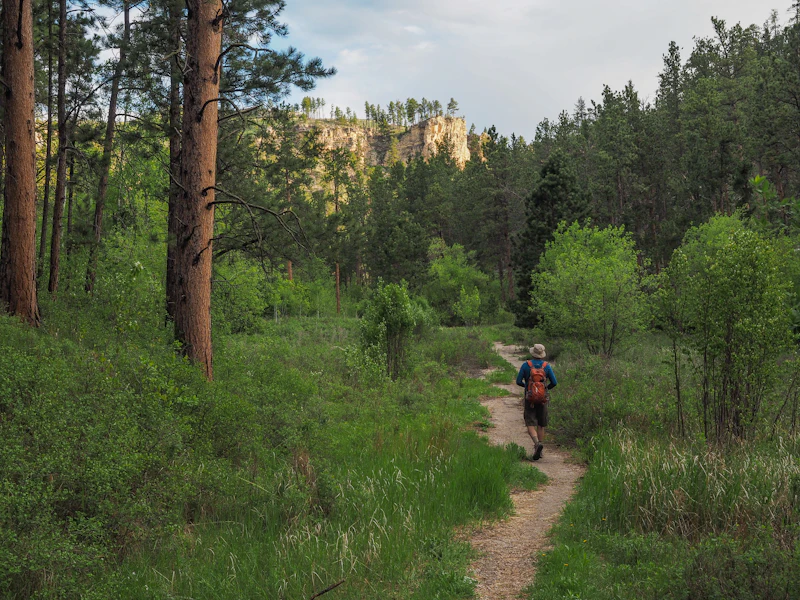 Photo by Jeffrey Clark
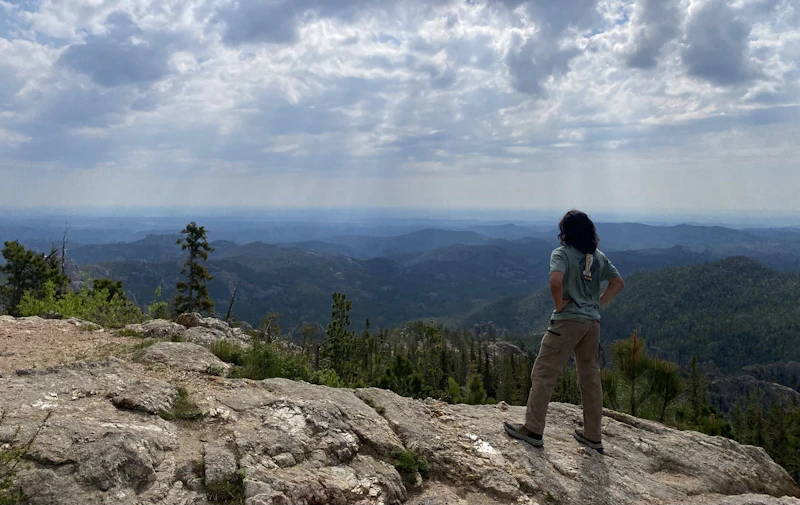 Photo by Weston Raynak
 Photo by Matthew Barroner
What is the History of the Black Hills National Forest?
The Black Hills area has a rich, diverse cultural heritage. Archaeological evidence suggests the earliest known use of the area occurred about 10,000 years ago. The region was originally inhabited by the Lakota Sioux, who consider the Black Hills sacred.
The name comes from the Lakota words “paha sapa,” which mean “hills that are black.” Seen from a distance, these pine-covered hills, rising several thousand feet above the surrounding prairie, appear black.
In the late 19th century, the discovery of gold in the area sparked a gold rush, leading to conflicts between the U.S. government and Native tribes, notably the Great Sioux War from 1876 to 1877.
The National Forest was one of the first to be established in 1897. Over time, the Black Hills National Forest evolved to host a variety of uses, including timber harvesting, recreation, and conservation. Today, visitors can experience the forest’s historic chapters by renting one of the historic ranger stations, exploring a mining ghost town, and viewing exhibits created in conjunction with tribal communities.
How to Get to the Black Hills National Forest
To reach the Black Hills National Forest, travelers usually take Interstate 90, the area’s main east-west route. From the east, enter through Rapid City, South Dakota, which has a major airport. From the west, the cities of Spearfish and Sturgis are popular gateway towns. Highway 385 runs north-south through the forest, connecting towns like Hill City, Deadwood, and Custer.
- Rapid City, South Dakota: 1 hour by car
- Casper, Wyoming: 3.5 to 4 hours by car
- Sioux Falls, South Dakota: 6 to 6.5 hours by car
- Cheyenne, Wyoming: 4.5 to 5 hours by car

Black Elk Peak, formerly Harney Peak, reaches 7,244 feet, offering an amazing vantage of the Black Hills. The Black Elk Peak Loop trail gains close to 1,500 feet in elevation, starting in a coniferous forest in Custer State Park and ending at a stone lookout tower.
With three horse campgrounds and plenty of horseback-friendly trails, the Black Hills National Forest is an ideal place to explore astride. In particular, ponderosa pine-filled Iron Creek campground, near Custer in the Hell Canyon Ranger District of the forest, is a great option for riders looking to explore the Black Elk Wilderness Area.
While Mount Rushmore National Memorial is the more popular of the forest’s two monuments, Jewel Cave is worth a visit. Set in the middle of the Black Hills National Forest, this monument is the third-largest cave system in the world. More than 200 miles of passages have been mapped and more continued to be discovered.
Seth Bullock, the infamous sheriff of the Wild West town of Deadwood (the same featured in the hit HBO series) and an early supervisor for the Black Hills National Forest, was close friends with President Theodore Roosevelt. To commemorate their friendship, Bullock built this stone tower in 1919. Visitors can reach it by a one-mile roundtrip trail from the Mount Roosevelt Picnic Area.
 Arrowleaf balsamroot
With sunflower-like blooms and arrow-shaped leaves, this perennial is common across the western Black Hills. It has cultural significance and medicinal use for the area’s Indigenous peoples.
Arrowleaf balsamroot
With sunflower-like blooms and arrow-shaped leaves, this perennial is common across the western Black Hills. It has cultural significance and medicinal use for the area’s Indigenous peoples.
 Turkey vulture
Found throughout the Black Hills and adjacent prairie, this huge bird uses columns of hot air, called thermals, to gain height and vantage, allowing it to spot scavenged food sources.
Turkey vulture
Found throughout the Black Hills and adjacent prairie, this huge bird uses columns of hot air, called thermals, to gain height and vantage, allowing it to spot scavenged food sources.
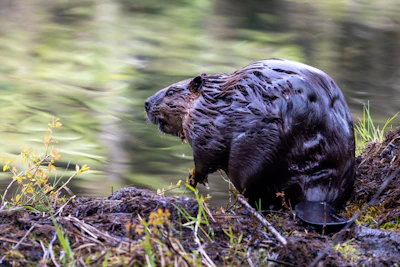 Beaver
Nature’s best engineers used to be a common presence in the forest, creating a thriving riparian habitat. To revive declining populations—only a few exist in isolated areas—the Forest Service has been reintroducing beavers using human-made dams.
Beaver
Nature’s best engineers used to be a common presence in the forest, creating a thriving riparian habitat. To revive declining populations—only a few exist in isolated areas—the Forest Service has been reintroducing beavers using human-made dams.
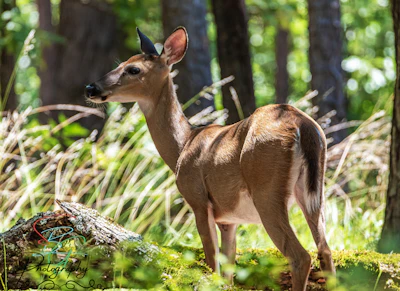 White-tailed deer
One of the most common sights in Bighorn National Forest, this deer is active at dawn and dusk and supports predators like mountain lions and wolves.
White-tailed deer
One of the most common sights in Bighorn National Forest, this deer is active at dawn and dusk and supports predators like mountain lions and wolves.
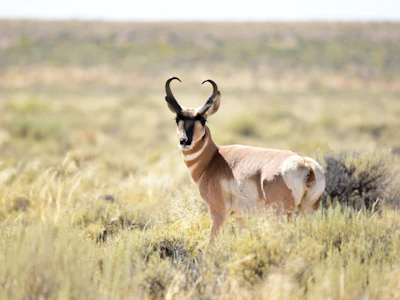 Pronghorn
North America’s fastest land animal, capable of reaching speeds of up to 60 miles per hour, can be spotted throughout the prairies surrounding the Black Hills.
Pronghorn
North America’s fastest land animal, capable of reaching speeds of up to 60 miles per hour, can be spotted throughout the prairies surrounding the Black Hills.
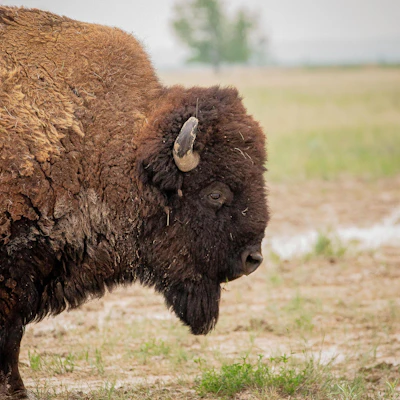 Bison
This massive herbivore, which weighs up to 2,000 pounds and runs 35 miles per hour, used to roam these lands in huge herds and can now be spotted on the forest’s grasslands.
Bison
This massive herbivore, which weighs up to 2,000 pounds and runs 35 miles per hour, used to roam these lands in huge herds and can now be spotted on the forest’s grasslands.
What’s the Best First-Timer’s Adventure in the Black Hills National Forest?
Make sure you visit during a full moon and join in on a Moon Walk, a family-friendly guided hike themed to everything from birds of prey to conservation techniques and CCC-designed structures. Moon Walks are held on select Saturday nights close to the full moon and start at 7 p.m., lasting between one to two hours. The walk is usually about one-mile round trip.
Where to Find More Information on the Black Hills National Forest
For more information or questions, visit https://www.fs.usda.gov/r02/blackhills
Discover how communities, volunteers, and partners are shaping the future of our National Forests and Grasslands.
The National Forest Foundation works with partners across Northern Colorado to restore forests, reduce wildfire risk, and care for the…
After years of damage, recovery, and reconstruction, the trail to Hanging Lake has been fully rebuilt, creating a more durable,…
Erosion and wildfire had left Arizona's historic Highline Trail rutted and unsafe. After five years of work with the Tonto…
Forest restoration near Flagstaff is reducing wildfire risk for local communities and safeguarding the water supply for millions across the…
Colorado's 14ers draw thousands of visitors each year, and the pressure on these fragile alpine landscapes is growing. Here's a…
Visitors of all ages can explore forest trails and sparkling waters, discover wildlife and underwater habitats, and connect with Tahoe’s…
A partnership-driven program connecting youth on Montana’s Flathead Reservation with hands-on conservation work, heritage education, and pathways in natural resource…
Seeing the impact first hand on the Grand Mesa, Uncompaghre and Gunnison National Forests
Seven Years of Reopening Trails After the Eagle Creek Fire
Field Ranger Program Connects Diverse Communities to Forests in Southern California
Our Forests Need Us Today.
Your donation powers critical, on-the-ground conservation—from wildfire recovery to watershed restoration—protecting forests for the future.