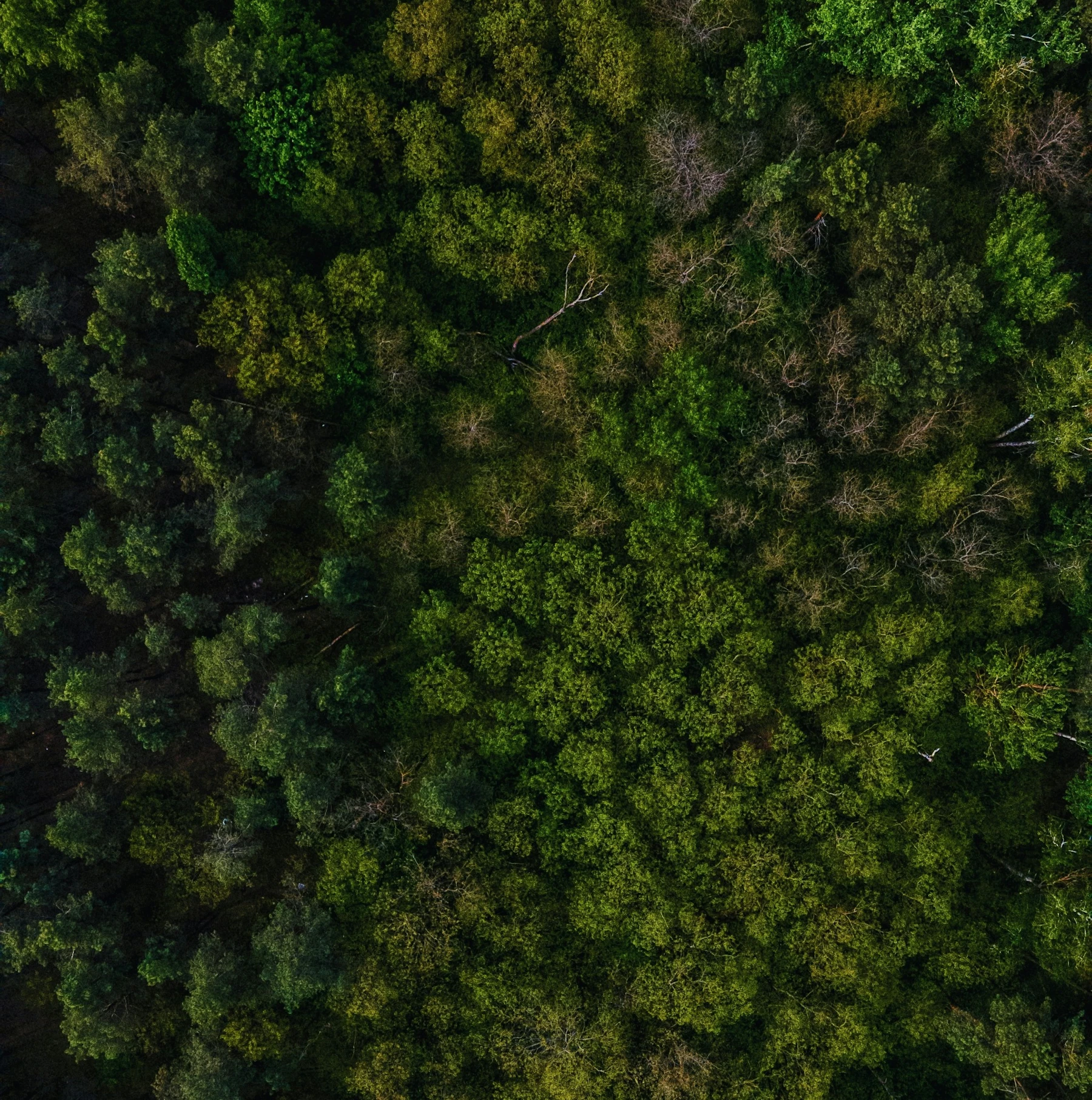
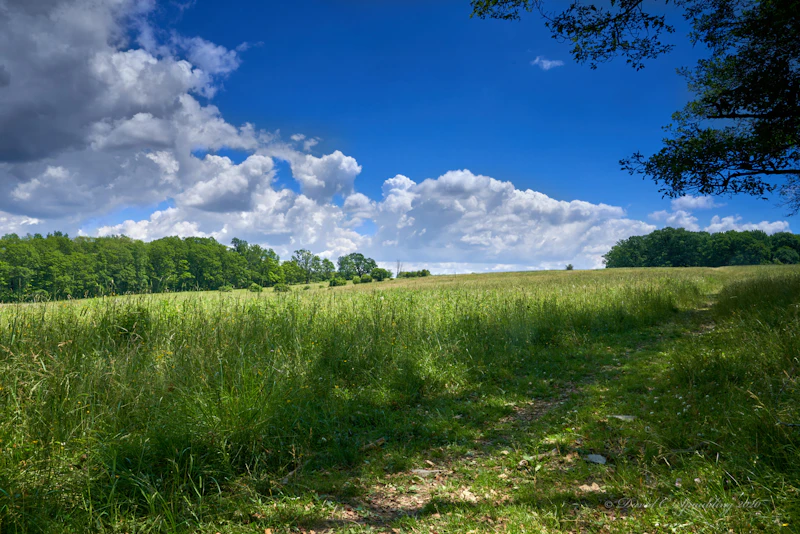
Experience the Finger Lakes National Forest, a 16,032-acre expanse that lies on a ridge between Seneca and Cayuga Lakes, the largest in the beautiful Finger Lakes region of New York State. As New York’s only forest, the Finger Lakes attracts more than a million visitors every year who come to explore its open pastures, cool ravines, and dense woodlands.
The Finger Lakes National Forest currently manages 1,400 acres as shrubland, emphasizing the maintenance of brushy openings for wildlife habitat and fruit production. This habitat type is relatively uncommon in the region, and the forest’s management prioritizes agriculture in areas accessible to forest visitors, with special emphasis on blueberry production.
A large variety of game and non-game wildlife species, from pheasants to white-tailed deer, are dependent on shrub openings during all or part of their life cycle. Many varieties of edible berries and tree fruits are also found in this vegetation type.
The Finger Lakes’ scenic beauty and unique ecosystem offer unlimited recreation any time of year. There are over 25 miles of interconnecting trails that host hikers, bikers, horseback riders, and cross-country skiers. One of its most popular is the 12-mile Interloken Trail and two miles of the Finger Lakes Trail.
 Photo by Erik Harvey
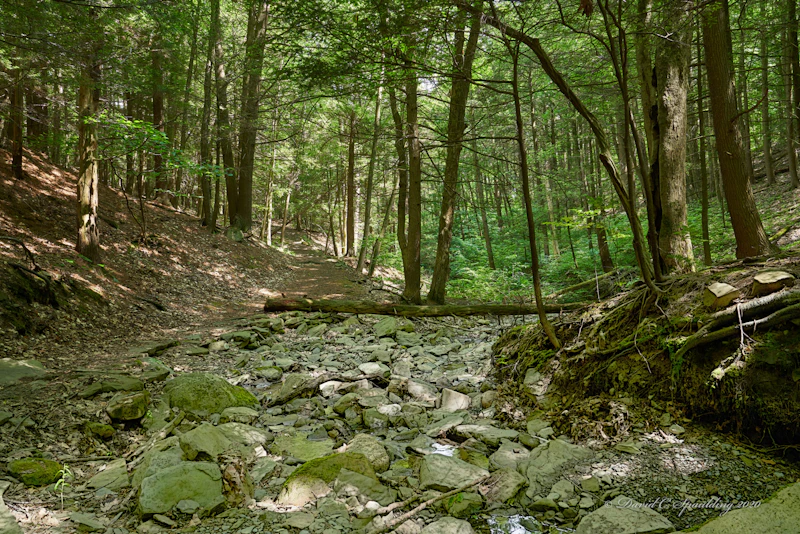 Photo by David Spaulding
 Photo by Erik Harvey
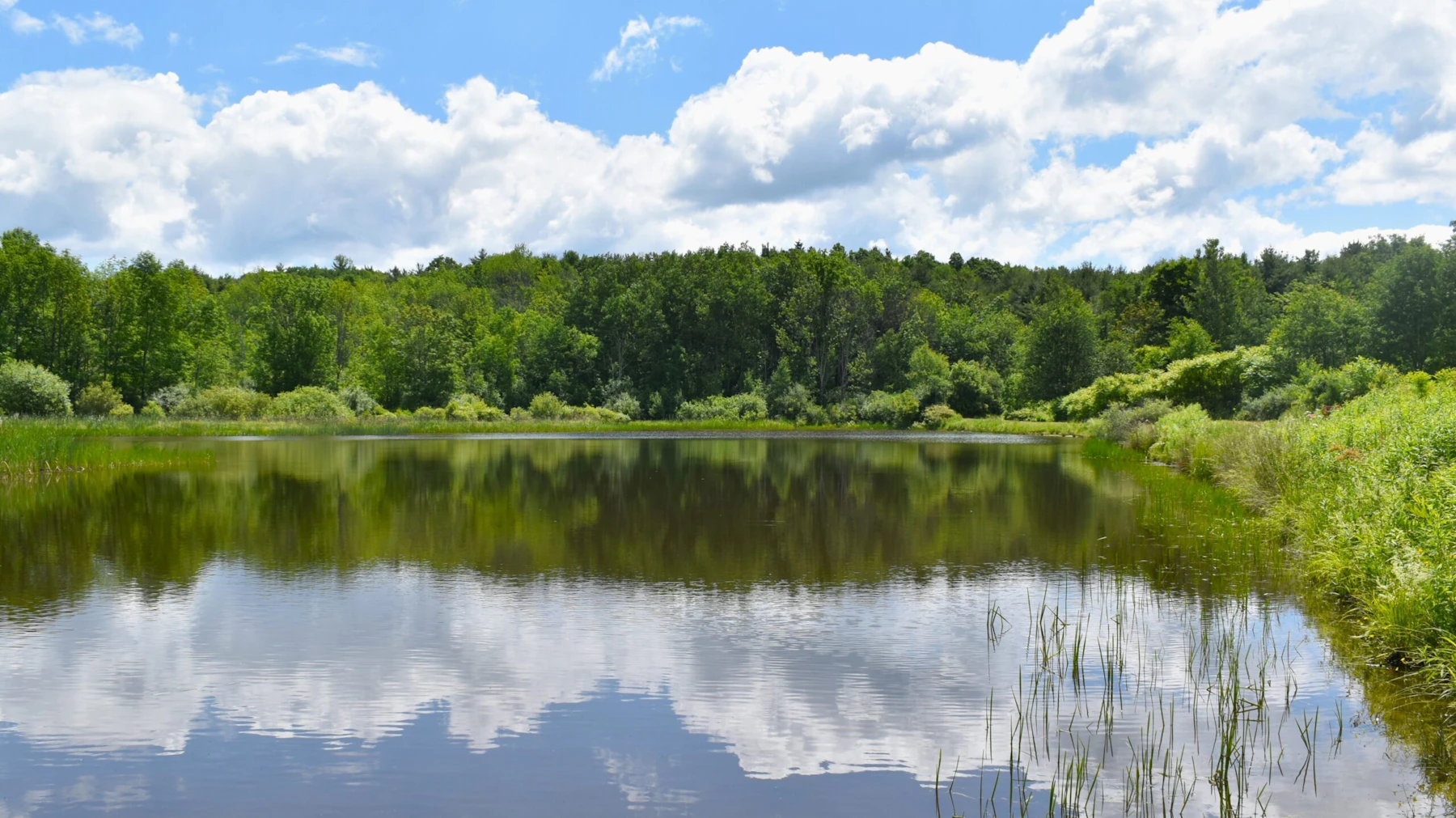
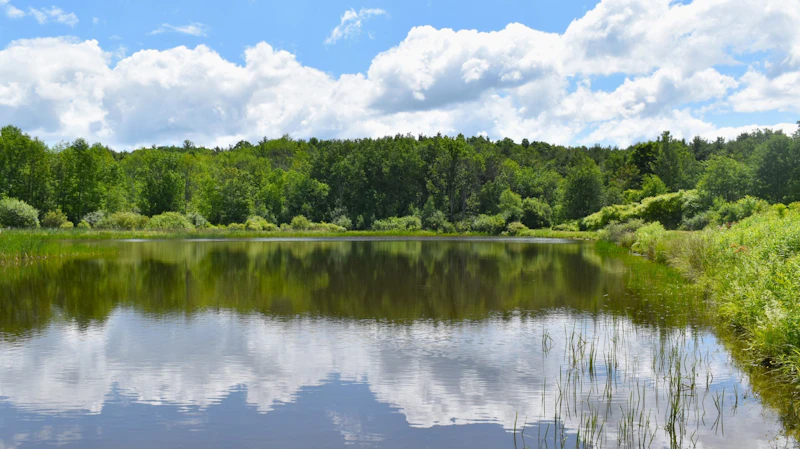 Foster Pond. Photo by Maureen McCarthy
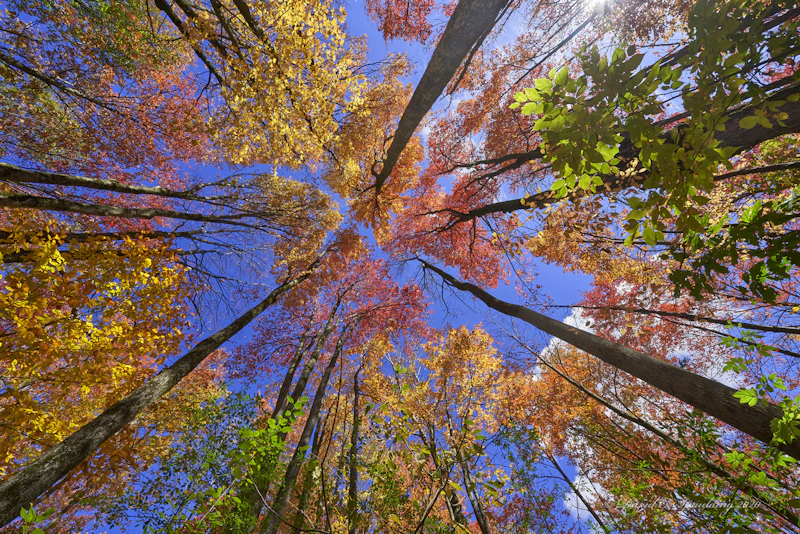 Photo by David Spaulding
What is the History of the Finger Lakes National Forest?
The Haudenosaunee Confederacy, known also as Iroquois Indian Confederacy and the League of Five Nations, originated in the Finger Lakes region. Made up of the Mohawks, Oneidas, Onondagas, Cayugas, and Senecas, the partnership of tribes lived in well-established villages, sustainably cultivated various crops, and is one of the oldest participatory democracies in the world.
After the American Revolutionary War, the U.S. government displaced many Native communities through treaties and land seizures. Much of the land in the Finger Lakes was designated as a Military Tract and awarded to veterans.
The area that now comprises the Finger Lakes National Forest was heavily farmed during the 19th century. However, poor soil quality and harsh winters led to the end of its agriculture chapter by the early 20th century.
The government began purchasing these areas during the Great Depression. After a series of uses, the area was officially designated as the Finger Lakes National Forest in 1985. Today, it is managed as a multi-use area that balances recreation, agriculture, conservation, and cultural preservation.
How to Get to the Finger Lakes National Forest
The forest is in New York’s Schuyler and Seneca counties, with the small town of Hector serving as the closest gateway community. Most visitors take Interstate 90, which runs east-west across the state, connecting via Route 14 or 96 to Route 414, which leads into the forest.
Nearby gateway cities include Ithaca, home to Cornell University and Ithaca College, offering dining, lodging, and cultural attractions. The communities of Geneva and Watkins Glen also make for good bases from which to experience wineries and lakefront activities.
- Hamilton, Ontario, Canada: 3.5 to 4 hours by car
- Mississauga, Ontario, Canada: 3.5 to 4 hours by car
- Toronto, Ontario, Canada: 4 to 4.5 hours by car
- New York City, New York: 4.5 to 5 hours by car
- Pittsburgh, Pennsylvania: 5 to 5.5 hours by car

This 12-mile route through the Finger Lakes National Forest from north to south, parallel to Seneca and Cayuga Lakes. It is ideal for both day hikes and backpacking, with several offshoot loop trails. With elevation gain of less than 1,000 feet and varied terrain, the Interloken Trail is ideal for both beginner and experienced hikers.
Winding backroads like Picnic Area Road and Burnt Hill Road offer panoramic views of rolling hills, colorful hardwoods, and lake vistas. Along the way, stop at scenic overlooks, local farm stands, or trailheads for short hikes.
With just nine campsites available on a first-come, first-serve basis, this scenic campground offers a peaceful escape in the Finger Lakes National Forest. Located next to a vast blueberry patch, it’s a great berry-picking spot come summer. The site is also near to the Interlocken and Burnt Hill trails.
 Staghorn sumac
Known for its antler-like branches topped by clusters of berries, this native shrub is an important food source for birds and a lovely source of color come fall.
Staghorn sumac
Known for its antler-like branches topped by clusters of berries, this native shrub is an important food source for birds and a lovely source of color come fall.
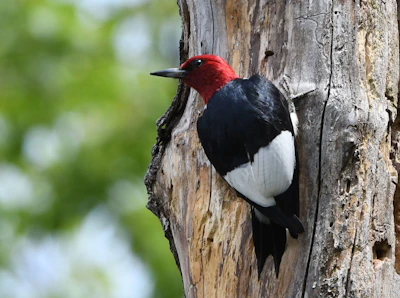 Red-headed woodpecker
With a bright crimson head atop a black-and-white body, this species of woodpecker is distinct for catching insects in flight and storing its food in trees.
Red-headed woodpecker
With a bright crimson head atop a black-and-white body, this species of woodpecker is distinct for catching insects in flight and storing its food in trees.
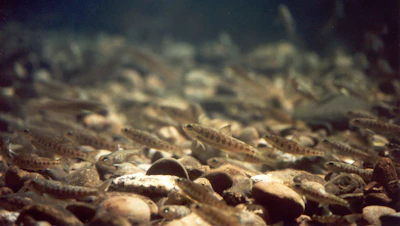 Atlantic salmon
Tens of thousands of these landlocked salmon can be found in Cayuga and Seneca lakes as one of the most popular game species for anglers.
Atlantic salmon
Tens of thousands of these landlocked salmon can be found in Cayuga and Seneca lakes as one of the most popular game species for anglers.
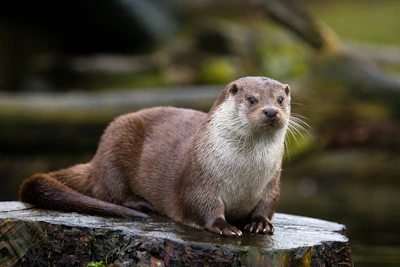 River otter
Once rare in New York, this playful mammal has made a successful return to the wetlands of the Finger Lakes, though sightings are rare due to their elusive nature.
River otter
Once rare in New York, this playful mammal has made a successful return to the wetlands of the Finger Lakes, though sightings are rare due to their elusive nature.
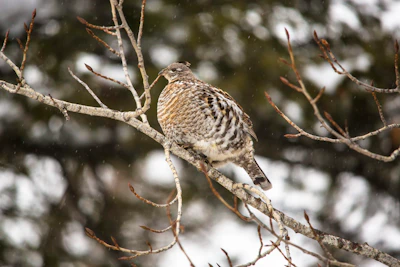 Ruffed grouse
A native game bird that thrives in the undergrowth of hardwood forests, the ruffed grouse is known for its unique drumming mating display and for being a valued species for hunters.
Ruffed grouse
A native game bird that thrives in the undergrowth of hardwood forests, the ruffed grouse is known for its unique drumming mating display and for being a valued species for hunters.
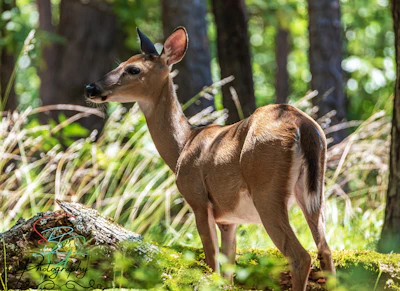 White-tailed deer
With a red-brown coat that turns gray in the winter, this deer is frequently spotted throughout the forest. Bucks, or adult males, grow antlers annually, which they shed after mating season.
White-tailed deer
With a red-brown coat that turns gray in the winter, this deer is frequently spotted throughout the forest. Bucks, or adult males, grow antlers annually, which they shed after mating season.
What’s the Best First-Timer’s Adventure in the Finger Lakes National Forest?
Whether hiking, snowshoeing, or birdwatching, the three-mile Burnt Hill Trail is a hidden gem within the forest’s trail system, tracing mixed hardwood forest and open meadows. It connects with the Interloken Trail, allowing visitors to extend their escape if desired.
Where to Find More Information on the Finger Lakes National Forest
For more information or questions, visit https://www.fs.usda.gov/r09/gmfl
Discover how communities, volunteers, and partners are shaping the future of our National Forests and Grasslands.
The National Forest Foundation works with partners across Northern Colorado to restore forests, reduce wildfire risk, and care for the…
After years of damage, recovery, and reconstruction, the trail to Hanging Lake has been fully rebuilt, creating a more durable,…
Erosion and wildfire had left Arizona's historic Highline Trail rutted and unsafe. After five years of work with the Tonto…
Forest restoration near Flagstaff is reducing wildfire risk for local communities and safeguarding the water supply for millions across the…
Colorado's 14ers draw thousands of visitors each year, and the pressure on these fragile alpine landscapes is growing. Here's a…
Visitors of all ages can explore forest trails and sparkling waters, discover wildlife and underwater habitats, and connect with Tahoe’s…
A partnership-driven program connecting youth on Montana’s Flathead Reservation with hands-on conservation work, heritage education, and pathways in natural resource…
Seeing the impact first hand on the Grand Mesa, Uncompaghre and Gunnison National Forests
Seven Years of Reopening Trails After the Eagle Creek Fire
Field Ranger Program Connects Diverse Communities to Forests in Southern California
Our Forests Need Us Today.
Your donation powers critical, on-the-ground conservation—from wildfire recovery to watershed restoration—protecting forests for the future.