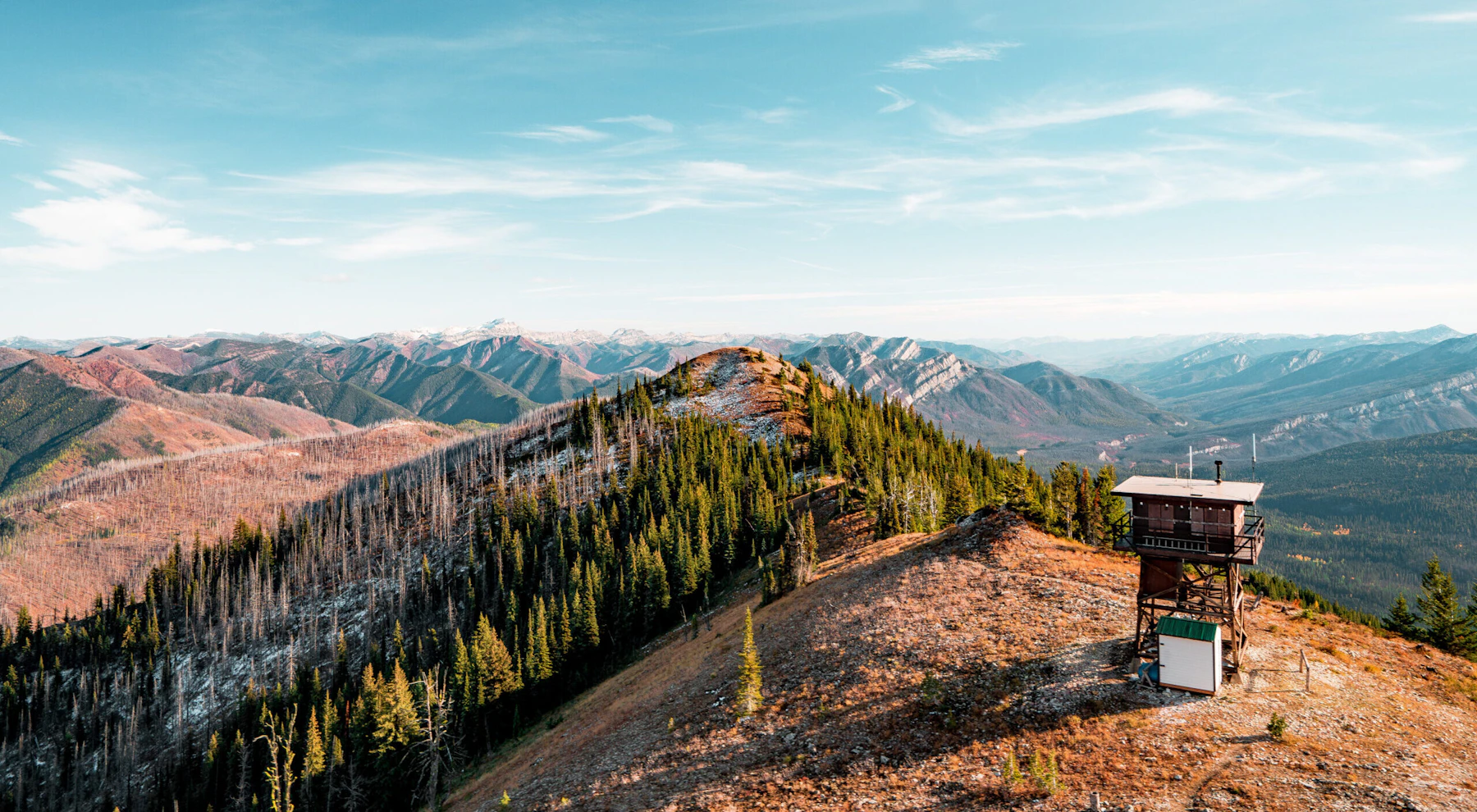
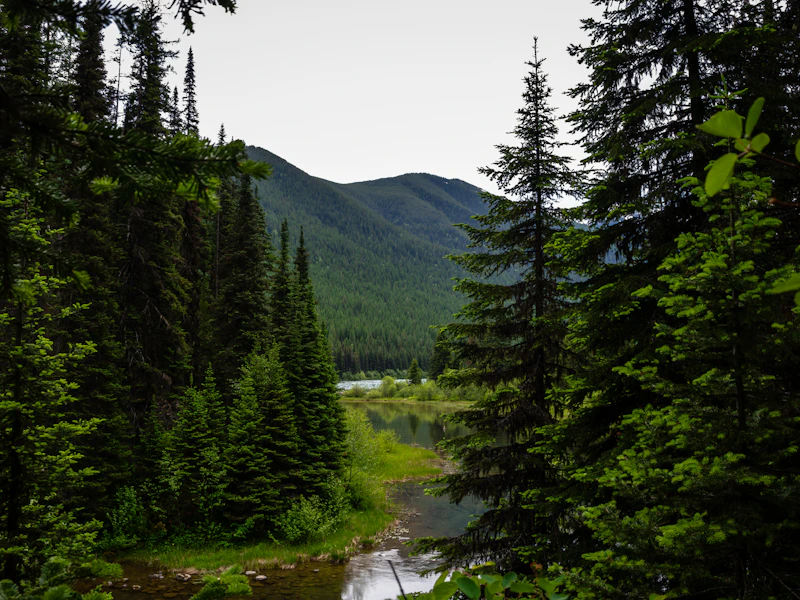
Explore the Flathead National Forest, stretching 2.4 million acres across the Rocky Mountains in northwest Montana. The National Forest is bordered by Canada, Glacier National Park, the Helen-Lewis and Clark National Forest, the Lolo National Forest, and the Kootenai National Forest.
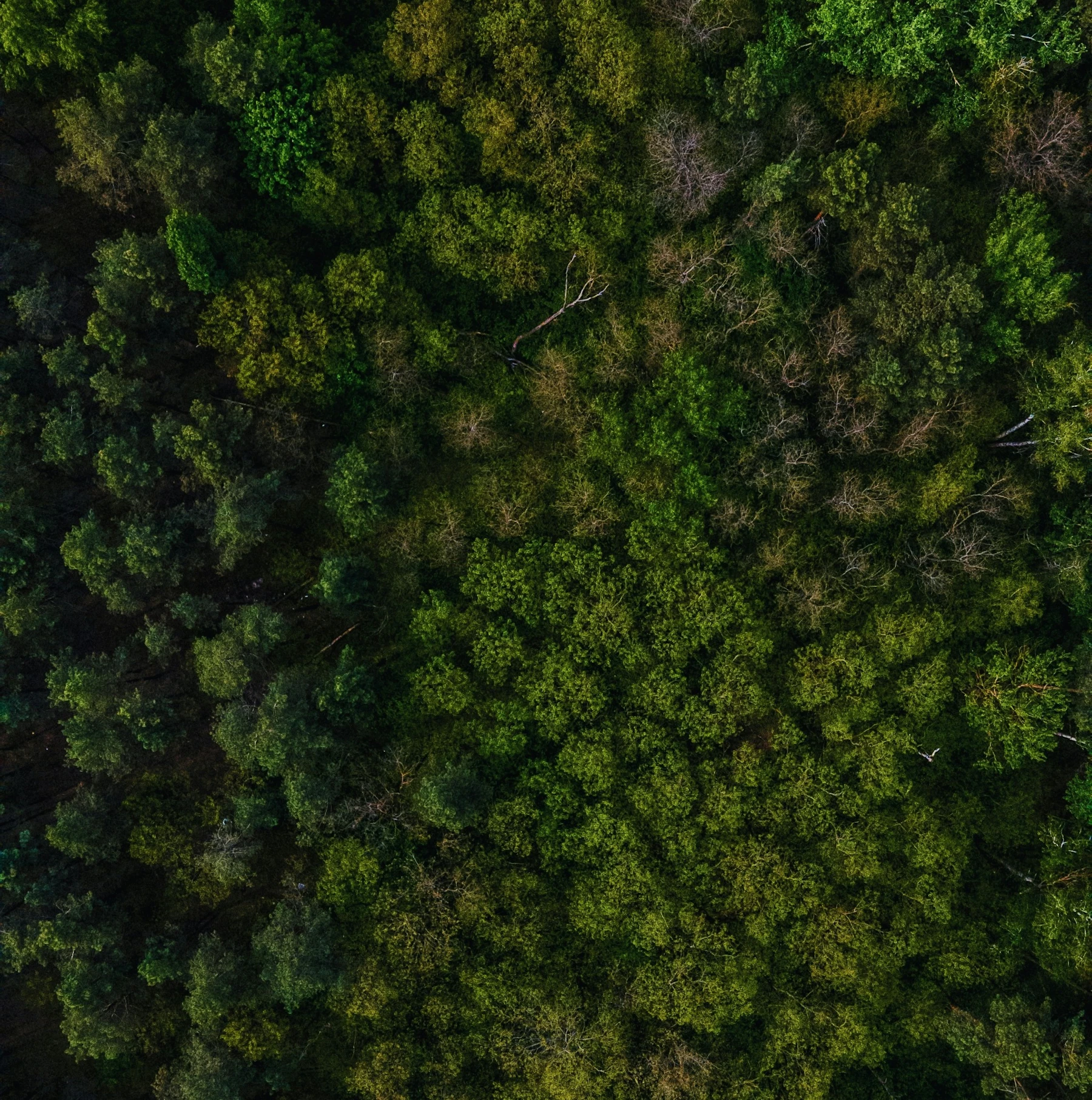
The landscape in northern Montana is made of block fault mountain ranges sculpted by glaciers, and covered with a thick forest of fir, spruce, and pine. Glaciations from the last ice age formed the land’s shape as well as the composition of the soil.
The Flathead National Forest contains three wilderness areas, two ski areas, and 300 miles Wild and Scenic Rivers. The Bob Marshall, Great Bear, and Mission Mountains wilderness areas comprises approximately 46 percent of the Forest’s land base. Other special management areas are the Jewel Basin Hiking Area, a unique 15,000-acre area exclusively for hiking and camping, and Coram Experimental Forest, a 7,500-acre area dedicated to western larch research.
Throughout are 2,600 miles of trails and 200 miles of National Recreation Trails, largely in designated Wilderness Areas, that offer a variety of hiking, biking, horseback riding, off-roading, and winter adventures.
The Flathead National Forest offers as many exciting opportunities to float and explore rivers and lakes. The North Fork, Middle Fork, and portions of the South Fork of the Flathead River are within the National Wild and Scenic Rivers System, and though no permits are required for floating use, be prepared and knowledgeable about paddling before you go.
The area also offers an incredible array of fishing, particularly of Bull Trout and Westslope Cutthroat Trout. The Montana Department of Fish, Wildlife, and Parks is responsible for regulating and managing fishing and hunting throughout the state. Licenses are available from their office and at most local sporting goods stores.
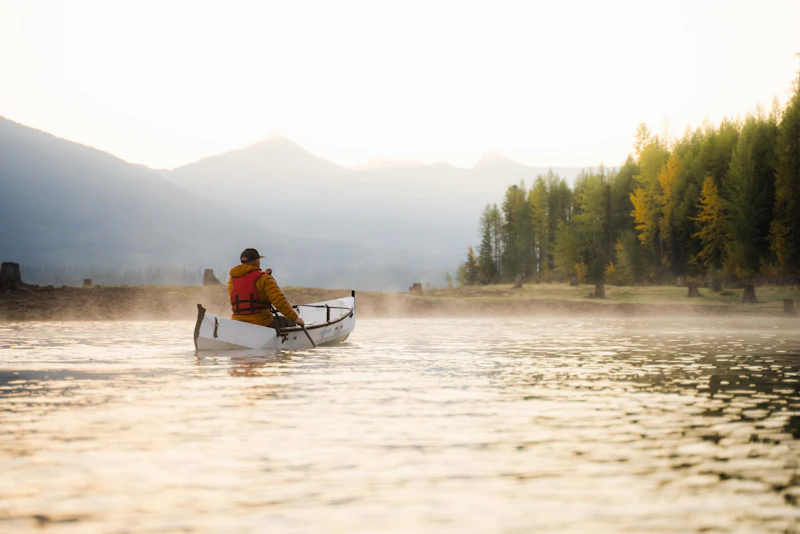 Canoeing on Hungry Horse Reservoir. Photo by Jordan Lefler
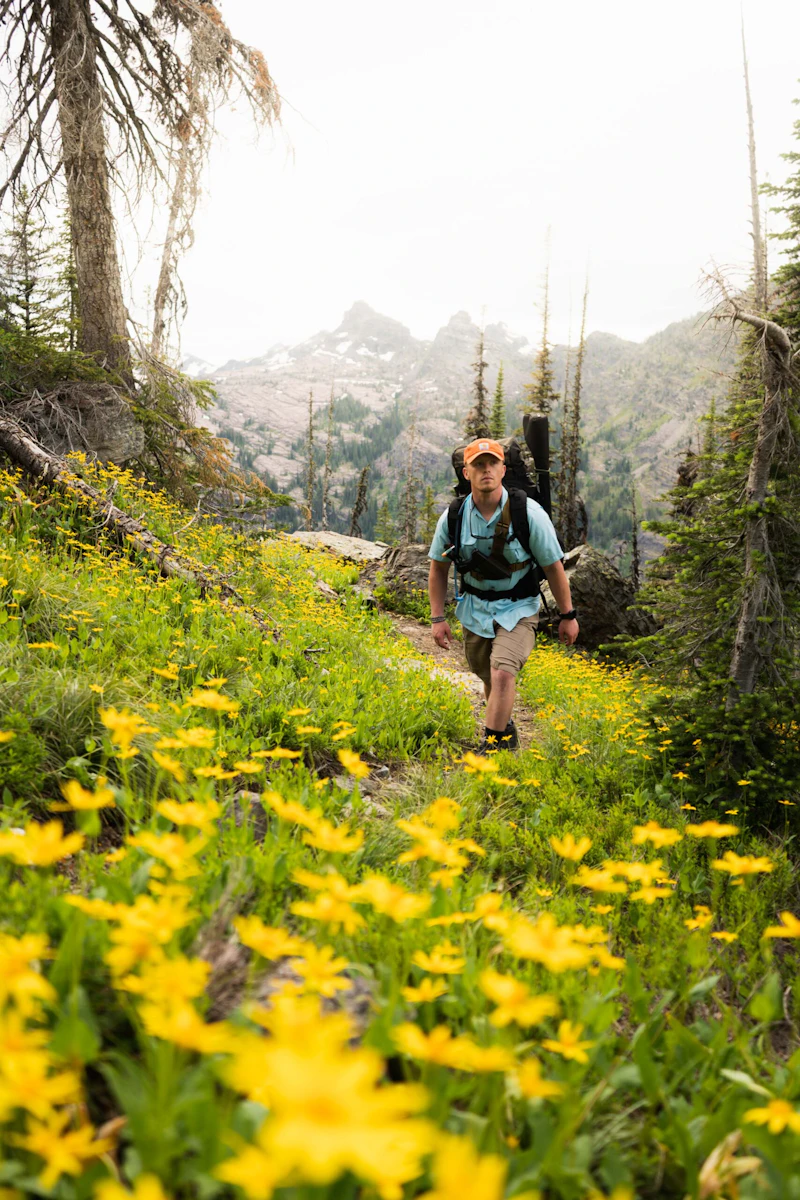 Photo by Jordan Lefler
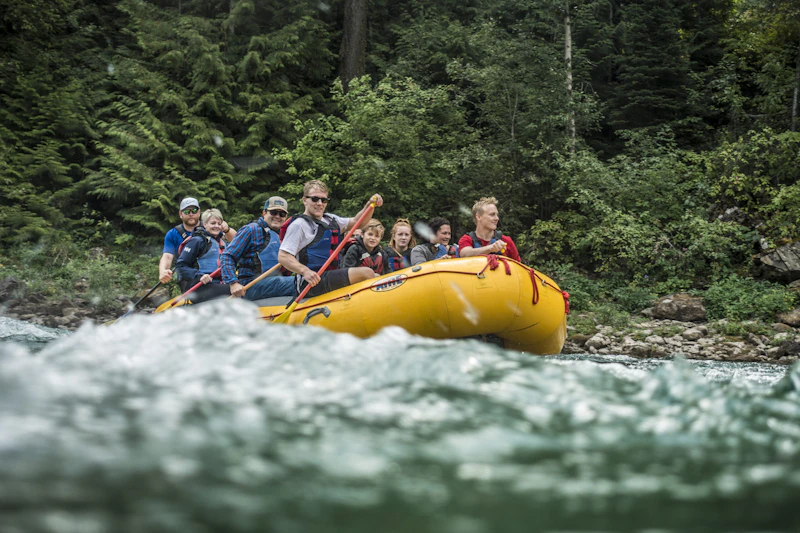 Middle Fork River. Photo by the U.S. Forest Service
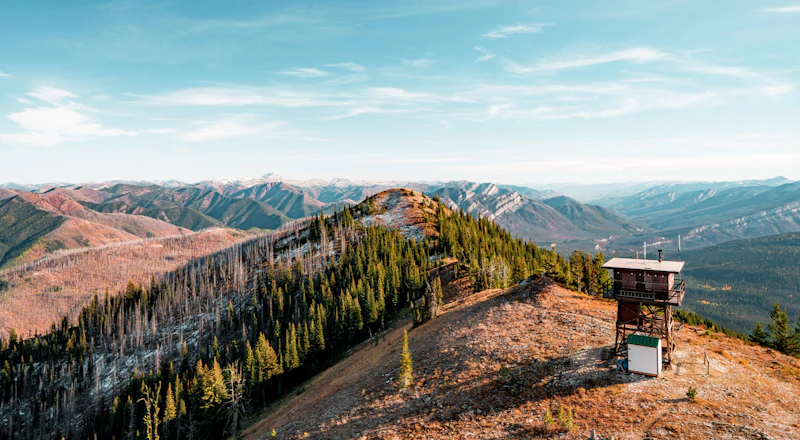 Photo by the U.S. Forest Service
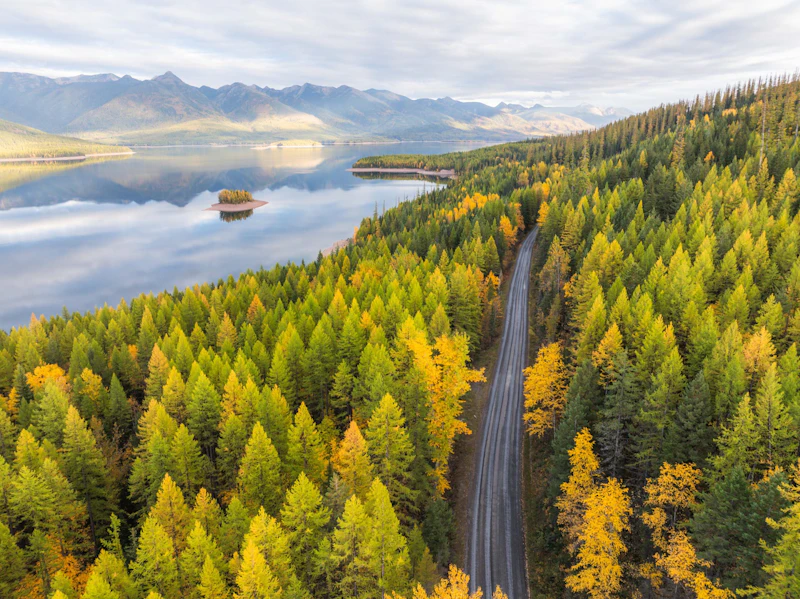 Fall colors at Hungry Horse Reservoir. Photo by Jorden
What is the History of the Flathead National Forest?
The area of the Flathead was home to the Salish, Kootenai, and Pend d’Oreille peoples. European-American exploration of the region began in the early 1800s, with fur trappers and traders moving westward. As logging and railroad industries expanded in the late 19th century, pressure on the land increased, prompting the federal government to act.
Flathead National Forest was officially established in 1897 as part of the greater Lewis and Clarke Forest Reserve. It became its own entity in 1910, named after the Flathead tribe, a common misnomer for the Salish people. Today, the forest partners with tribal, state, and local governments to manage its resources.
How to Get to the Flathead National Forest
The largest city in the area, Kalispell, serves as a primary gateway to the forest. It’s located along U.S. Highway 2 and U.S. Highway 93, which provide access to different parts of the forest. U.S. Highway 2 runs east-west and is a major route for visitors coming from Glacier National Park U.S. Highway 93 runs north-south and connects Kalispell to Missoula in the south and the Canadian border to the north.
Glacier Park International Airport (FCA), located just outside Kalispell, is the nearest airport. Whitefish, to the north of Kalispell, is another popular entry point, especially for those heading to the northern sections of the forest. Columbia Falls and Bigfork provide access to eastern and southern areas of the forest, respectively.
- Missoula, Montana: 1 to 1.5 hours by car
- Great Falls, Montana: 2.5 to 3 hours by car
- Bozeman, Montana: 3.5 to 4 hours by car

Some 15,000 acres of this specially designated area—exclusive to camping and hiking—contains 27 lakes with excellent fishing. These lakes are stocked with westslope cutthroat trout every three years, while rainbow and Yellowstone cutthroat trout are self-sustaining in many lakes.
West of Whitefish, this 39-site campground on the shores of its namesake lake—one of the deepest in the state—is an ideal base for all kinds of adventures, from swimming from its sandy beach to hiking forested trails.
The Flathead National Forest features 157 miles of designated snowmobile trails and thousands of acres of open play areas. The groomed Summit House Snowmobile Trail takes riders to the top of Big Mountain.
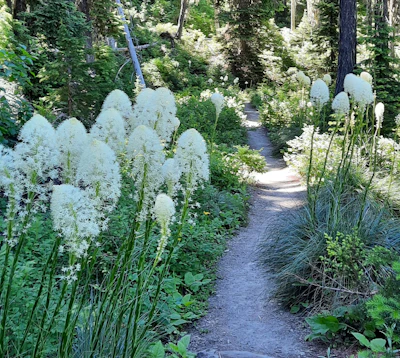 Beargrass
This unique wildflower blooms every five to seven years, bursting with white flowers atop tall stalks. It is commonly used by Native American peoples for weaving baskets.
Beargrass
This unique wildflower blooms every five to seven years, bursting with white flowers atop tall stalks. It is commonly used by Native American peoples for weaving baskets.
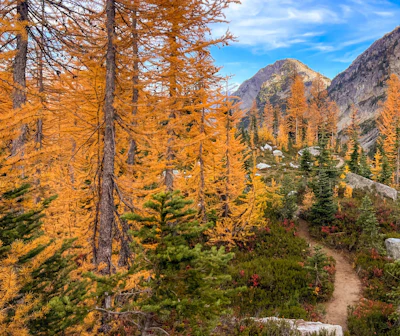 Western larch
Unlike most conifers, the western larch is deciduous, with needles that glow golden in the fall and shed before winter. The Coram Experimental Forest, on the Flathead, is a leading research grounds for the species.
Western larch
Unlike most conifers, the western larch is deciduous, with needles that glow golden in the fall and shed before winter. The Coram Experimental Forest, on the Flathead, is a leading research grounds for the species.
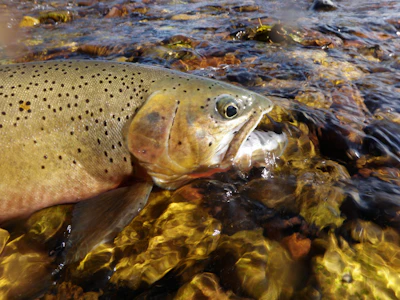 Westslope cutthroat trout
One of two subspecies of native cutthroat found in Montana, alongside Yellowstone cutthroat trout, the Westslope has been in decline but is the focus of conservation efforts.
Westslope cutthroat trout
One of two subspecies of native cutthroat found in Montana, alongside Yellowstone cutthroat trout, the Westslope has been in decline but is the focus of conservation efforts.
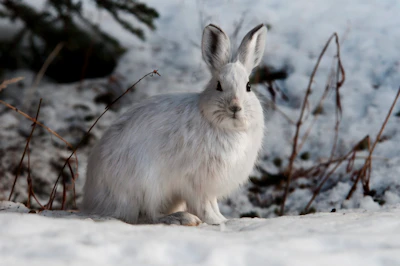 Snowshoe hare
Named for its large feet that function like snowshoes, this hare changes fur color from brown in the summer to white in the winter, which acts as camouflage against predators.
Snowshoe hare
Named for its large feet that function like snowshoes, this hare changes fur color from brown in the summer to white in the winter, which acts as camouflage against predators.
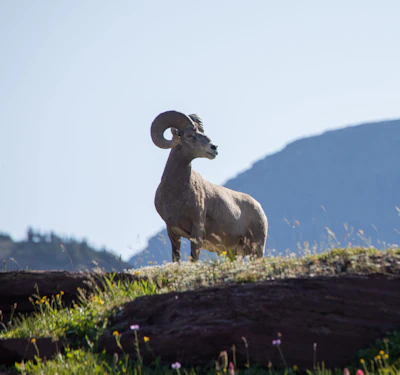 Bighorn sheep
Known for its massive curled horns and climbing skills, this sheep can be found in the high elevation areas of the three mountain ranges.
Bighorn sheep
Known for its massive curled horns and climbing skills, this sheep can be found in the high elevation areas of the three mountain ranges.
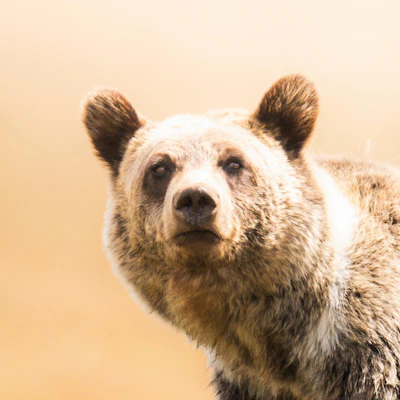 Grizzly bear
This apex predator is growing in population size across this region and displays little fear of humans, so keeping food stowed properly and remaining aware are crucial when visiting the Flathead.
Grizzly bear
This apex predator is growing in population size across this region and displays little fear of humans, so keeping food stowed properly and remaining aware are crucial when visiting the Flathead.
Related Impact
Cultivating Leaders in the Mission Mountains
A partnership-driven program connects youth on Montana’s Flathead Reservation with hands-on conservation work, heritage education, and pathways in natural resource careers.
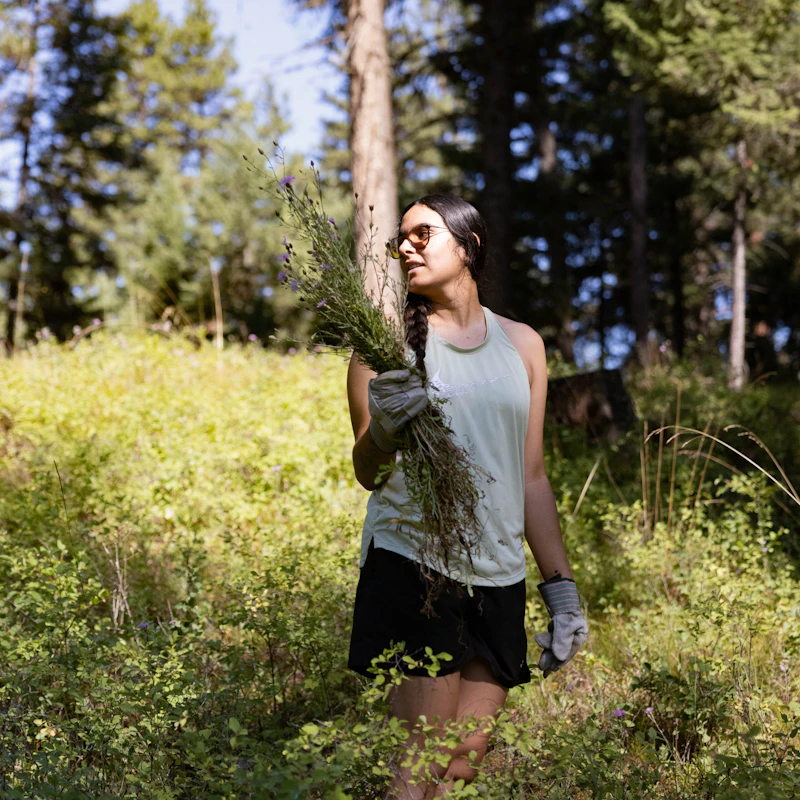
What’s the Best First-Timer’s Adventure in the Flathead National Forest?
Hike the eight-mile Danny On Memorial trail, named after a beloved Forest Service ecologist and nature photographer. The popular hike is located within the Whitefish Mountain Resort, also on the forest and just north of the town of Whitefish. It ascends 2,000 feet up to the summit of Big Mountain. Hikers can opt to hike just one way and take a lift ride the other.
Where to Find More Information on the Flathead National Forest
For more information or questions, visit https://www.fs.usda.gov/r01/flathead
Discover how communities, volunteers, and partners are shaping the future of our National Forests and Grasslands.
The National Forest Foundation works with partners across Northern Colorado to restore forests, reduce wildfire risk, and care for the…
After years of damage, recovery, and reconstruction, the trail to Hanging Lake has been fully rebuilt, creating a more durable,…
Erosion and wildfire had left Arizona's historic Highline Trail rutted and unsafe. After five years of work with the Tonto…
Forest restoration near Flagstaff is reducing wildfire risk for local communities and safeguarding the water supply for millions across the…
Colorado's 14ers draw thousands of visitors each year, and the pressure on these fragile alpine landscapes is growing. Here's a…
Visitors of all ages can explore forest trails and sparkling waters, discover wildlife and underwater habitats, and connect with Tahoe’s…
A partnership-driven program connecting youth on Montana’s Flathead Reservation with hands-on conservation work, heritage education, and pathways in natural resource…
Seeing the impact first hand on the Grand Mesa, Uncompaghre and Gunnison National Forests
Seven Years of Reopening Trails After the Eagle Creek Fire
Field Ranger Program Connects Diverse Communities to Forests in Southern California
Our Forests Need Us Today.
Your donation powers critical, on-the-ground conservation—from wildfire recovery to watershed restoration—protecting forests for the future.