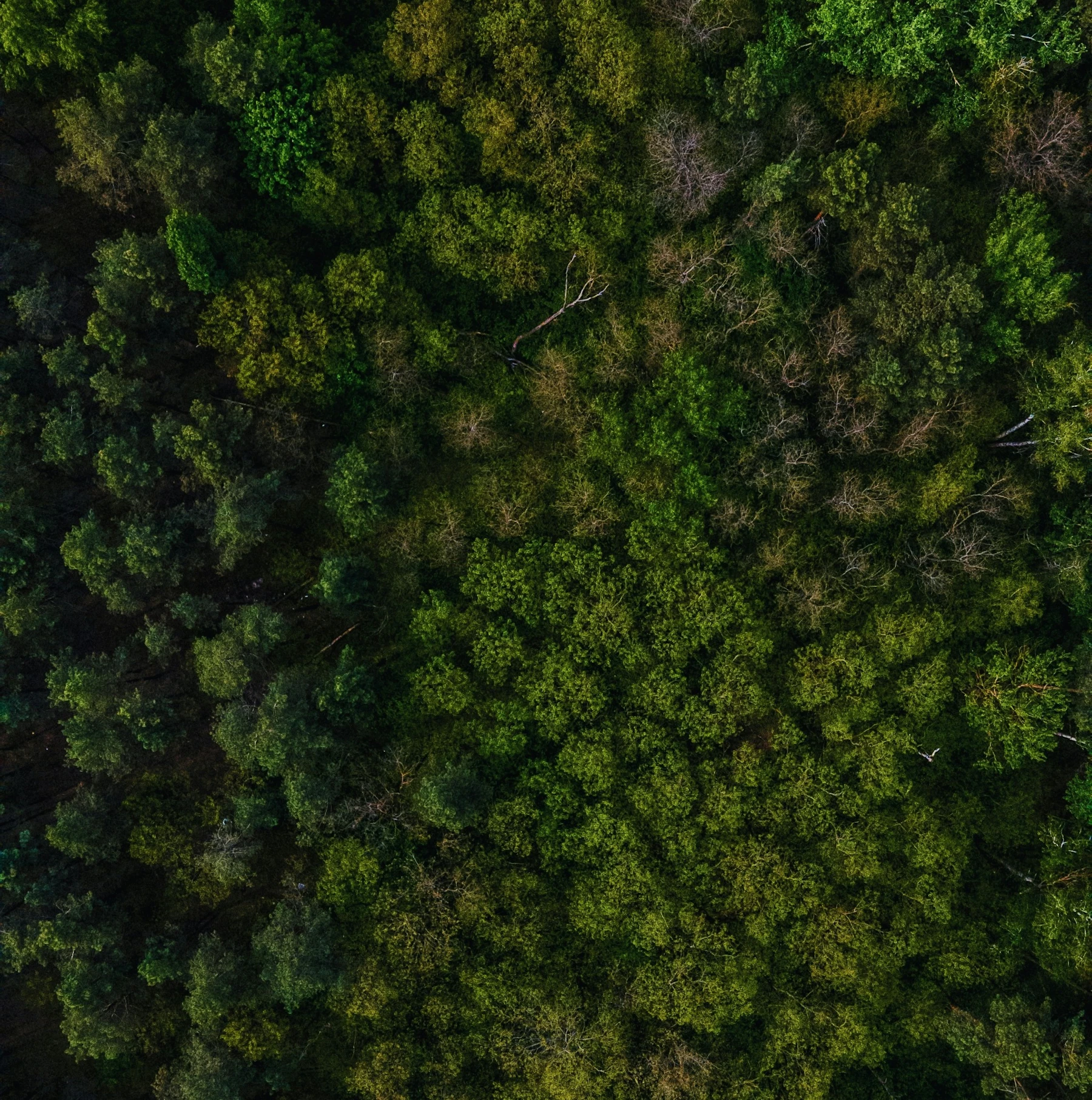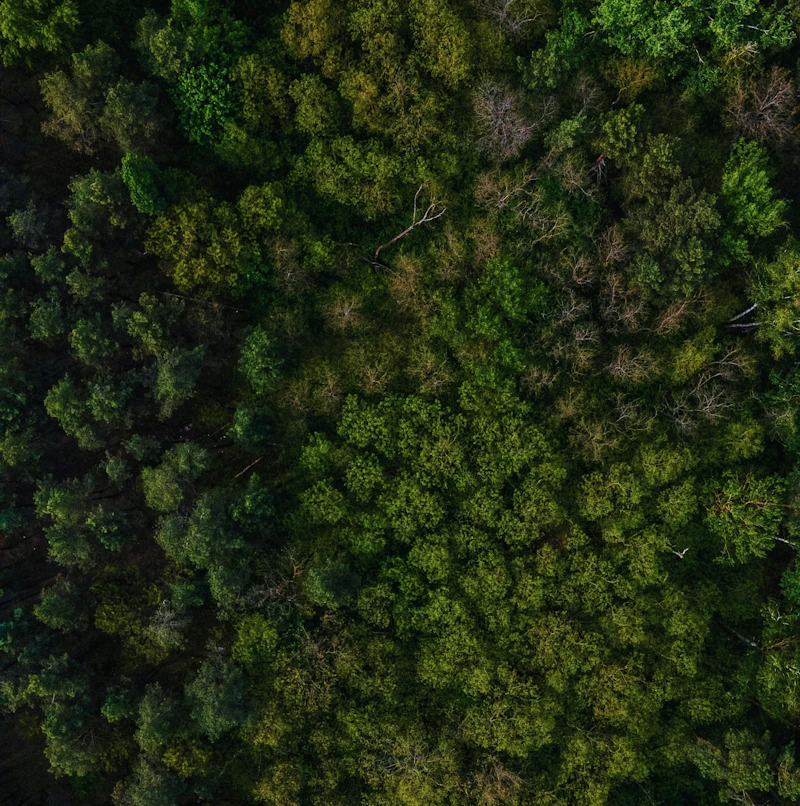
Experience the National Forests in Alabama, nearly 667,000 acres that include the Conecuh, Talladega, Tuskegee, William B. Bankhead National Forests. The four National Forests in Alabama are spread across the state, adding pockets of green in every corner.
You might be surprised to learn that this state actually has peaks: Elevations range from more than 2,140-foot Dugger Mountain, the second-highest peak in Alabama, in the Piedmont area to only 100 feet in the Coastal Plain. High overlooks, rolling hills, and tree-studded flat land are among the contrasting terrains in the forests.
There are five wildlife management areas across the forests that are cooperatively managed by the Wildlife and Freshwater Fisheries Division of Alabama Department of Conservation and Natural Resources. These areas offer excellent hunting, with game species that include white-tailed deer, bobwhite quail, gray and fox squirrel, turkey, rabbit, raccoon, and various waterfowl.
There are three Wilderness Areas within Alabama’s National Forests that encompass more than 41,000 acres. The 25,002-acre Sipsey Wilderness, in the Bankhead, is the second largest wilderness area east of the Mississippi. The 7,245-acre Cheaha Wilderness in the Talladega, offers high elevations, with numerous overlooks for panoramic views of east-central Alabama.
The Pinhoti Trails System in Talladega National Forests, Conecuh Trail in Conecuh National Forest, and the Bartram Trail in Tuskegee National Forest provide more than 150 miles of developed trails for hiking and biking. The Talladega and Bankhead National Forests, meanwhile, feature equestrian and OHV trails. Boaters and water skiers can enjoy several large lakes, which have enough quiet coves to satisfy anglers as well.
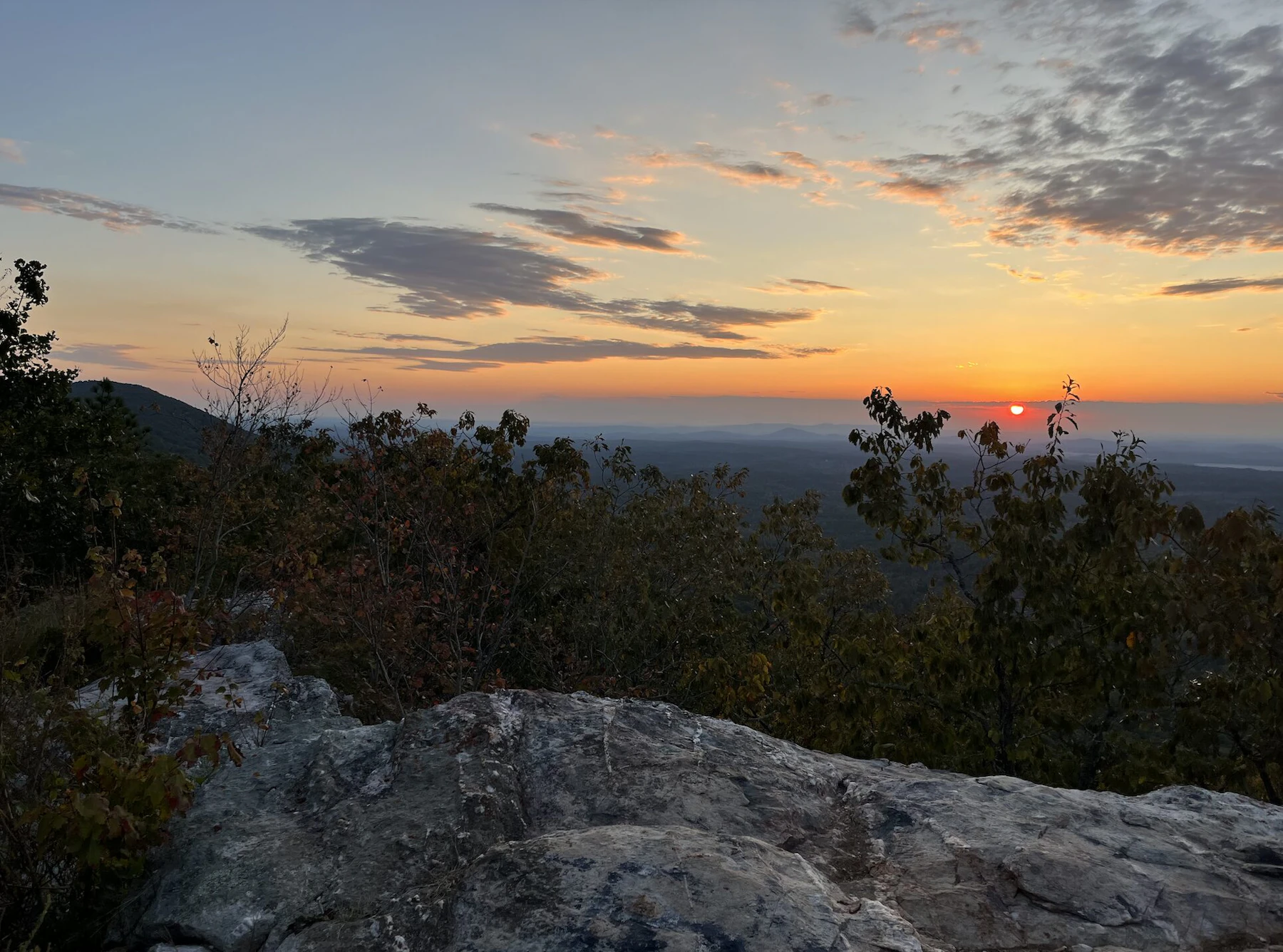
 Talladega National Forest. Photo by Maggie Johnston
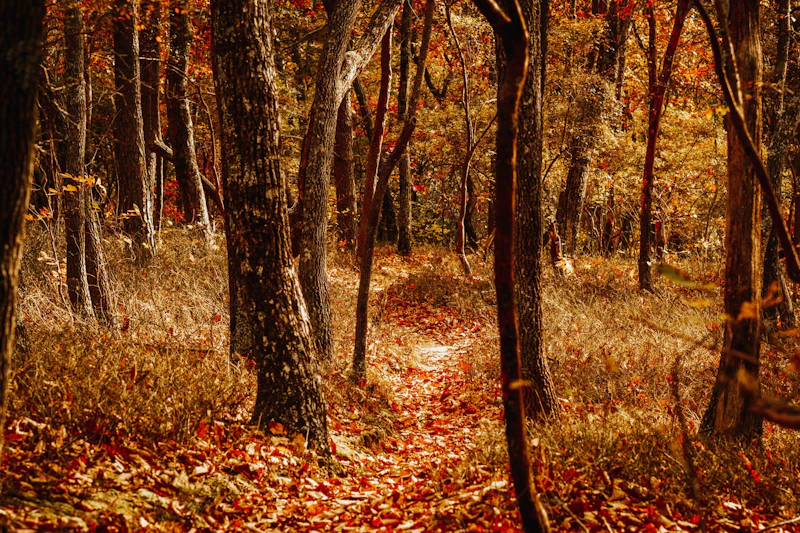 Talladega National Forest. Photo by Jesse Adams
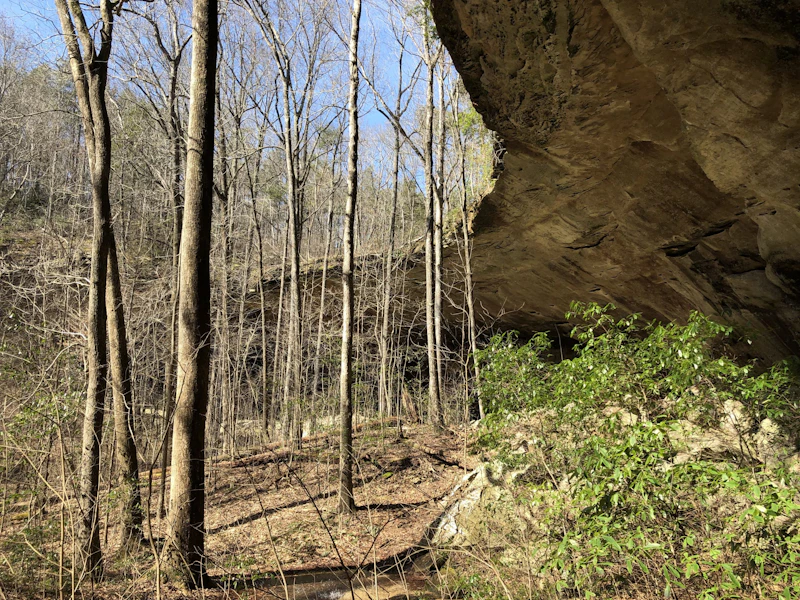 Corral Canyon, Bankhead National Forest. Photo by Gabriel Akins
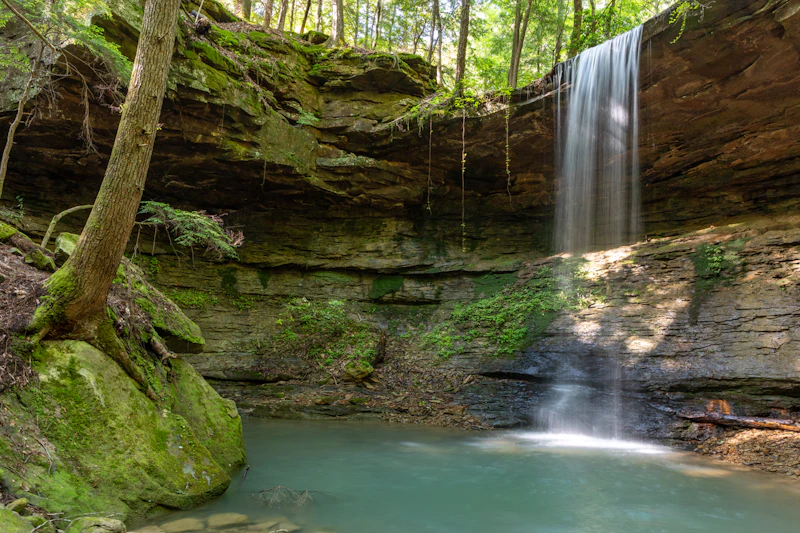 Bankhead National Forest. Photo by Kelly Corey
 Pine Glen Campground, Talladega National Forest. Photo by Jeremy Davidson
What is the History of the National Forests in Alabama?
Established in 1918 as the Alabama National Forest, an area of deforested lands in the Cumberland Plateau was renamed the Black Warrior National Forest in 1936 and, in 1942, took the name of Congressman William B. Bankhead.
The Conecuh National Forest was created by Presidential proclamation in 1936. Its name comes from a Muskogee‑language phrase meaning “land of cane,” owing to the ancient canebrakes that once covered the area.
The Talladega National Forest was also proclaimed in 1936 by combining the Oakmulgee and Talladega purchase units.
The Tuskegee National Forest in Macon County represents a somewhat different story. Originating in the mid‑1930s under the Bankhead‑Jones Farm Tenant Act, the federal government purchased eroded farmland during the 1930s, before establishing the Tuskegee National Forest in 1959.
Long before federal acquisition, Indigenous peoples inhabited the area for millennia; petroglyphs, rock‑shelters and mound-like structures in the forest indicate human presence at least 8,000 years ago. The Muscogee peoples occupied parts of this landscape before removal, and later settlers cleared much of the forest for timber and agriculture.
The four sites now host a range of ecological restoration initiatives, from restoring longleaf pine habitats to rehabilitating Indigo snake populations.

How to Get to the National Forests in Alabama
The Conecuh National Forest, in south Alabama’s Escambia and Covington counties, is reachable from Mobile by Interstate 65 and U.S. Route 84. Evergreen and Andalusia are gateway towns.
The Talladega National Forest, in east-central Alabama, can be reached from Birmingham by U.S. Route 78 or Alabama State Route 281, which provides a scenic drive through the forest toward Cheaha Mountain, the state’s highest point. Gateway towns include Heflin, Talladega, and Ashland.
The Tuskegee National Forest, in Macon County, is accessible from Montgomery via Interstate 85 and AL 186. The town of Tuskegee provides convenient access to trailheads and the ranger district.
The William B. Bankhead National Forest, in northwestern Alabama, is most easily reached via U.S. Route 278 or Interstate 65, with Double Springs and Moulton serving as gateway towns.
- Mobile, Alabama: 2 to 2.5 hours by car from the Conecuh National Forest
- Birmingham, Alabama: 1 to 1.5 hours by car from the Talladega National Forest and the William B. Bankhead National Forest
- Columbus, Georgia: 1 hour by car from the Tuskegee National Forest
- Montgomery, Alabama: 1 to 1.5 hours by car from the Talladega National Forest and the Tuskegee National Forest

Known as the “Land of 1,000 Waterfalls,” the Sipsey Wilderness is filled with water features ranging from 20 to 100 feet high. Because this is a wilderness, trails are remote and not as often maintained, even those leading to well-known cascades. For a rewarding overnight trip, consider this route.
This 100-mile route in the Talladega National Forest starts at the Piedmont, continues southward below Talladega, and features an offshoot trail to the Cheaha Wilderness, home of Alabama’s highest peak, 2,407-foot Mount Cheaha.
For one of the most scenic paddling experiences in the Southeast, take to the water at this designated Wild and Scenic River in the Bankhead National Forest in the summer. The Sipsey flower through towering sandstone cliffs and lush hardwood forests, offering calm sections for beginners and more faster stretches for experienced paddlers.
 Cranefly orchid
This native species is unique for its single, dark-green leaf that has a bright purple underside that appears in the fall before blooming pale-purple blossoms in the summer, which look like craneflies.
Cranefly orchid
This native species is unique for its single, dark-green leaf that has a bright purple underside that appears in the fall before blooming pale-purple blossoms in the summer, which look like craneflies.
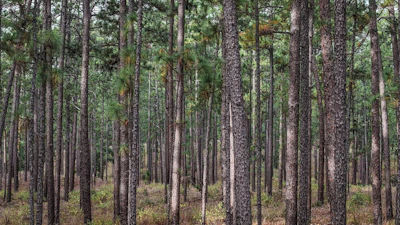 Longleaf pine
Known for its tall, straight trunks and long needles, this fire-adapted pine provides critical habitat for endangered species and supports a rich understory.
Longleaf pine
Known for its tall, straight trunks and long needles, this fire-adapted pine provides critical habitat for endangered species and supports a rich understory.
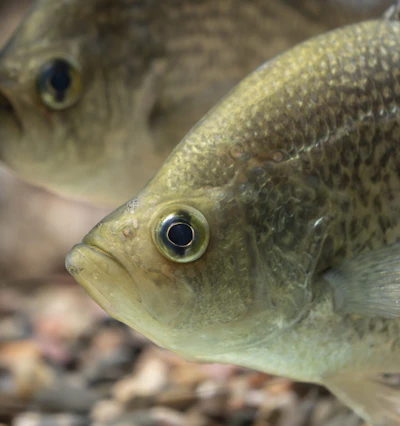 Crappie
Both black and white species of this fish thrive in Alabama’s National Forests, and is prized for its tasty fillets.
Crappie
Both black and white species of this fish thrive in Alabama’s National Forests, and is prized for its tasty fillets.
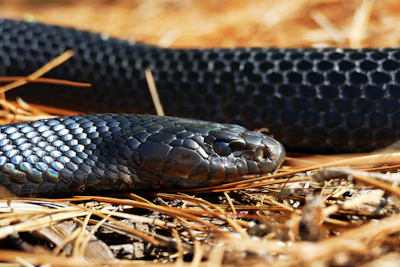 Eastern indigo snake
The longest native snake in the United States, this nonvenomous, glossy black species are a focus of conservation efforts.
Eastern indigo snake
The longest native snake in the United States, this nonvenomous, glossy black species are a focus of conservation efforts.
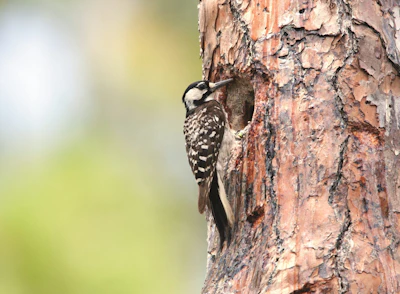 Red-cockaded woodpecker
This endangered species, known for its black-and-white striped back and, in its males, a red streak on its head, relies on longleaf pines for habitat.
Red-cockaded woodpecker
This endangered species, known for its black-and-white striped back and, in its males, a red streak on its head, relies on longleaf pines for habitat.
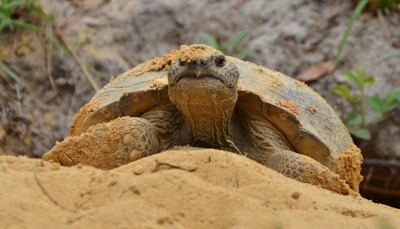 Gopher tortoise
This endangered species, which reaches up to 15 inches in length and weighs 8 to 15 pounds, relies on longleaf pine habitats, where it creates extensive burrows.
Gopher tortoise
This endangered species, which reaches up to 15 inches in length and weighs 8 to 15 pounds, relies on longleaf pine habitats, where it creates extensive burrows.
What’s the Best First-Timer’s Adventure in the National Forests in Alabama
For panoramic views of the Appalachian Mountains, head out on the 25-mile Talladega Scenic Drive at 2,000 feet through Talladega National Forest. Take a dip in Lake Chinnabee, fish at Sweetwater Lake, and horseback ride along the trails at Warden Station.

Where to Find More Information on the National Forests in Alabama
For more information or questions, visit https://www.fs.usda.gov/r08/alabama.
Discover how communities, volunteers, and partners are shaping the future of our National Forests and Grasslands.
The National Forest Foundation works with partners across Northern Colorado to restore forests, reduce wildfire risk, and care for the…
After years of damage, recovery, and reconstruction, the trail to Hanging Lake has been fully rebuilt, creating a more durable,…
Erosion and wildfire had left Arizona's historic Highline Trail rutted and unsafe. After five years of work with the Tonto…
Forest restoration near Flagstaff is reducing wildfire risk for local communities and safeguarding the water supply for millions across the…
Colorado's 14ers draw thousands of visitors each year, and the pressure on these fragile alpine landscapes is growing. Here's a…
Visitors of all ages can explore forest trails and sparkling waters, discover wildlife and underwater habitats, and connect with Tahoe’s…
A partnership-driven program connecting youth on Montana’s Flathead Reservation with hands-on conservation work, heritage education, and pathways in natural resource…
Seeing the impact first hand on the Grand Mesa, Uncompaghre and Gunnison National Forests
Seven Years of Reopening Trails After the Eagle Creek Fire
Field Ranger Program Connects Diverse Communities to Forests in Southern California
Our Forests Need Us Today.
Your donation powers critical, on-the-ground conservation—from wildfire recovery to watershed restoration—protecting forests for the future.