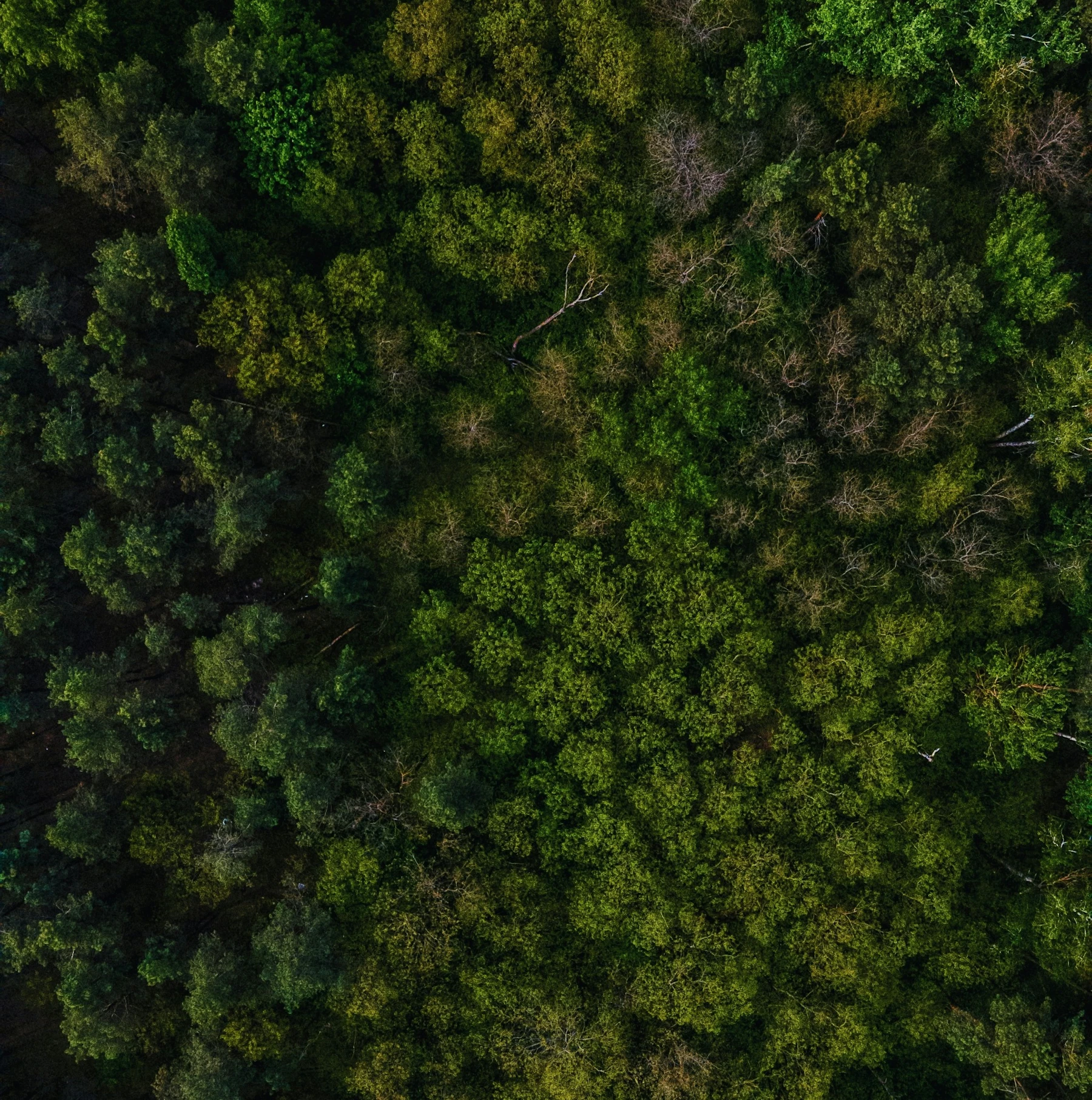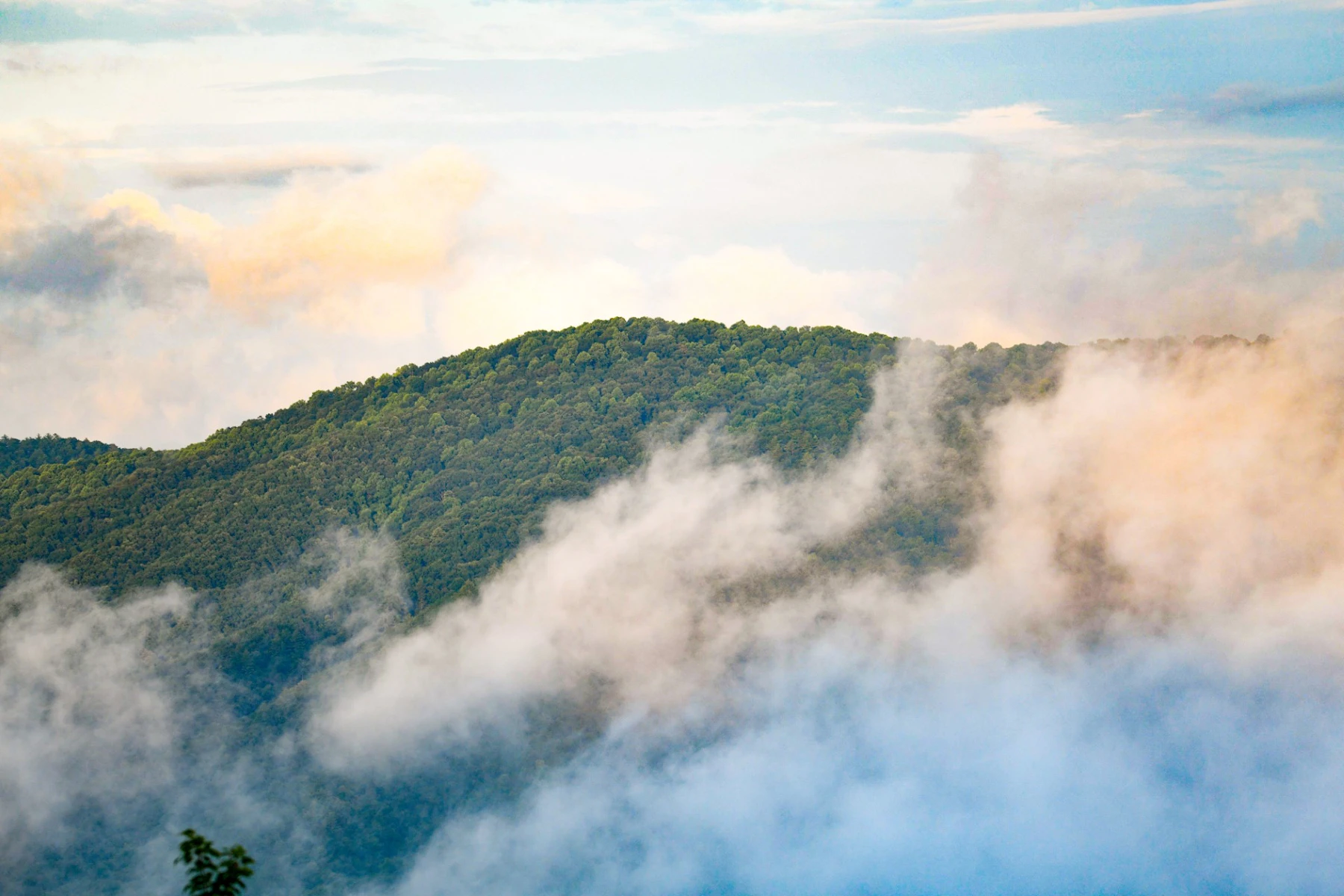
Explore the Chattahoochee-Oconee National Forest in Georgia, encompassing nearly 867,000 acres of forested mountains, rolling hills, wild rivers, and scenic waterfalls. Ten Wilderness Areas, 1,367 miles of trout streams, and 850 miles of trails enrich the Chattahoochee-Oconee, which is also the start of the famous 2,135-mile Appalachian Trail.
Several major Civil War battles were fought in the surrounding area, most of them centered around the railroad that stretched from Chattanooga, Tennessee to Atlanta, Georgia. Explore this hiker’s paradise, trek to dozens of waterfalls, and climb Georgia’s highest peak, 4,784-foot Brasstown Bald.
 Photo by Gracie Bryant
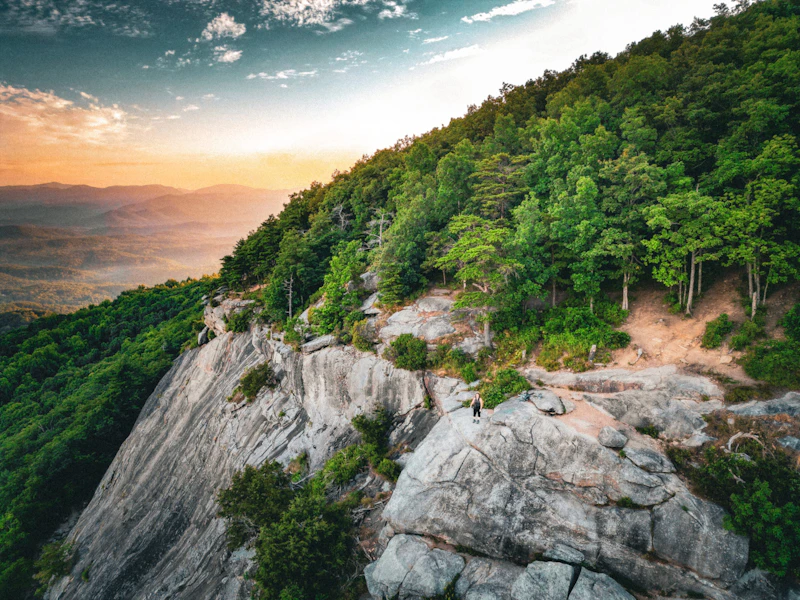 Sunrise on Mount Yonah. Photo by Christine Broderick
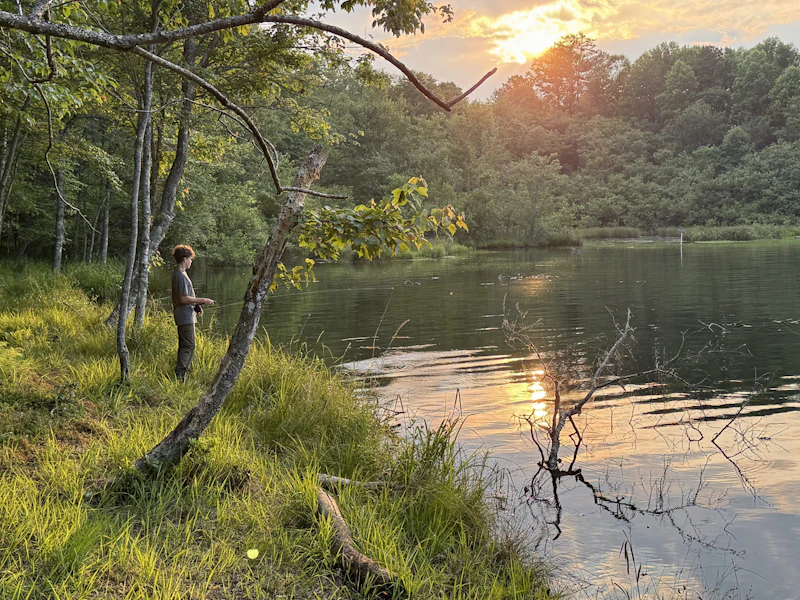 Photo by Stephanie Serra
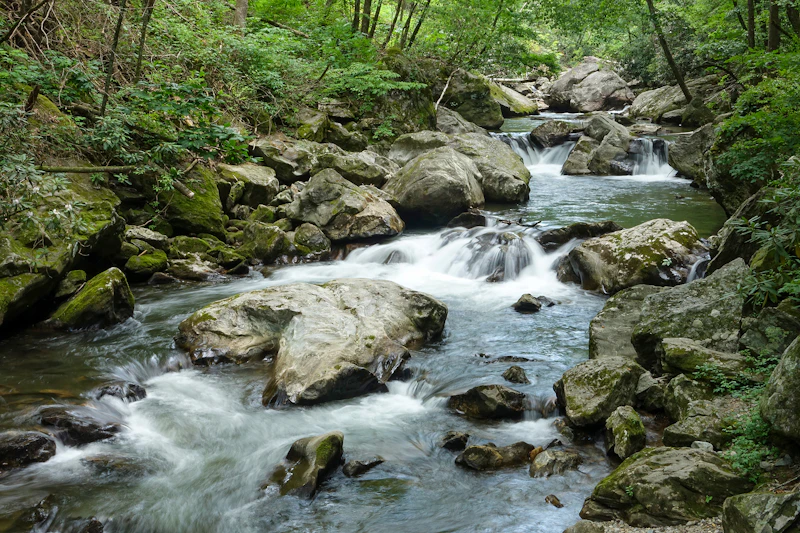 Tallulah River. Photo by Luci Westphal
 Photo by Gracie Bryant
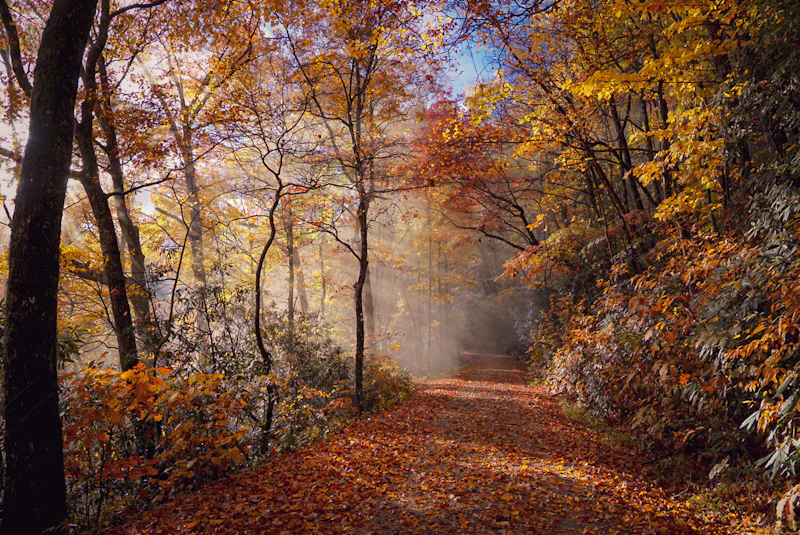 Photo by Tanya Triber
What is the History of the Chattahoochee-Oconee National Forest?
A visit to the Chattahoochee-Oconee National Forest is a history lesson that spans the Cherokee and Muscogee’s struggle to hold on to their lands to major battles of the Civil War. In between are chapters marked by the Spanish conquistador Hernando de Soto’s futile search for gold and the United States’ first frenzied gold rush.
In the 1830s, the Cherokee Nation endured a forced migration, known as the Trail of Tears, from their ancestral lands in this area and across the southeast to present-day Oklahoma. This expulsion journey resulted in the deaths of thousands due to hunger, disease, and exhaustion.
In the early 20th century, European settlers logged the area extensively, leading to severe deforestation. The Civilian Conservation Corps led much of the land’s restoration and constructed a lot of the infrastructure that’s still used today. The Chattahoochee portion was established in 1936, and the Oconee followed in 1959.
Today, the Chattahoochee-Oconee National Forest attracts close to 2.4 million people every year and generates on average more than $100 million in annual visitor spending, supporting jobs and local economies across the 26 counties it covers. The forest is also crucial for supplying timber, clean air and water, and energy production.
How to Get to the Chattahoochee-Oconee National Forest
The Chattahoochee-Oconee National Forest is within a day’s drive of almost half of the U.S. population, including those residing in Atlanta, just 70 miles away. To reach the Chattahoochee section, Highway 76, U.S. 19, or Georgia State Route 60 intersect gateway towns and cities like Dahlonega, Helen, Blairsville, and Blue Ridge. For the Oconee section in east-central Georgia, Interstate 20 and U.S. Highway 441 reaches the small cities of Eatonton and Greensboro, popular entry points.
- Athens, Georgia: Half-hour to 1 hour by car
- Atlanta, Georgia: 1.5 to 2 hours by car
- Chattanooga, Tennessee: 1.5 to 2 hours by car
- Knoxville, Tennessee: 2 to 2.5 hours by car
- Augusta, Georgia: 2.5 to 3 hours by car

One of the best day hikes in the Chattahoochee-Oconee National Forest is a two-mile round trip to Preachers Rock, near the top of Big Cedar Mountain. Starting in Woody Gap Recreation Area, the moderate route packs a lot into a short distance: multiple overlooks North Georgia Mountains, an incredible summit view, and access to the Appalachian Trail.
For an easy and family-friendly way to experience Chattahoochee-Oconee’s famed waterfalls, hike the under one-mile out-and-back paved trail to Anna Ruby Falls near the northeastern mountain town of Helen. The two waterfalls plunge 150 feet and come fall, are shrouded in color. There’s also a short 0.15-mile Lion’s Eye Trail near the visitor center with interpretive signs in braille for visually impaired visitors.
This 50-mile loop showcases the quintessential scenery of Chattahoochee-Oconee, winding along forested ridges, rolling farmline and limestone valleys. It follows routes one used by Civil War troops and offers access to scenic overlooks of and trailheads to the Armuchee Ridges of the Appalachian Mountains.
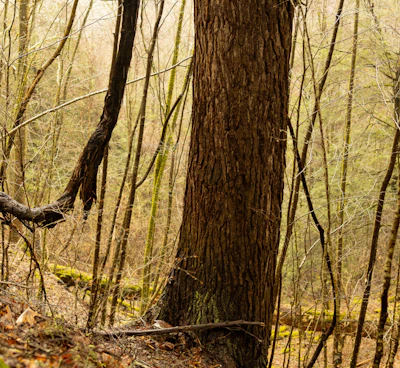 Eastern hemlock
This evergreen, marked by drooping branches and flat needles, provides critical habitat along ravines and mountain streams of Chattahoochee-Oconee. The trees are being threatened by the invasive hemlock woolly adelgid.
Eastern hemlock
This evergreen, marked by drooping branches and flat needles, provides critical habitat along ravines and mountain streams of Chattahoochee-Oconee. The trees are being threatened by the invasive hemlock woolly adelgid.
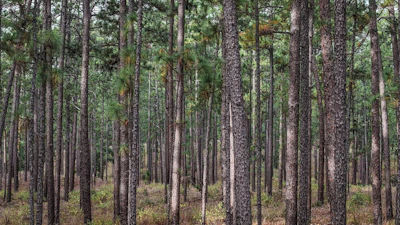 Longleaf pine
Excessive logging following the Civil War decimated this keystone species, which can grow up to 100 feet and live more than 300 years. But recent efforts supported by the National Forest Foundation have focused on reforesting the longleaf pine and the important wildlife that relies on it.
Longleaf pine
Excessive logging following the Civil War decimated this keystone species, which can grow up to 100 feet and live more than 300 years. But recent efforts supported by the National Forest Foundation have focused on reforesting the longleaf pine and the important wildlife that relies on it.
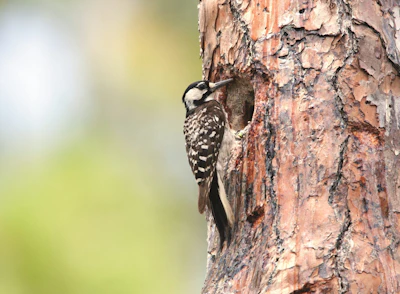 Red-cockaded woodpecker
This endangered species, known for its black-and-white striped back and, in its males, a red streak on its head, relies on longleaf pines and are being rehabilitated alongside the tree’s return.
Red-cockaded woodpecker
This endangered species, known for its black-and-white striped back and, in its males, a red streak on its head, relies on longleaf pines and are being rehabilitated alongside the tree’s return.
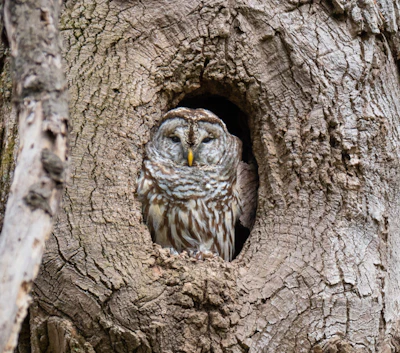 Barred owl
This characterful bird, with dark eyes and mottled feathers, is known for a distinct call. It resides in the hardwood forests of Chattahoochee and is an active hunter at dusk and night.
Barred owl
This characterful bird, with dark eyes and mottled feathers, is known for a distinct call. It resides in the hardwood forests of Chattahoochee and is an active hunter at dusk and night.
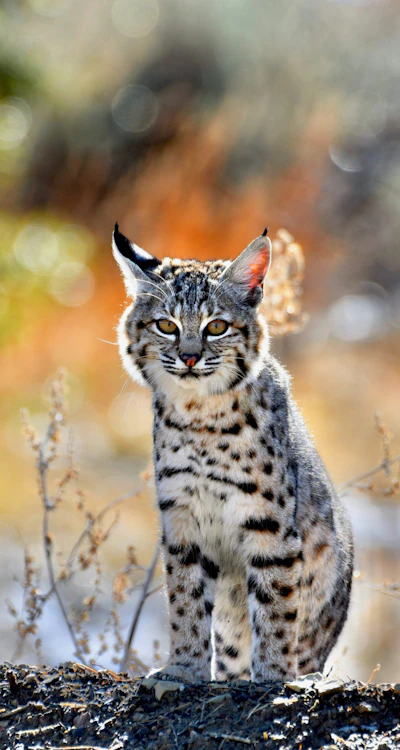 Bobcat
This elusive predator, with tufted ears and spotted coats, hunts rabbits, birds, and rodents throughout the forest. While seeing a bobcat is rare, visitors often spot their tracks.
Bobcat
This elusive predator, with tufted ears and spotted coats, hunts rabbits, birds, and rodents throughout the forest. While seeing a bobcat is rare, visitors often spot their tracks.
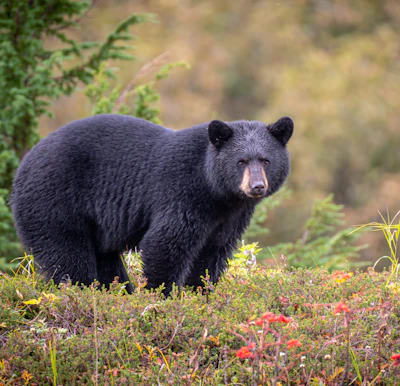 Black bear
The largest mammal in the area, the black bear—of which Georgia has a population of around 5,000—resides mostly in the wilderness areas of the forest.
Black bear
The largest mammal in the area, the black bear—of which Georgia has a population of around 5,000—resides mostly in the wilderness areas of the forest.
Related Impact
Restoring Red Spruce in the Southern Appalachians
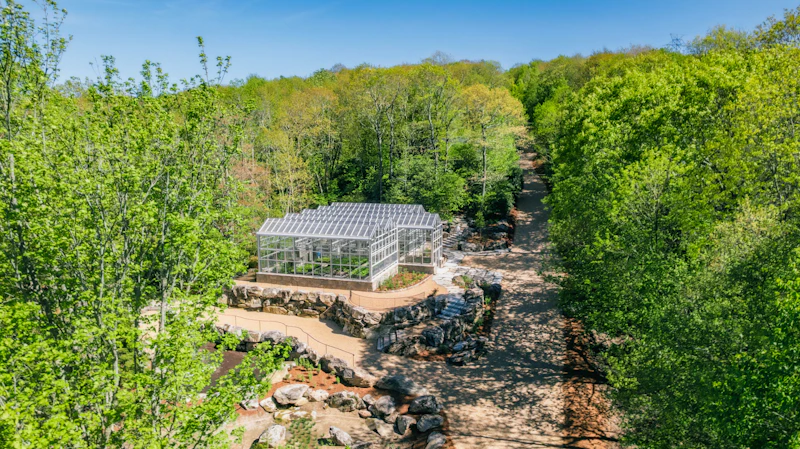
The National Forest Foundation and our partners are joining forces to protect the iconic “sky island” ecosystems of the Southern Appalachians by expanding the capacity for red spruce restoration with a new state-of-the-art greenhouse.
What’s the Best First-Timer’s Adventure in the Chattahoochee-Oconee National Forest?
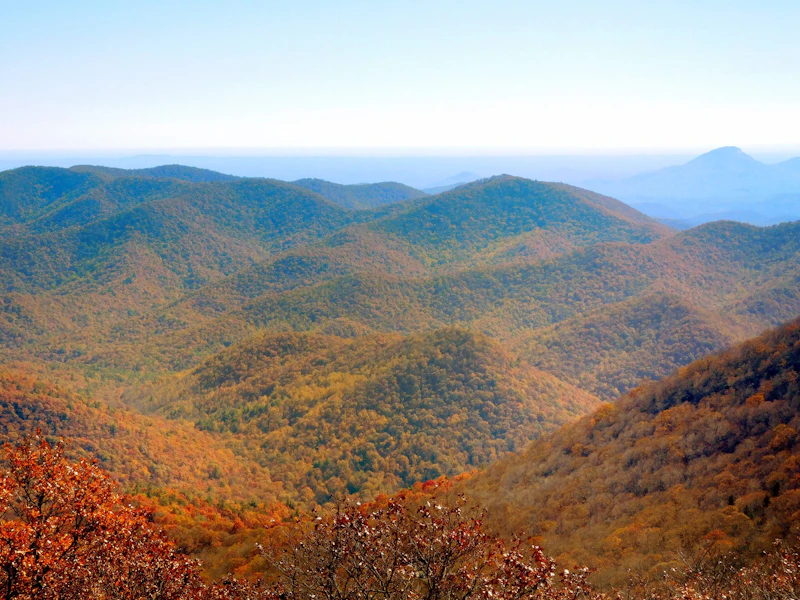
For sweeping views of the Blue Ridge Mountains, head to Georgia’s highest point, 4,784-foot Brasstown Bald, at sunset. The visitor center, located in the town of Hiawassee, sits near the top of the mountain and runs shuttles to the summit’s observation deck. Alternatively, visitors can hike 400 feet over 0.6 miles starting near the gift shop.
Where to Find More Information on the Chattahoochee-Oconee National Forest
For more information or questions, visit https://www.fs.usda.gov/r08/chattahoochee-oconee
Discover how communities, volunteers, and partners are shaping the future of our National Forests and Grasslands.
The National Forest Foundation works with partners across Northern Colorado to restore forests, reduce wildfire risk, and care for the…
After years of damage, recovery, and reconstruction, the trail to Hanging Lake has been fully rebuilt, creating a more durable,…
Erosion and wildfire had left Arizona's historic Highline Trail rutted and unsafe. After five years of work with the Tonto…
Forest restoration near Flagstaff is reducing wildfire risk for local communities and safeguarding the water supply for millions across the…
Colorado's 14ers draw thousands of visitors each year, and the pressure on these fragile alpine landscapes is growing. Here's a…
Visitors of all ages can explore forest trails and sparkling waters, discover wildlife and underwater habitats, and connect with Tahoe’s…
A partnership-driven program connecting youth on Montana’s Flathead Reservation with hands-on conservation work, heritage education, and pathways in natural resource…
Seeing the impact first hand on the Grand Mesa, Uncompaghre and Gunnison National Forests
Seven Years of Reopening Trails After the Eagle Creek Fire
Field Ranger Program Connects Diverse Communities to Forests in Southern California
Our Forests Need Us Today.
Your donation powers critical, on-the-ground conservation—from wildfire recovery to watershed restoration—protecting forests for the future.