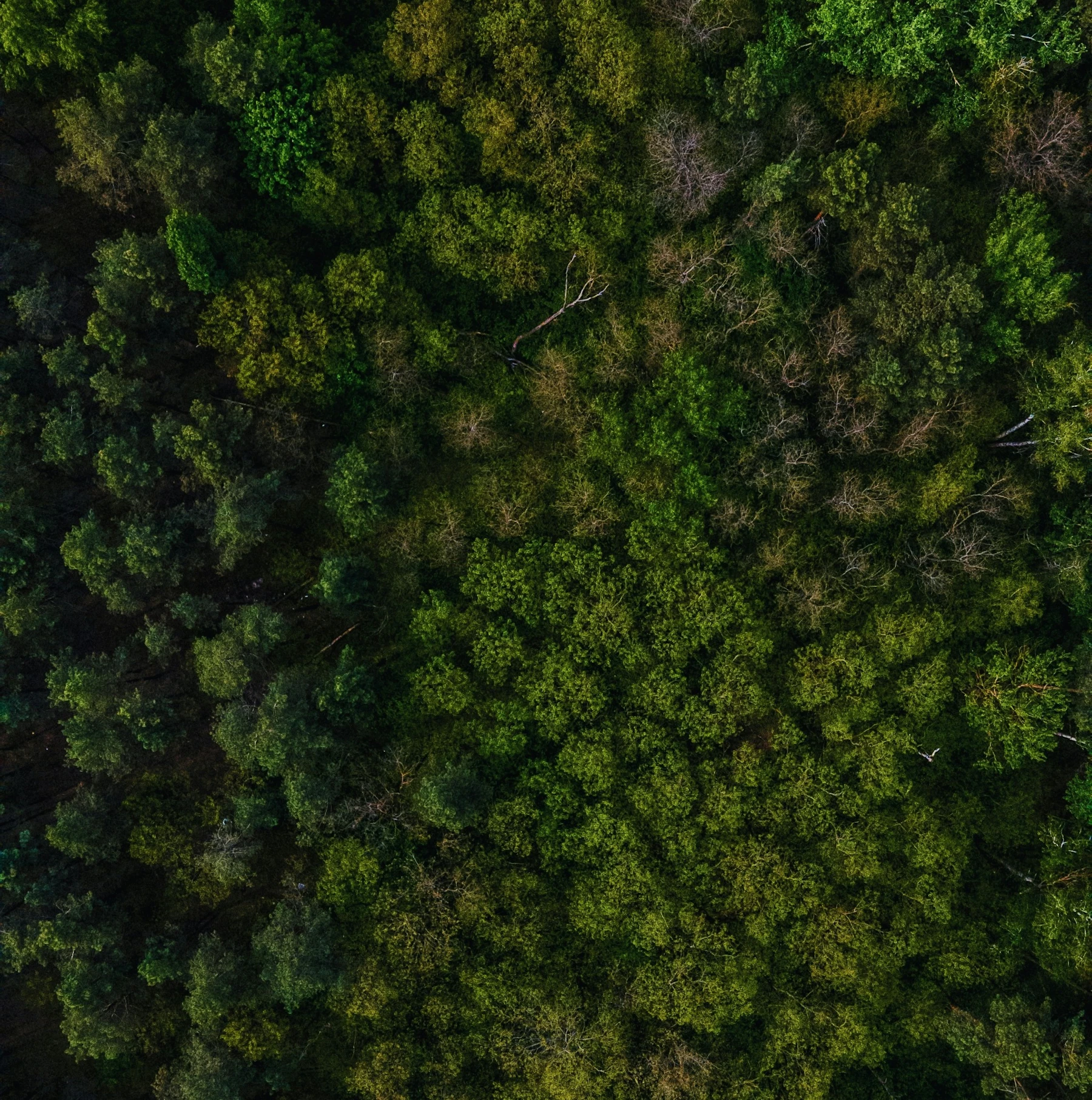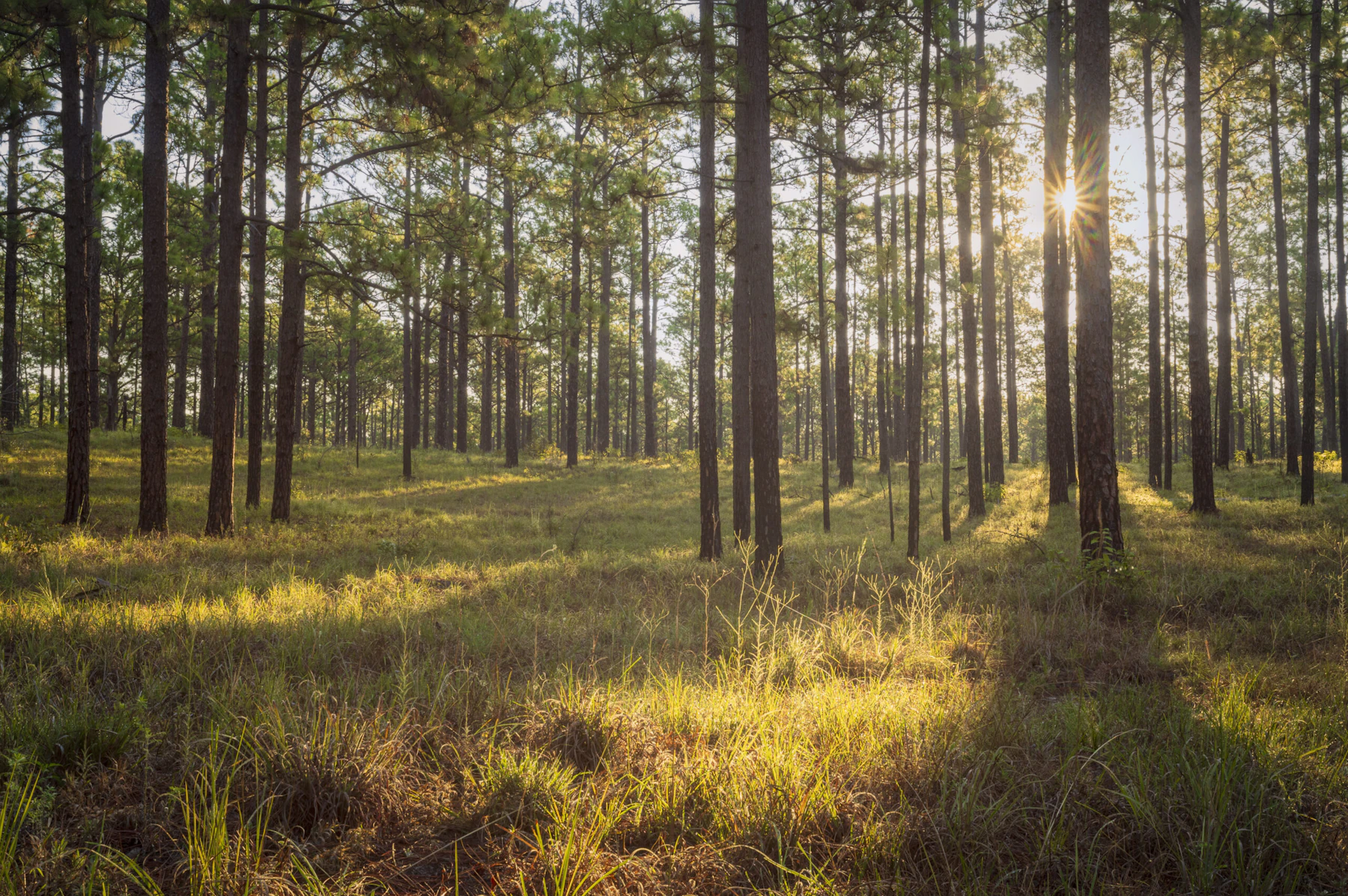
Uncover the National Forests and Grasslands in Texas, 675,000 acres shared among the Angelina, Davy Crockett, Sabine, Sam Houston National Forests in east Texas and the Caddo-Lyndon B. Johnson National Grasslands in northeast Texas.
The Sabine and Angelina National Forests are located on the shores of Toledo Bend and Sam Rayburn Reservoirs, two large lakes featuring great fishing and water sports. The Sam Houston and Davy Crockett National Forests are located where the pine forests of the southeast meet the blackland prairies of central Texas. The Caddo and Lyndon B. Johnson (LBJ) National Grasslands are divided into two sites north of the Dallas-Fort Worth metro area.
The Sabine National Forest, located in the pineywoods, is the easternmost forest, forming part of the boundary between Texas and Louisiana. The Angelina National Forest lies in the Neches River Basin of the upper Gulf Coast region, and includes the north and south shores of 114,400-acre Sam Rayburn Reservoir, the largest manmade lake in Texas.
The crown jewel of the Sam Houston National Forest, 50 miles north of Houston, is the 128-mile Lone Star Hiking Trail, a portion of which has gained National Recreation Trail status. The Davy Crockett National Forest, named for the legendary pioneer, contains more than 160,000 acres of woodlands, streams, recreation areas, including the popular Ratcliff Lake Recreation Area.
Across the four forests and one grassland, there are miles upon miles of trails for hiking and biking, including 600 miles that allow horseback riding. You’ll also find five scenic areas, five wilderness areas, a canoe trail, and off-road vehicle trails.
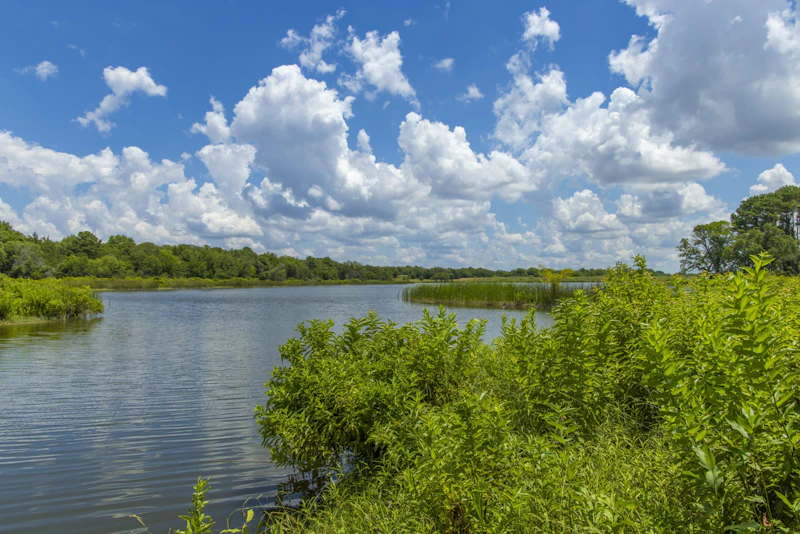 Black Creek Lake, LBJ National Grassland. Photo by Jelly Cocanougher
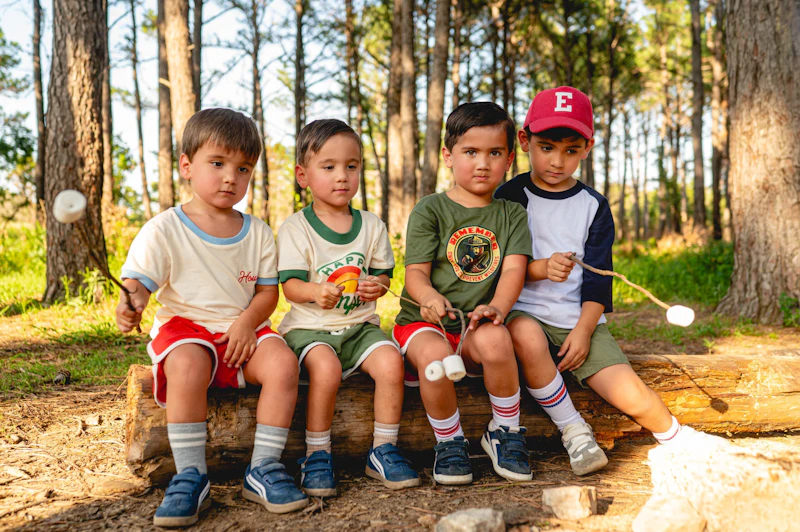 Caddo-LBJ National Grassland. Photo by Emily King
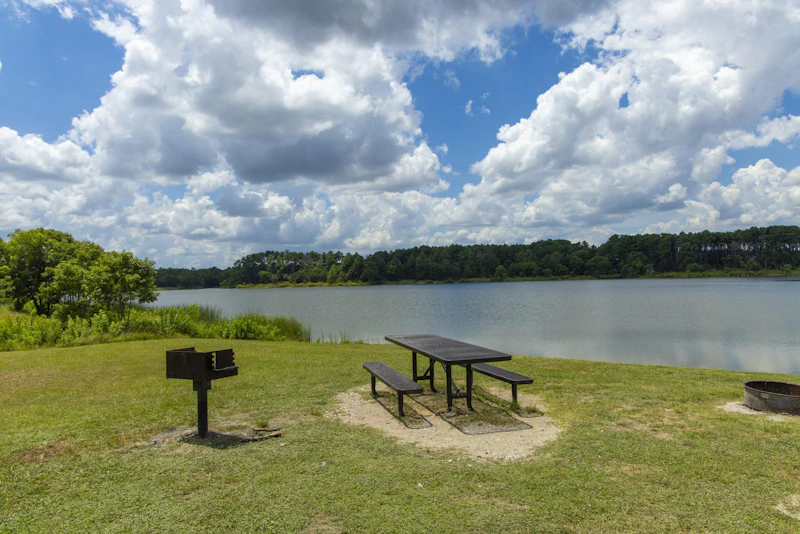 Black Creek Lake on the LBJ National Grassland. Photo by Jelly Cocanougher
 Sam Houston National Forest. Photo by Preston Keres, courtesy of the U.S. Forest Service
What is the History of the National Forests and Grasslands in Texas?
In 1933 the Texas Legislature authorized purchase of the lands that now comprise the National Forests, and in 1936, President Roosevelt officially designated them as such. Before that, the Pineywoods region supported Indigenous peoples for thousands of years. In particular, the ancestors of the Caddo Nation settled between the Sabine, Angelina and Neches rivers from about A.D. 700–800. Near the Gulf and Big Thicket regions were also bands of the Atakapa, including the Akokisa and Bidai peoples.

How to Get to the National Forests and Grasslands in Texas
To reach the Angelina National Forest, U.S. Highway 69 and State Highways 63 and 147 lead to the gateway communities of Lufkin, Zavalla, and Broaddus. Just east is the Sabine National Forest, along the Texas-Louisiana border. U.S. Highways 96 and 84 and State Highway 87 connect its gateways of Hemphill and Shelbyville.
The Davy Crockett National Forest, between the cities of Lufkin and Crockett, is accessible via U.S. Highways 287 and 69, and State Highway 7. The southernmost forest, the Sam Houston National Forest, is just north of Houston and easily reached by Interstate 45.
The Lyndon B. Johnson National Grassland, 50 miles from Fort Worth, is accessed via U.S. Highway 81/287, while Caddo National Grassland, near the Texas–Oklahoma border, can be reached by U.S. Highway 82 and State Highway 78.
- Houston, Texas: 1 to 1.5 hours by car from the Sam Houston National Forest, 2 hours by car from the Davy Crockett National Forest
- Beaumont, Texas: 2 hours by car from the Sam Houston National Forest and the Davy Crockett National Forest; 2.5 hours by car from the Angelina National Forest and the Sabine National Forest
- Shreveport, Louisiana: 2 hours by car from the Angelina National Forest and the Sabine National Forest
- Fort Worth, Texas: 1 hour by car from the Lyndon B. Johnson National Grassland; 2 to 2.5 hours by car from the Caddo National Grassland

Stretching between Toledo Bend Reservoir and Lakeview Recreation Area on Sam Rayburn Reservoir in the Sabine National Forest, this 28-mile backcountry trail is an ideal immersion in the quiet beauty of the region’s forests.
This tranquil area in the Angelina National Forest features camping, fishing, and picnicking. For the chance to spot unique songbirds, keep an eye out near the lake or hike the three-mile Sawmill Hiking Trail, which leads to the Aldridge Sawmill Historic site.
With 53 miles of interconnected trails through the Davy Crockett National Forest, this trail system is ideal for horseback riders who want to take in the pineywoods. Piney Creek Horse Camp is an ideal base for a longer excursion.
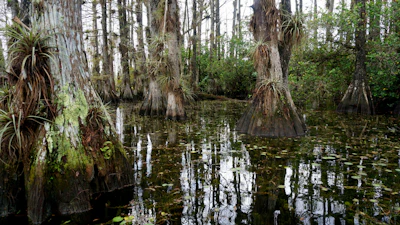 Bald cypress
With its flared “knees” and feathery foliage that turns orange in fall, this is one of the most common trees across East Texas’s National Forests.
Bald cypress
With its flared “knees” and feathery foliage that turns orange in fall, this is one of the most common trees across East Texas’s National Forests.
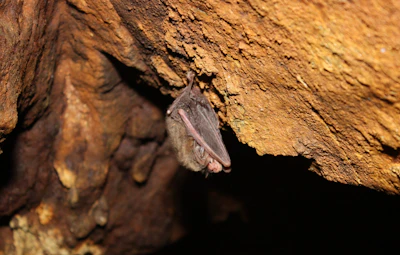 Rafinesque’s big-eared bat
The ears of this vesper bat that’s native to the southeast are a quarter of its body length.
Rafinesque’s big-eared bat
The ears of this vesper bat that’s native to the southeast are a quarter of its body length.
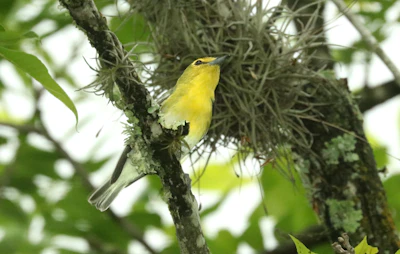 Yellow-throated vireo
A yellow throat, white belly, and gray-olive back, as well as a melodious call, make this unique species a delight for birdwatchers.
Yellow-throated vireo
A yellow throat, white belly, and gray-olive back, as well as a melodious call, make this unique species a delight for birdwatchers.
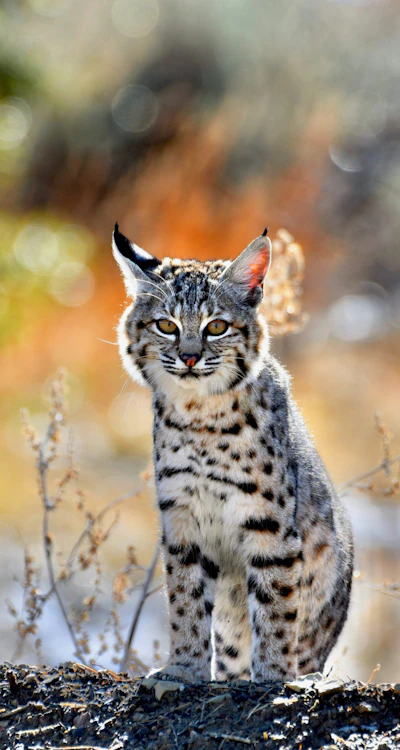 Bobcat
This elusive predator, with tufted ears and spotted coats, hunts rabbits, birds, and rodents throughout the forest. While seeing a bobcat is rare, visitors often spot their tracks.
Bobcat
This elusive predator, with tufted ears and spotted coats, hunts rabbits, birds, and rodents throughout the forest. While seeing a bobcat is rare, visitors often spot their tracks.
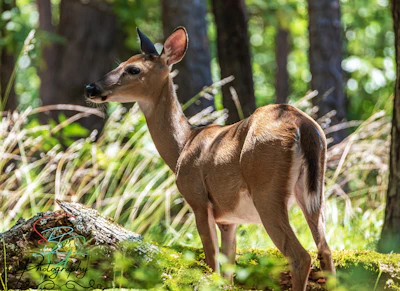 White-tailed deer
With a red-brown coat that turns gray in the winter, this deer is frequently spotted throughout the forest. Bucks, or adult males, grow antlers annually, which they shed after mating season.
White-tailed deer
With a red-brown coat that turns gray in the winter, this deer is frequently spotted throughout the forest. Bucks, or adult males, grow antlers annually, which they shed after mating season.
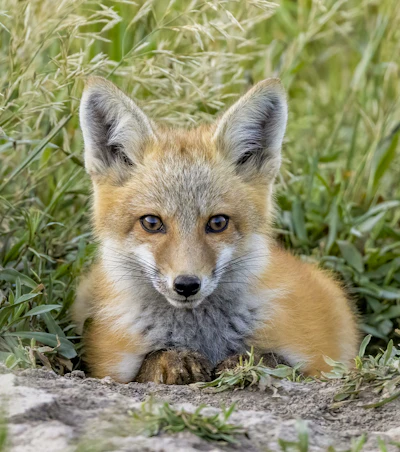 Red fox
This fox, with its reddish coat and bushy tail, is among the rarest mammal species in North America.
Red fox
This fox, with its reddish coat and bushy tail, is among the rarest mammal species in North America.
Related Impact
Building Watershed Resiliency in North Texas
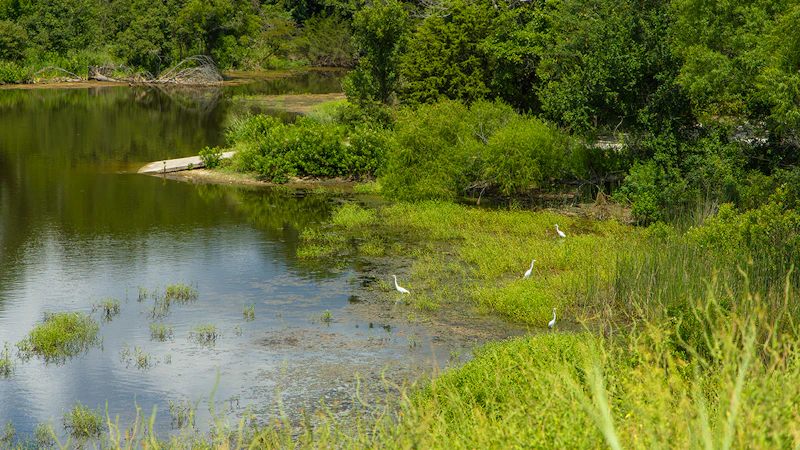
The streams and creeks of the LBJ National Grassland flow into the Trinity River Basin, which supplies water for over 6 million people across the Dallas-Fort Worth metropolitan area. At the Basin’s headwaters, the Grassland’s health directly impacts water supply in the region.
What’s the Best First-Timer’s Adventure in the National Forests in Texas
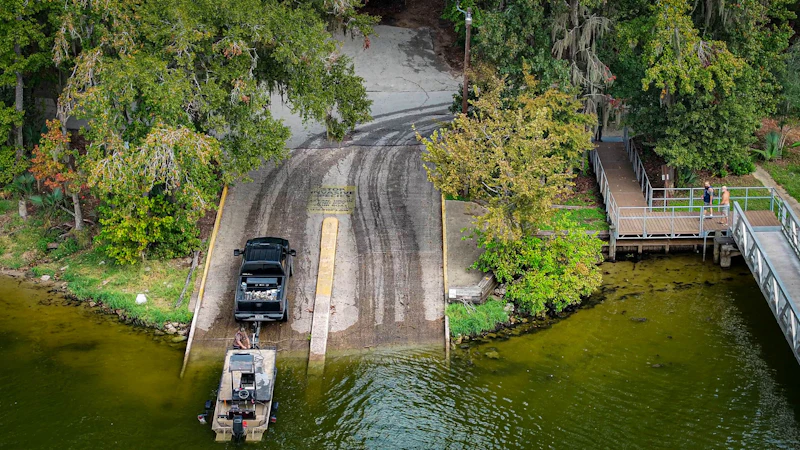
It’d be difficult to visit east Texas without stopping by the Sam Rayburn Reservoir in the Angelina National Forest. Covering over 114,000 acres, the state’s largest manmade lake is ideal for fishing, sailing, and jet skiing. Many public boat ramps and marinas provide easy access, while coves and inlets allow for an escape from the crowds.
Where to Find More Information on the National Forests in Texas
For more information or questions, visit https://www.fs.usda.gov/r08/texas.
Discover how communities, volunteers, and partners are shaping the future of our National Forests and Grasslands.
The National Forest Foundation works with partners across Northern Colorado to restore forests, reduce wildfire risk, and care for the…
After years of damage, recovery, and reconstruction, the trail to Hanging Lake has been fully rebuilt, creating a more durable,…
Erosion and wildfire had left Arizona's historic Highline Trail rutted and unsafe. After five years of work with the Tonto…
Forest restoration near Flagstaff is reducing wildfire risk for local communities and safeguarding the water supply for millions across the…
Colorado's 14ers draw thousands of visitors each year, and the pressure on these fragile alpine landscapes is growing. Here's a…
Visitors of all ages can explore forest trails and sparkling waters, discover wildlife and underwater habitats, and connect with Tahoe’s…
A partnership-driven program connecting youth on Montana’s Flathead Reservation with hands-on conservation work, heritage education, and pathways in natural resource…
Seeing the impact first hand on the Grand Mesa, Uncompaghre and Gunnison National Forests
Seven Years of Reopening Trails After the Eagle Creek Fire
Field Ranger Program Connects Diverse Communities to Forests in Southern California
Our Forests Need Us Today.
Your donation powers critical, on-the-ground conservation—from wildfire recovery to watershed restoration—protecting forests for the future.