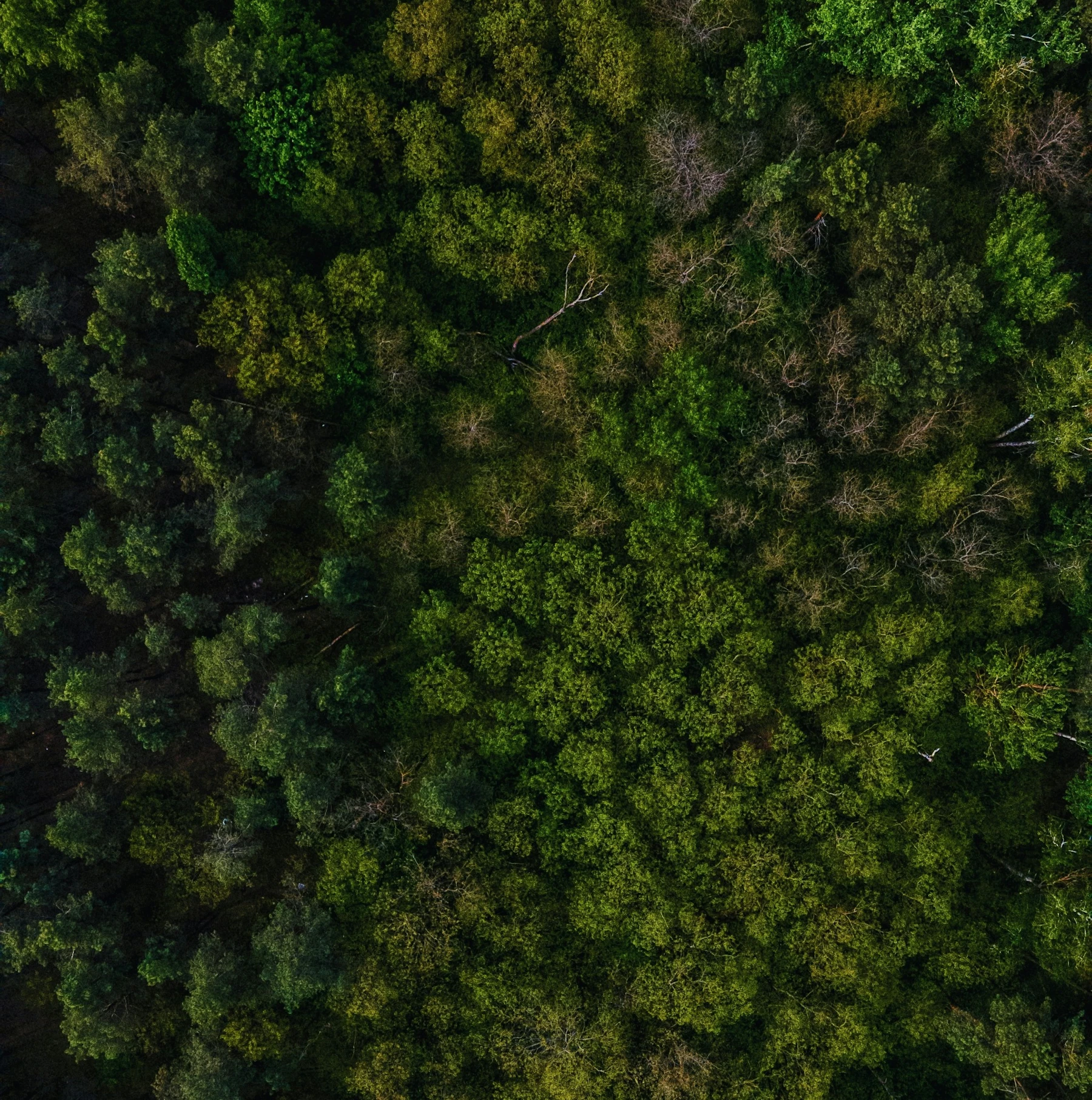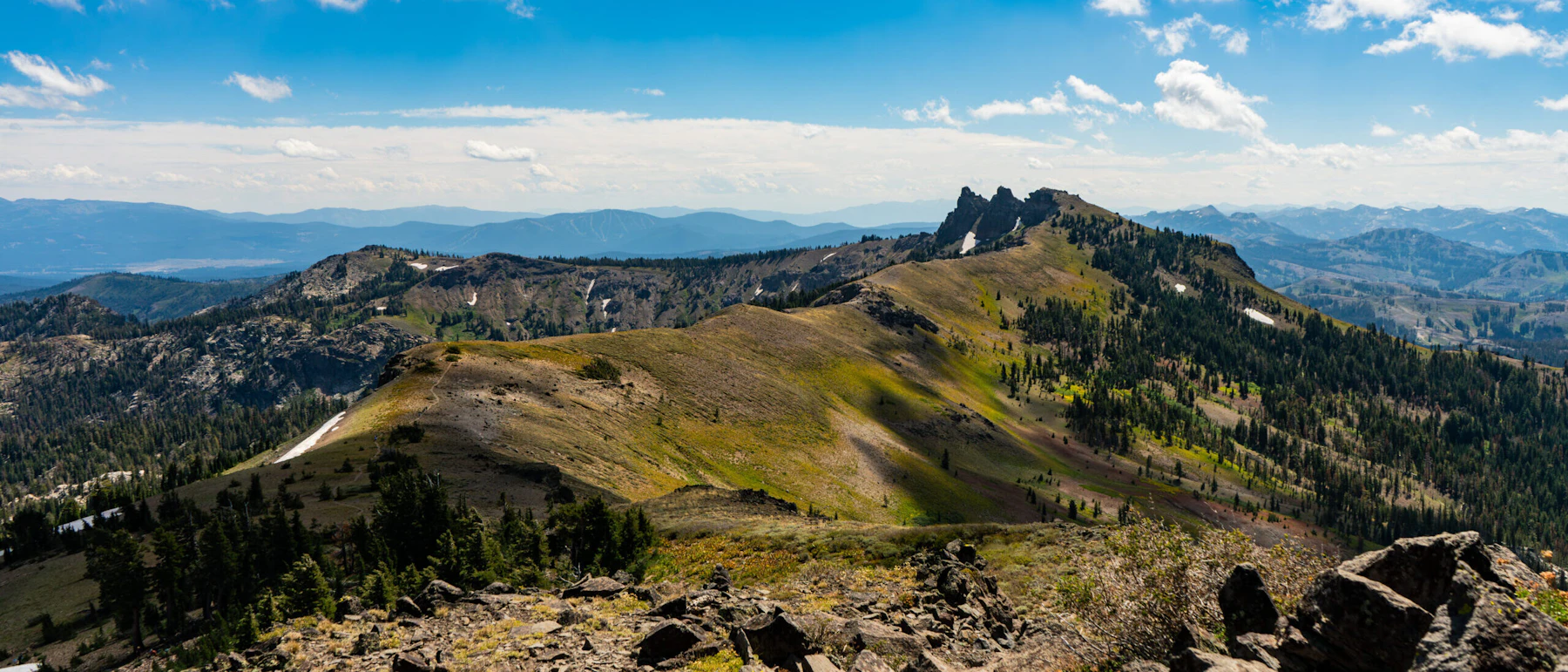
Uncover the Tahoe National Forest, more than 850,000 acres from the foothills on the Sierra’s western slope to the high peaks of its crest in northern California. The forest ranges from an elevation of 1,500 feet at the American River canyon on its western edge to over 9,400 feet at the top of Mt. Lola, along the Sierra Crest.
The area of Big Bend is at the heart of a natural break in the Sierra Nevada. For thousands of years, humans, animals, plants, and massive winter storms have been drawn to this break in the mountains. Glaciers, rivers, and seismic action have combined to create a pass that’s been used for thousands of years by both wildlife and humans.
The Tahoe National Forest contains the Granite Chief Wilderness Area, an area shared with the Lake Tahoe Basin Management Unit. The forest’s rivers and streams—such as the North Fork American, Yuba, and Truckee Rivers—cut through deep canyons, creating whitewater rapids, waterfalls, and habitat for salmon and trout fishing. There are also 20,000 surface acres of lakes that host water activities.
Hikers, mountain bikers, and equestrians are drawn to the forest’s expansive trail network, as are cross-country skiers and snowmobilers in the winter. The forest also hosts many track systems for off-highway vehicle use.
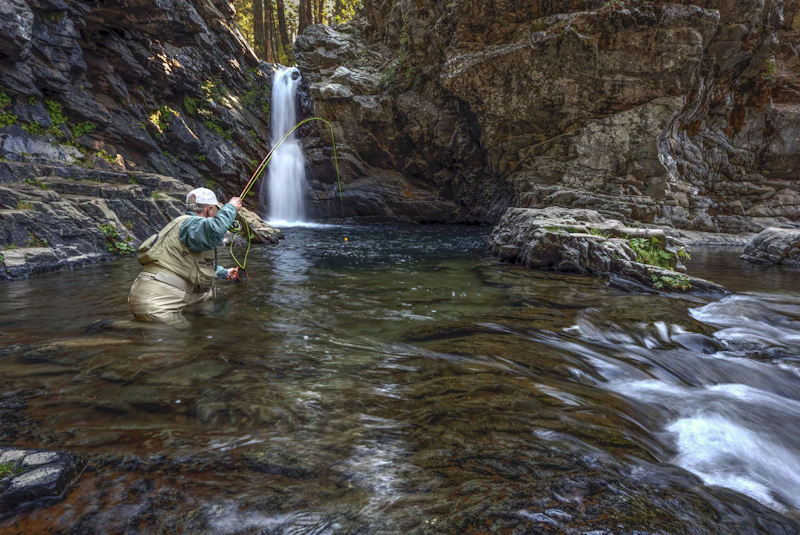 Fly fishing at North Fork Falls. Photo by Phil Reedy
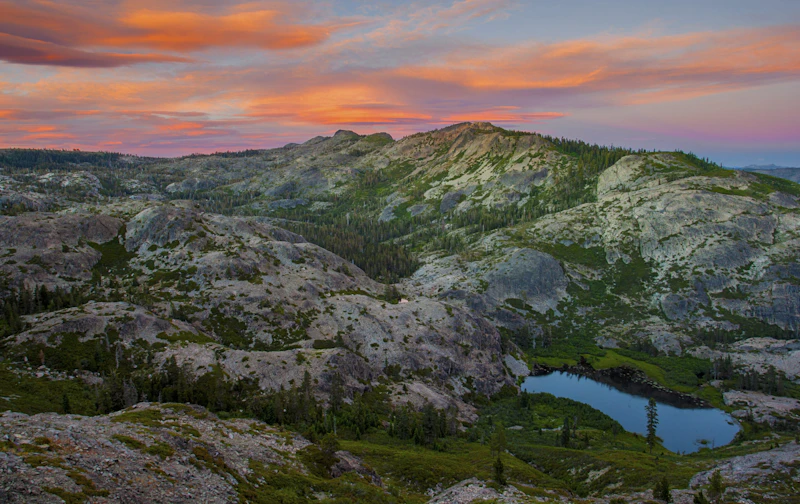 Photo by Jack Devlin
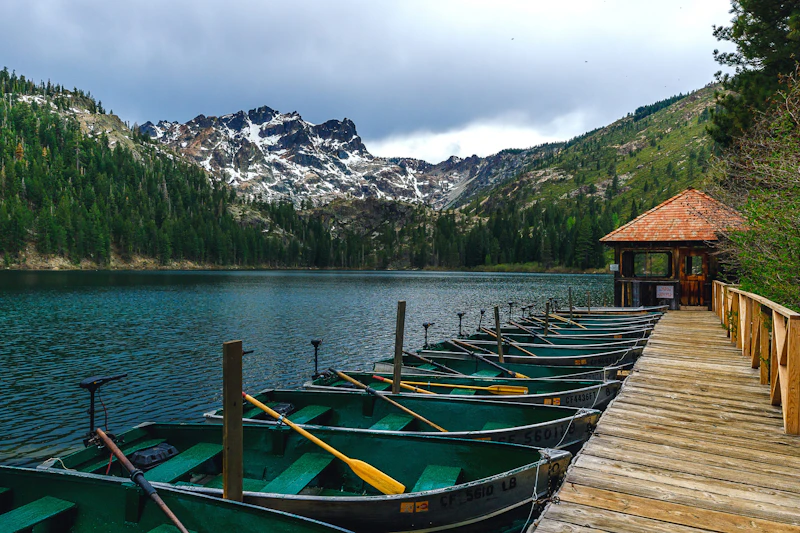 Photo by Yesenia Cachu Rios
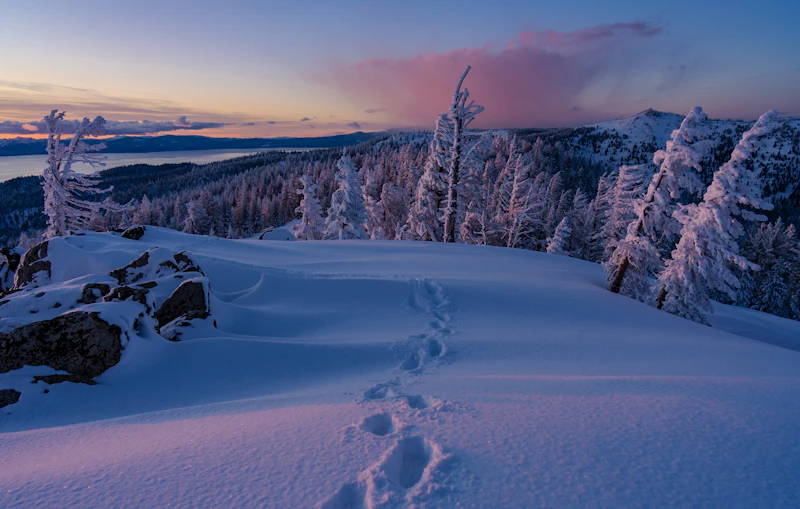 Photo by Nicolas Montiel
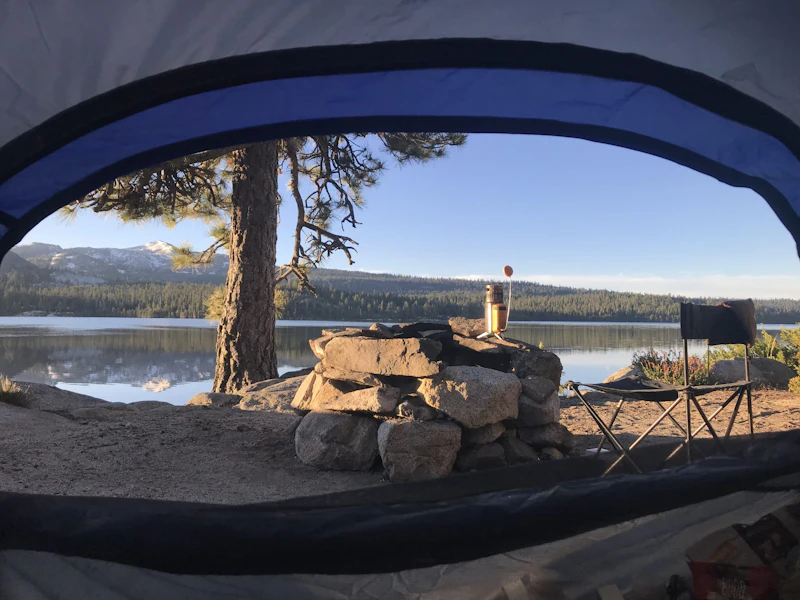 Camping at Loon Lake Dam. Photo by Taylor Spears
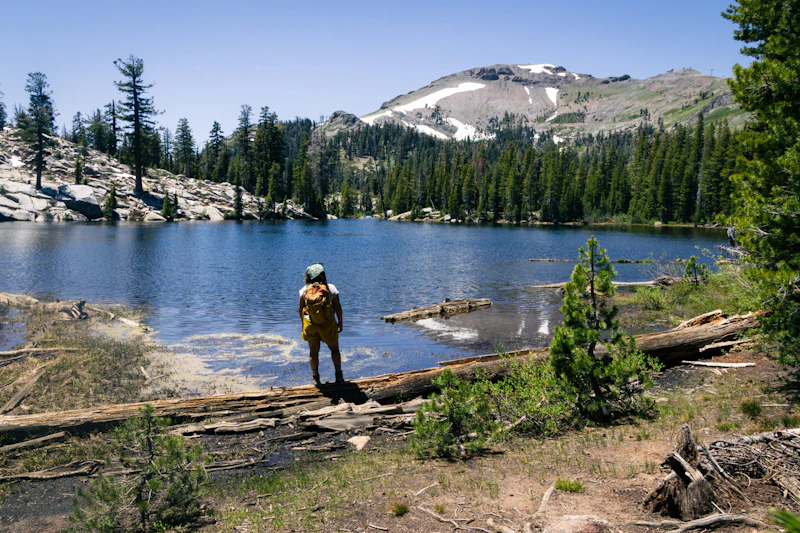 Five Lakes Trail, Granite Chief Wilderness. Photo by Kaitlyn Njoroge
The Five Lakes Trail hike takes you to five unnamed, alpine lakes on the Tahoe National Forest. Shot by Kaitlyn Njoroge.
Five Lakes Trail, Granite Chief Wilderness. Photo by Kaitlyn Njoroge
The Five Lakes Trail hike takes you to five unnamed, alpine lakes on the Tahoe National Forest. Shot by Kaitlyn Njoroge.
What is the History of the Tahoe National Forest?
The Tahoe NF has an incredibly rich historic and prehistoric setting, due to thousands of years of trans-Sierra migration and travel across Donner Pass. Indigenous peoples, including the Nisenan and Washoe, lived in the region for centuries.
Over 200,000 people came through Big Bend on their way to California prior to and during the Gold Rush in the 1840s and 1850s. Rust marks from covered wagon wheels remain visible near the center, and during summer, Visitor Center staff lead walks on the emigrant trail.
The Tahoe National Forest was established in 1905. Early forest management focused on regulating timber harvests, preventing wildfires, and protecting watersheds. Today, Tahoe National Forest balances recreation, conservation, and sustainable resource use.
How to Get to the Tahoe National Forest
To reach the Tahoe National Forest, Interstate 80 provides direct access from Sacramento and Reno, passing through Truckee and Colfax, popular entry points to the forest’s northern districts.
Highway 49 connects visitors from the Gold Country, with towns like Grass Valley and Nevada City serving as southern gateways.
Highway 89 leads to scenic high-elevation areas near Tahoe City and Truckee, while Highway 20 provides access to western portions of the forest.
- Reno, Nevada: 1.5 to 2 hours by car
- Sacramento, California: 3 to 3.5 hours by car
- Chico, California: 3 to 3.5 hours by car
- San Francisco, California: 4 to 4.5 hours by car

This windmill-style lookout was built by the Civilian Conservation Corps in 1934 and was active until 1975. It’s now available for rent, and features a sleeping room and observation cabin on top. It’s reached by road during the summer, but requires skiing or snowshoeing in the winter.
This part of the Sierra range looks like the Alps and offers just as scenic hikes. A six-mile roundtrip hike from Packer Lake Road ascends 1,500 feet towards a lookout tower that features epic views of the Sierra Valley, Sardine Lakes, and Mount Lassen on a clear day.
A seven-mile trail along this designated Wild and Scenic River between Sailor Flat Trail and the Mumford Bar Trail offers hiking through epic scenery, trout fishing, and whitewater rafting.
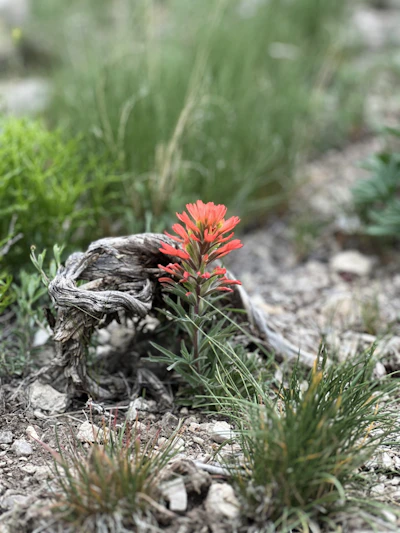 Indian paintbrush
This rare wildflower blooms yellow to red in a paintbrush-like shape in high-elevation meadows and forest openings.
Indian paintbrush
This rare wildflower blooms yellow to red in a paintbrush-like shape in high-elevation meadows and forest openings.
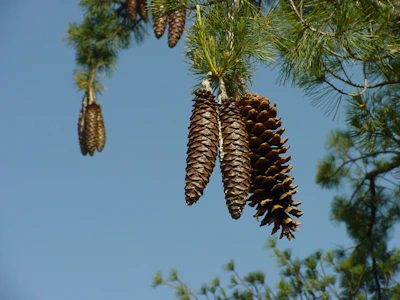 Sugar pine
This iconic conifer is known for reaching up to 200 feet tall and producing the largest cones of any pine species.
Sugar pine
This iconic conifer is known for reaching up to 200 feet tall and producing the largest cones of any pine species.
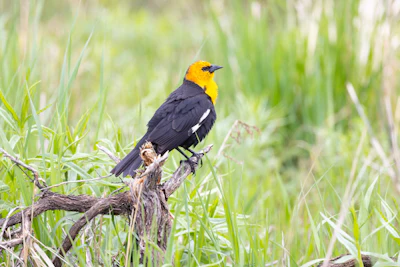 Yellow-headed blackbird
With bright yellow heads contrasting with black bodies, this bird has a distinct rattling call that’s commonly heard during the late spring and summer breeding season.
Yellow-headed blackbird
With bright yellow heads contrasting with black bodies, this bird has a distinct rattling call that’s commonly heard during the late spring and summer breeding season.
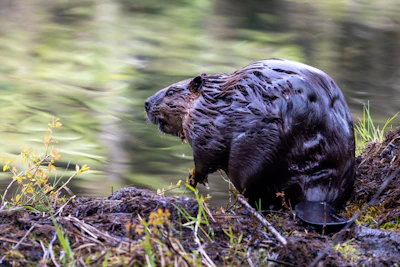 Beaver
This keystone species constructs dams that slow water flow, create habitat for other wildlife, and reduce erosion.
Beaver
This keystone species constructs dams that slow water flow, create habitat for other wildlife, and reduce erosion.
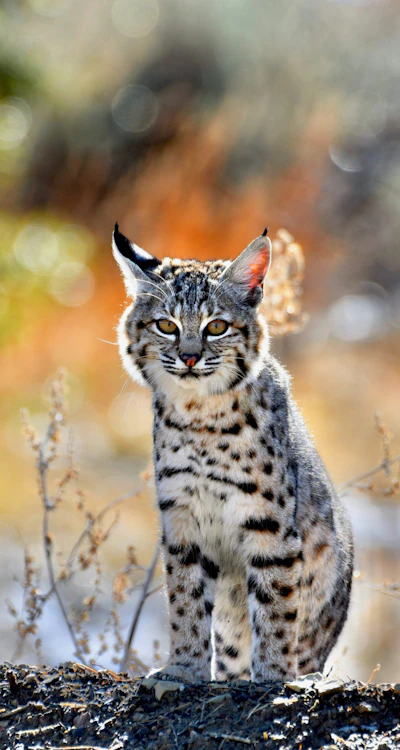 Bobcat
This elusive predator, with tufted ears and spotted coats, hunts rabbits, birds, and rodents throughout the forest. While seeing a bobcat is rare, visitors often spot their tracks.
Bobcat
This elusive predator, with tufted ears and spotted coats, hunts rabbits, birds, and rodents throughout the forest. While seeing a bobcat is rare, visitors often spot their tracks.
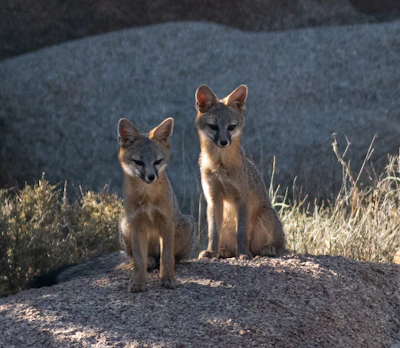 Gray fox
This subspecies is an excellent climber, often retreating into trees to escape danger or search for food.
Gray fox
This subspecies is an excellent climber, often retreating into trees to escape danger or search for food.
Related Impact
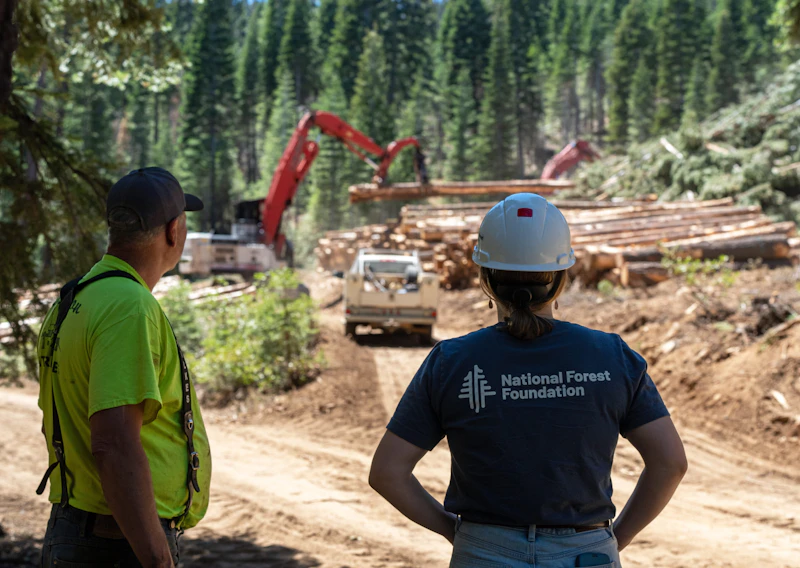
Creating a Fire Resilient Truckee
The largest, most destructive wildfires in California’s history have occurred in the last ten years. Everything is at stake for mountain communities like Truckee.
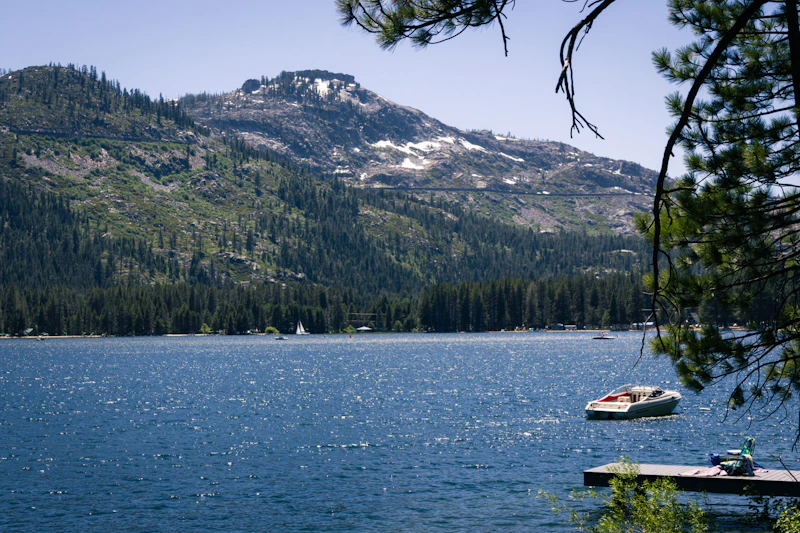
What’s the Best First-Timer’s Adventure in the Tahoe National Forest
Spend a summer’s day at Donner Lake, a crown jewel of the town of Truckee and for the Tahoe National Forest. The 840-acre lake is packed with recreation: swim at West End Beach Park, boat from one of 37 public docks that dot the lake’s north shore, or hike the Pacific Crest Trail up to Donner Summit.
Where to Find More Information on the Tahoe National Forest
For more information or questions, visit https://www.fs.usda.gov/r05/tahoe.
Discover how communities, volunteers, and partners are shaping the future of our National Forests and Grasslands.
The National Forest Foundation works with partners across Northern Colorado to restore forests, reduce wildfire risk, and care for the…
After years of damage, recovery, and reconstruction, the trail to Hanging Lake has been fully rebuilt, creating a more durable,…
Erosion and wildfire had left Arizona's historic Highline Trail rutted and unsafe. After five years of work with the Tonto…
Forest restoration near Flagstaff is reducing wildfire risk for local communities and safeguarding the water supply for millions across the…
Colorado's 14ers draw thousands of visitors each year, and the pressure on these fragile alpine landscapes is growing. Here's a…
Visitors of all ages can explore forest trails and sparkling waters, discover wildlife and underwater habitats, and connect with Tahoe’s…
A partnership-driven program connecting youth on Montana’s Flathead Reservation with hands-on conservation work, heritage education, and pathways in natural resource…
Seeing the impact first hand on the Grand Mesa, Uncompaghre and Gunnison National Forests
Seven Years of Reopening Trails After the Eagle Creek Fire
Field Ranger Program Connects Diverse Communities to Forests in Southern California
Our Forests Need Us Today.
Your donation powers critical, on-the-ground conservation—from wildfire recovery to watershed restoration—protecting forests for the future.